
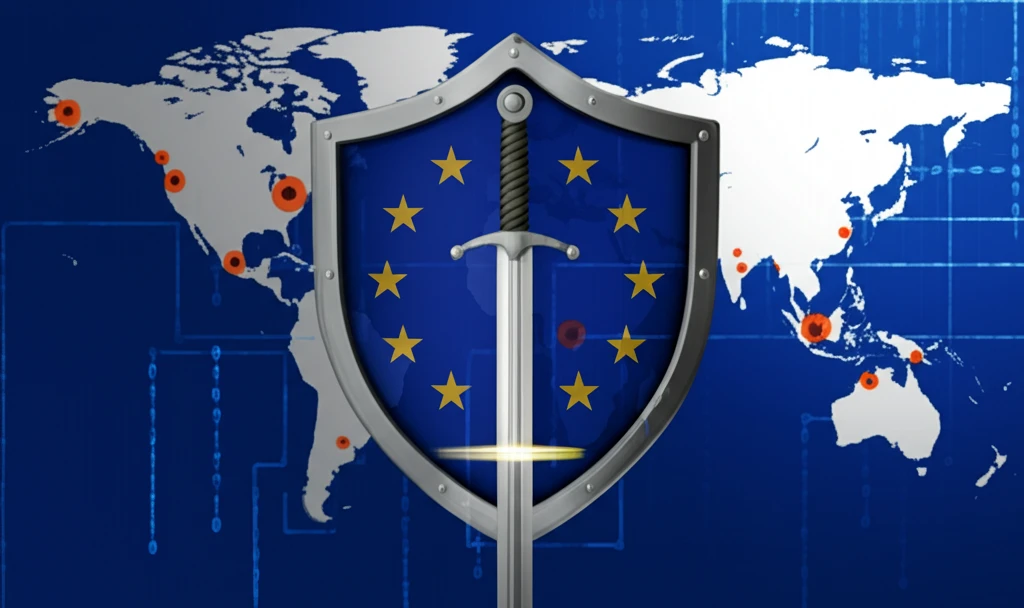
Is Europe's Defense Policy Strong Enough? Understanding the EU's Security Challenges

"A Deep Dive into the EU's Common Security and Defence Policy (CSDP) and Its Capacity to Respond to Global Crises"
In an era defined by increasing global instability and complex security challenges, the European Union's (EU) role in international security has never been more critical. The EU's Common Security and Defence Policy (CSDP) represents the Union's attempt to act as a unified force in addressing crises, promoting peace, and protecting its interests and values. But how effective has this policy been, and what are its limitations?
A recent study by M.E. Smith, meticulously researched and detailed, delves into the development of the EU's security and defence policy. The study examines the CSDP's evolution, from its origins to its current state, providing a comprehensive analysis of its institutional framework, operational experiences, and strategic challenges. This article draws upon Smith's insights to explore the key aspects of the CSDP, its successes, shortcomings, and future prospects.
Understanding the CSDP is crucial for anyone interested in global affairs, European politics, or the future of international security. As the EU continues to navigate its role as a global actor, the CSDP will undoubtedly remain a central pillar of its external action. By examining its past, present, and future, we can gain valuable insights into the EU's capacity to respond to the challenges of an increasingly uncertain world.
Europe's Evolving Security Landscape
Europe faces a complex and shifting security environment in the mid-2020s, marked by geopolitical tensions, evolving threats, and renewed debates about collective defense. The continent's nations must balance sovereignty with cooperation as they navigate challenges ranging from territorial disputes to hybrid warfare. Understanding the scale and nature of these challenges is essential for evaluating whether current defense frameworks are adequate.
The EU's Institutional Defense Framework
The European Union, an international organization governing economic, social, and security policies for its 27 member countries, was created by the Maastricht Treaty which entered into force on November 1, 1993. The EU's common currency, the euro, reflects deep economic integration, yet defense and security policy remain areas of complex coordination among sovereign states. While the EU provides institutional structures for cooperation, each member retains its own military capabilities and national defense strategies, creating both opportunities for collective action and limitations in unified response.
From Post-War Integration to Modern Defense Questions
Europe's post-World War II integration was driven by a desire to prevent future conflicts through economic and political cooperation. Over decades, this integration expanded from trade to include common policies on security and foreign affairs. The question of whether this cooperative model can adequately address 21st-century security threats continues to evolve as the geopolitical landscape shifts.
The Evolution of the CSDP: From Origins to Current Challenges
The Common Security and Defence Policy (CSDP) has undergone significant transformation since its inception. Initially conceived as a means to enhance European integration and project stability, the CSDP has evolved in response to a changing geopolitical landscape and internal pressures within the EU. This evolution can be understood through several key phases:
- The Saint-Malo Declaration (1998): A pivotal moment, this declaration between France and the UK paved the way for a more robust European security and defence policy.
- The Helsinki Headline Goal (1999): This initiative aimed to develop a rapid reaction force capable of deploying within 60 days, marking a significant step towards operational capability.
- Early Missions: The EU launched its first CSDP missions in the early 2000s, primarily focused on peacekeeping and crisis management in the Balkans.
Defining European Identity in Security Contexts
Contemporary discussions of European defense policy often center on what it means to be 'European' in a security and strategic context. The concept encompasses not just geographic boundaries but shared values, institutional commitments, and collective approaches to threats. Understanding these definitional aspects is important for framing debates about how Europe should organize its defense capabilities and priorities.
Challenges to Unified European Defense
Critics of European defense integration point to persistent challenges including differing national priorities, burden-sharing disputes, and the difficulty of coordinating military operations across sovereign states. Some argue that the EU's consensus-based decision-making can be too slow for rapidly evolving security situations. These limitations raise questions about whether current structures can respond effectively to emerging threats.
Europe's Defense in Global Context
When compared to other major powers, Europe's defense architecture faces unique challenges due to its multinational nature and the varying capabilities of its member states. The balance between national sovereignty and collective security creates dynamics distinct from those of single-nation military powers. These differences highlight both the potential strengths and structural constraints of European defense cooperation.
- Limited Resources: Insufficient defence spending and a lack of military capabilities hinder the EU's ability to project power effectively.
- Political Disunity: Divergent national interests and a lack of consensus among member states often undermine the EU's ability to act decisively.
- Institutional Complexities: A complex institutional framework and bureaucratic processes slow down decision-making and implementation.
- New Security Threats: The rise of terrorism, cyber warfare, and hybrid threats pose new challenges that require a more agile and coordinated response.
Moving Forward: Strengthening the EU's Role in Global Security
The EU's Common Security and Defence Policy has come a long way. To truly realize its potential, the EU must address its shortcomings, overcome internal divisions, and adapt to the changing nature of global security threats. This requires a concerted effort to increase defence spending, improve military capabilities, streamline decision-making processes, and foster greater unity among member states. Only then can the EU effectively contribute to peace and stability in an increasingly complex and dangerous world.
Assessing Europe's Defense Adequacy
Expert assessments of Europe's defense readiness vary, with some emphasizing the EU's institutional frameworks and collective resources as significant assets. Others highlight gaps in capabilities, coordination, and political will that could limit effectiveness. A balanced evaluation requires weighing both the structural strengths of European cooperation and the practical challenges of implementation.
Pathways for European Defense Evolution
The future of European defense policy will likely involve continued debates about burden-sharing, capability development, and the relationship between EU structures and NATO. Emerging technologies and new threat domains, including cyber and space, present both challenges and opportunities for European cooperation. How well Europe adapts its defense frameworks to these evolving requirements remains an open question.
Systemic Constraints on European Defense
European defense policy operates within broader systemic constraints, including the relationship between economic resources and military capabilities, and the tension between integration and national sovereignty. These structural factors shape what is achievable through collective action and influence the pace and scope of defense reforms. Understanding these constraints is essential for realistic assessments of Europe's security posture.
Defense Policy's Effect on European Citizens
Defense policy decisions ultimately affect the security and well-being of European citizens, influencing everything from national security to resource allocation. The human dimension of these policies includes not only military personnel but also civilian populations who depend on effective security frameworks. Evaluating defense policy requires consideration of these real-world impacts alongside strategic and institutional factors.