
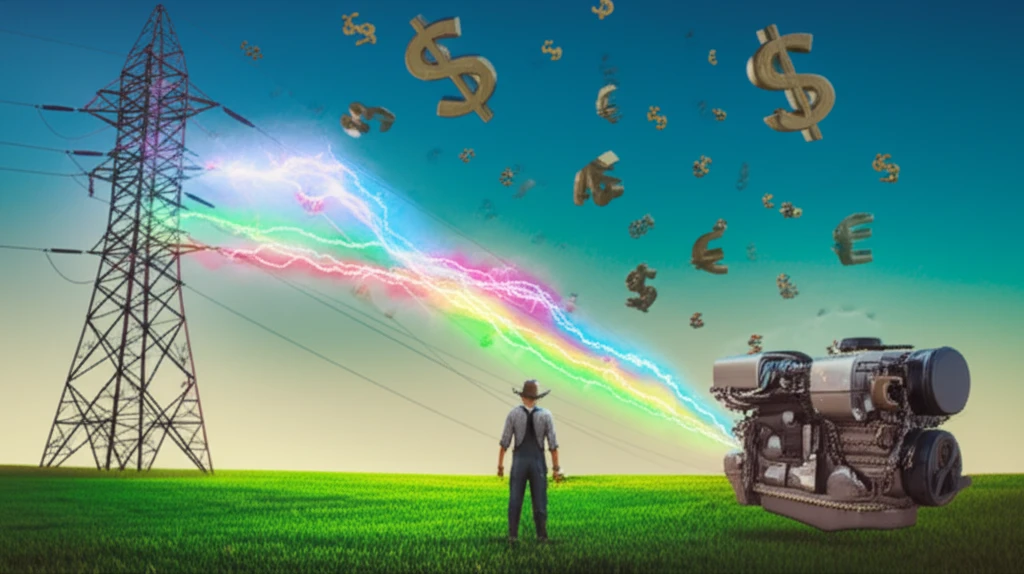
A Brazilian farmer faces a tough choice between electricity and diesel for irrigation, symbolized by a surreal illustration.

Is Diesel Cheaper? A Shocking Look at Irrigation Energy Costs in Brazil

"Brazilian farmers face tough choices with rising electricity costs. Discover if switching to diesel is the answer and how new tariffs impact your irrigation budget."


Electricity is the lifeblood of modern society, powering everything from our homes to vital sectors like agriculture. In Brazil, where hydroelectric power dominates, fluctuations in rainfall can significantly impact energy costs, especially for irrigation. As electricity prices rise, farmers are left scrambling for affordable solutions to keep their crops watered and their businesses afloat.

Enter the debate: electricity versus diesel. For years, diesel engines have been touted as a potential alternative for irrigation, offering independence from the grid. But are they truly a cost-effective solution in today's market? The answer is far more complex than it seems, especially with the introduction of Brazil's new electricity tariff model, complete with its confusing "tariff flags."

This article dives deep into the comparative costs of energy for irrigation in Brazil. We'll break down the complexities of the new tariff system, explore the potential savings of diesel engines, and arm you with the knowledge you need to make informed decisions about your irrigation strategy. Let's get started!

Decoding Brazil's Electricity Tariffs: A Farmer's Guide

A Brazilian farmer faces a tough choice between electricity and diesel for irrigation, symbolized by a surreal illustration.

In January 2015, Brazil implemented a new electricity tariff model featuring a flag system designed to signal the real-time conditions of power generation. Think of it like a traffic light: green means smooth sailing, yellow indicates caution, and red signals high alert. Here's what each flag means for your wallet:

Green Flag: When conditions are favorable for power generation (usually due to ample rainfall), the tariff remains normal.

  • Yellow Flag: Generation conditions are less favorable, and a surcharge is added to each kWh consumed.
  • Red Flag: Generation is under stress (low water levels in reservoirs), resulting in the highest surcharges.
The intention behind this system is to encourage consumers to adapt their consumption and prevent further price increases. But for irrigators, whose energy demands are crucial and time-sensitive, adapting isn't always easy. This is where the diesel engine alternative comes into play.

Diesel vs. Electricity: Which is the Right Choice for You?

The research clearly shows that while the bohemian blue tariff provides the best economic advantage, there are scenarios, particularly in the Southeast region, where a combined diesel and electric approach could offer savings. Ultimately, the decision hinges on a careful evaluation of your specific circumstances: location, irrigation hours, tariff options, and access to the electrical grid. By understanding the complexities of energy costs and exploring all available options, Brazilian farmers can navigate these challenges and ensure a sustainable future for their operations.

About this Article -

This article was crafted using a human-AI hybrid and collaborative approach. AI assisted our team with initial drafting, research insights, identifying key questions, and image generation. Our human editors guided topic selection, defined the angle, structured the content, ensured factual accuracy and relevance, refined the tone, and conducted thorough editing to deliver helpful, high-quality information.See our About page for more information.

Everything You Need To Know

1

What are the key factors influencing irrigation energy costs for Brazilian farmers?

Brazilian farmers face fluctuating electricity costs, primarily due to their reliance on hydroelectric power. Rainfall directly impacts the availability and cost of electricity. Additionally, the implementation of the new electricity tariff model, including the "tariff flags" (Green, Yellow, and Red), significantly influences the final energy costs. These flags reflect the real-time conditions of power generation and introduce surcharges during periods of stress, impacting farmers' irrigation budgets. Location, irrigation hours, tariff options, and access to the electrical grid are also key factors.

2

How does Brazil's electricity tariff model work and how does it impact farmers?

Brazil's electricity tariff model, introduced in January 2015, uses a flag system (Green, Yellow, and Red) to signal the real-time conditions of power generation. The Green Flag indicates favorable conditions with normal tariffs. The Yellow Flag introduces a surcharge, and the Red Flag signifies the highest surcharges due to generation stress, typically caused by low water levels in reservoirs. For farmers, especially irrigators with time-sensitive energy demands, adapting to these fluctuations can be challenging. The Red Flag could significantly increase costs, potentially leading farmers to explore alternatives like diesel engines.

3

What are the potential advantages and disadvantages of using diesel engines for irrigation in Brazil?

Diesel engines are often considered an alternative to electricity for irrigation, offering independence from the electrical grid. This can be advantageous, especially when electricity prices are high or unstable due to tariff flags. However, the cost-effectiveness of diesel depends on various factors, including fuel prices and maintenance costs. The research suggest there are regions where combined diesel and electric approach could offer savings. Farmers need to carefully evaluate their specific circumstances: location, irrigation hours, tariff options, and access to the electrical grid to determine if diesel is the right choice.

4

What is the "bohemian blue tariff" and why is it mentioned?

The "bohemian blue tariff" is referenced in the context of a study which reveals the best economic advantage compared to other tariffs. It highlights the complex nature of the electrical market in Brazil and the dynamic variables that affect the price farmers pay. It is not described what this tariff exactly is in the provided text. This further proves the need to assess individual circumstances to make a smart choice.

5

What should Brazilian farmers consider when deciding between electricity and diesel for irrigation?

Brazilian farmers need to carefully evaluate several factors. First, understand the impact of the "tariff flags" (Green, Yellow, Red) on electricity costs. Assess the location within Brazil, because the economic advantage can change based on location. Determine the irrigation hours needed. Research and compare different tariff options, and evaluate their access to the electrical grid. Consider a combined diesel and electric approach, to maximize savings. Ultimately, the decision hinges on a careful assessment of these variables to ensure a sustainable future for their agricultural operations.

Newsletter Subscribe

Subscribe to get the latest articles and insights directly in your inbox.