
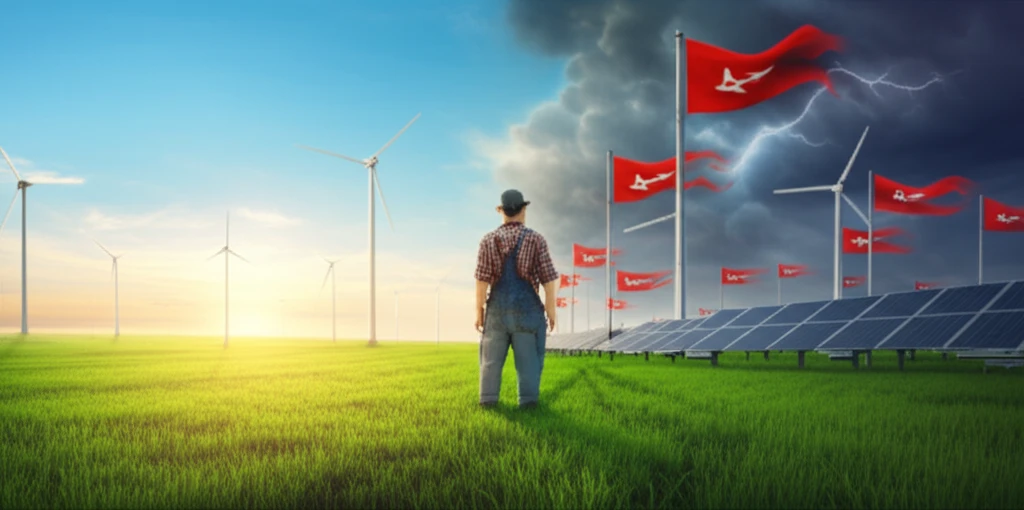
Farmer contemplating energy choices in a field with renewable energy sources and contrasting weather, symbolizing the challenges of Brazil's electricity tariffs.

Irrigation Costs Under Scrutiny: Is Brazil's New Electricity Tariff Model Impacting Farmers?

"A Deep Dive into Energy Expenses and Alternative Solutions for Brazilian Agriculture in the Face of Evolving Energy Policies."


Electricity plays a crucial role in modern society and the economic advancement of nations. In Brazil, hydroelectric power, derived from rivers, constitutes the primary source of electricity generation, accounting for 65% of the country's operational capacity. Thermal power plants contribute the remaining 28% (ANEEL, 2013).

Hydroelectric plant operations are heavily dependent on rainfall and reservoir water levels. During periods of low water storage, thermal power plants are activated to conserve water reserves, leading to increased energy generation costs due to the utilization of fuels such as natural gas, coal, fuel oil, and diesel.

The Resolution N° 700, enacted on January 26, 2016, by ANEEL (Agência Nacional de Energia Elétrica), brought significant changes to electricity taxation in Brazil. Under this resolution, tariff flags were introduced to signal electricity generation conditions to consumers. These flags offer consumers the opportunity to adjust their consumption patterns, helping to mitigate potential cost increases. The tariff flag system operates like a traffic light, indicating the cost of power generation. A green flag signifies favorable conditions, with no tariff increase, while yellow and red flags indicate less favorable conditions, resulting in increased tariffs per kWh consumed.

Diesel vs. Electric: Analyzing the Cost of Irrigation Pumping in Brazil

Farmer contemplating energy choices in a field with renewable energy sources and contrasting weather, symbolizing the challenges of Brazil's electricity tariffs.

With the introduction of tariff flags, the cost of electricity for irrigation has become a significant concern for Brazilian farmers. This has led to a search for alternative energy sources, such as diesel engines, to power irrigation systems. A study was conducted to compare the costs of pumping water using both diesel and electric power in three regions of Brazil, taking into account the application of tariff flags.

The study analyzed the hourly cost of electricity in the Southeast region (SE), which was found to be higher than in the Central-West (CO) and Northeast (NE) regions, regardless of the tariff applied. This makes the use of diesel engines a potentially viable option for irrigation in the Southeast, particularly for locations that are a significant distance from the electrical grid.

  • Southeast Region: Diesel engines are feasible for distances ranging from 2.8 to 72.4 km from the electrical grid, with the most favorable conditions occurring with 4 months of operation per year using fertirrigation.
  • Northeast Region: Diesel is least favorable under the red flag tariff with 10 months/year operation with or without fertirrigation, especially under conventional tariff and the red flag. Bohemia blue and green flag tariffs offer better cost efficiency.
The study highlighted the importance of considering the distance from the electrical grid when evaluating the feasibility of using diesel engines for irrigation. The further the distance, the more attractive diesel becomes as an alternative energy source. The study also noted that the specific tariff flag in effect can significantly impact the cost of electricity, making it essential for farmers to carefully analyze their energy consumption patterns and choose the most cost-effective option.

Strategic Energy Choices for Brazilian Irrigators

In conclusion, Brazil's new electricity tariff model has created a complex energy landscape for irrigators, requiring careful consideration of costs and alternative energy sources. While the bohemia blue tariff appears to be the most cost-effective option, the feasibility of using diesel engines depends on factors such as location, distance from the electrical grid, and specific tariff flags. By carefully analyzing their energy needs and exploring alternative solutions, Brazilian farmers can optimize their irrigation systems and minimize their energy costs.

About this Article -

This article was crafted using a human-AI hybrid and collaborative approach. AI assisted our team with initial drafting, research insights, identifying key questions, and image generation. Our human editors guided topic selection, defined the angle, structured the content, ensured factual accuracy and relevance, refined the tone, and conducted thorough editing to deliver helpful, high-quality information.See our About page for more information.

Everything You Need To Know

1

Why is Brazil's electricity generation dependent on both hydroelectric and thermal power plants?

Brazil relies heavily on hydroelectric power, which makes up about 65% of its electricity generation. The remaining power comes from thermal power plants. However, hydroelectric power is subject to the availability of water, and when water levels are low, thermal power plants must step in. This increases energy generation costs because these plants use fuels like natural gas, coal, fuel oil, and diesel.

2

How does the electricity tariff flag system affect irrigation costs for farmers?

The tariff flag system, introduced by ANEEL, signals the cost of electricity generation to consumers. A green flag indicates favorable conditions with no tariff increase. Yellow and red flags indicate less favorable conditions and higher tariffs per kWh consumed. This system impacts irrigation costs because it makes the price of electricity variable, which affects the overall cost of irrigation, especially in regions with higher electricity costs or during periods when yellow or red flags are in effect.

3

Why are farmers considering diesel engines as an alternative to electricity for irrigation?

Farmers are considering diesel engines as an alternative energy source for irrigation due to the fluctuating costs associated with the tariff flag system. Diesel engines become more economically viable, especially in areas far from the electrical grid or when electricity tariffs are high. The cost-effectiveness of diesel depends on factors such as location, distance from the electrical grid, and the specific tariff flag in effect.

4

What did the study reveal about the costs of using diesel versus electric power in different regions of Brazil?

The study revealed that the Southeast region has higher hourly electricity costs compared to the Central-West and Northeast regions, regardless of the tariff flag applied. In the Southeast, diesel engines are a feasible alternative for distances ranging from 2.8 to 72.4 km from the electrical grid. In the Northeast, diesel is least favorable under the red flag tariff with 10 months/year operation. Bohemia blue and green flag tariffs offer better cost efficiency.

5

What strategies can farmers use to optimize their irrigation systems and minimize energy costs?

Farmers can optimize their irrigation systems by analyzing their energy needs, exploring alternative solutions like diesel engines, and carefully monitoring the tariff flags to adjust their consumption patterns. They should also consider factors such as their location, distance from the electrical grid, and the specific tariff flags in effect. The Bohemia blue tariff seems to be the most cost effective option.

Newsletter Subscribe

Subscribe to get the latest articles and insights directly in your inbox.