
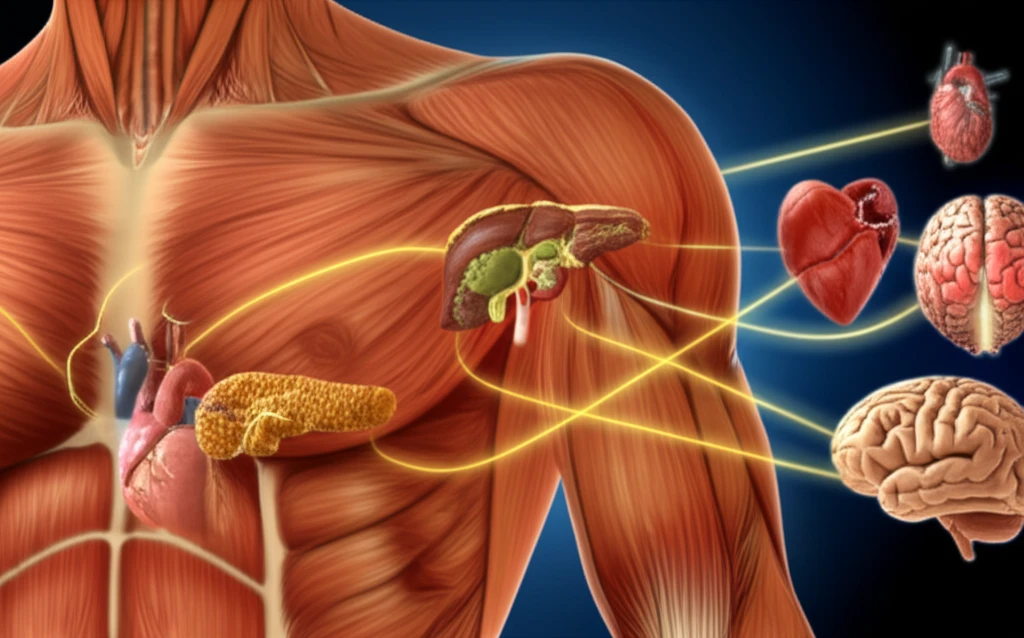
Irisin: The Exercise Hormone's Role in Metabolic Health

"Exploring the science behind irisin, a myokine linked to exercise and its potential impact on obesity, diabetes, and cardiovascular health."
In an era where the benefits of exercise are constantly touted, scientists have been diligently working to unravel the specific mechanisms that make physical activity so beneficial. Among the key discoveries is irisin, a myokine/adipokine released primarily by muscles during exercise. This hormone has garnered significant attention for its potential role in "browning" white adipose tissue, enhancing thermogenesis, and boosting energy expenditure.
Since its identification, irisin has been linked to a range of favorable effects on metabolic diseases. Conditions such as obesity, type 2 diabetes mellitus (T2DM), cardiovascular disease (CVD), nonalcoholic fatty liver disease (NAFLD), polycystic ovary syndrome (PCOS), and metabolic bone diseases have all been associated with irisin activity. While promising results have been observed in rodents, the effects of irisin in humans are still being explored to a great extend.
This article aims to provide an in-depth review of the current understanding of irisin, its mechanisms, and its implications for various metabolic disorders. We'll explore the latest research, discuss the challenges in studying this hormone, and consider its potential as a therapeutic target for improving metabolic health.
Irisin and Obesity: What's the Connection?
The relationship between irisin and obesity is a central focus in metabolic research. White adipose tissue (WAT), the primary site for energy storage, is now considered a significant endocrine organ. Irisin's ability to induce "browning" in WAT—transforming it into more metabolically active, brown-like fat—has sparked interest in its potential to combat obesity.
- Rodent Studies: In rodents, FNDC5/irisin is secreted mainly from subcutaneous adipose tissue (SAT), with lower amounts from visceral adipose tissue (VAT). WAT-derived irisin can constitute up to 30% of circulating levels and is further elevated after exercise. In obese mice, injecting FNDC5-expressing adenoviral particles or recombinant human irisin improves glucose metabolism, but has minor effects on body weight.
- Human Studies: In humans, FNDC5 expression is 100–200 times lower in WAT than in muscle, indicating that WAT’s contribution to circulating irisin levels is minor. Once released into circulation, irisin stimulates UCP1 expression and WAT browning, increasing total body energy expenditure.
- In Vitro vs. In Vivo: In human preadipocytes from SAT, irisin inhibits differentiation into mature adipocytes, decreasing browning-related genes. Conversely, in mature human adipocytes, irisin stimulates browning, as indicated by increased UCP1 and PRDM16 expression, probably through the activation of the p38 MAPK and ERK signaling pathways.
The Future of Irisin Research
Irisin holds considerable promise as a therapeutic target for metabolic diseases. It emphasizes the intricate relationship between exercise, muscle function, and overall metabolic health. Further research is necessary to fully understand the physiological roles of irisin and to harness its therapeutic potential.