
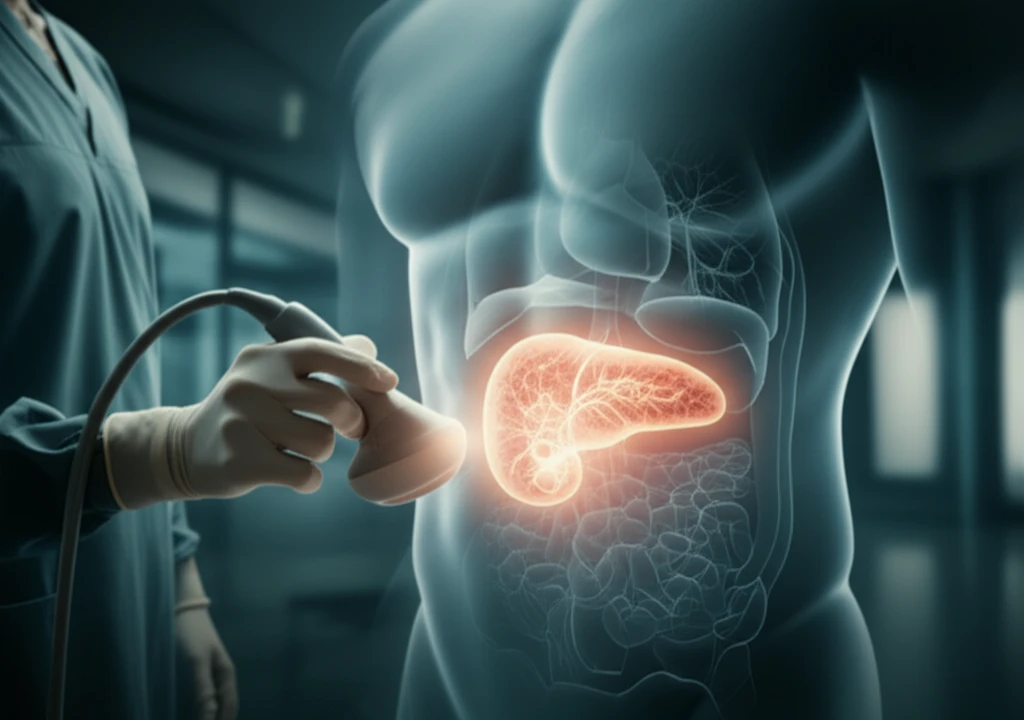
Surgeon using advanced ultrasound on glowing pancreas.

IOUS: The Unsung Hero in Treating Pancreatic Diseases

"Discover how intraoperative ultrasound (IOUS) is revolutionizing pancreatic surgery, improving outcomes, and changing lives."


In the realm of medical advancements, intraoperative ultrasound (IOUS) emerges as a pivotal tool, enhancing the precision and efficacy of surgical interventions, especially in the treatment of pancreatic diseases. While traditional imaging techniques provide a foundational understanding, IOUS offers real-time, high-resolution visualization during surgery, enabling surgeons to make informed decisions, adapt strategies, and improve patient outcomes.

IOUS represents a significant leap forward, allowing for immediate assessment and verification of pre-operative diagnoses. This real-time imaging capability is invaluable in accurately determining the extent of the disease, guiding surgical procedures, and minimizing the duration of operations. The ability to assess anatomical structures and evaluate the surgical field post-treatment ensures more complete and effective care.

The integration of IOUS into surgical practice signifies a commitment to leveraging technology for enhanced patient care. By providing surgeons with a clear and immediate view of the operative field, IOUS not only improves the precision of surgical interventions but also contributes to better long-term outcomes for patients battling pancreatic diseases.

What is Intraoperative Ultrasound (IOUS) and Why Does It Matter in Pancreatic Disease?

Surgeon using advanced ultrasound on glowing pancreas.

IOUS is a specialized ultrasound technique performed during surgery to visualize internal organs and tissues in real-time. Unlike traditional imaging methods such as CT scans or MRIs, IOUS provides immediate feedback to the surgeon, allowing for dynamic adjustments to the surgical approach. In the context of pancreatic diseases, this is particularly crucial due to the organ's complex anatomy and proximity to vital blood vessels and ducts.

The pancreas, located deep within the abdomen, presents challenges for accurate pre-operative imaging. IOUS overcomes these limitations by providing a high-resolution view directly at the surgical site. This enables surgeons to:

  • Confirm and refine pre-operative diagnoses.
  • Assess the extent and severity of pancreatic lesions.
  • Guide surgical resections with greater precision.
  • Evaluate the involvement of blood vessels and lymph nodes.
  • Detect local and distant metastases.
By offering these capabilities, IOUS significantly enhances the surgeon's ability to perform safe and effective procedures, potentially reducing the risk of complications and improving patient outcomes. This real-time feedback loop transforms complex surgeries into more manageable and precise interventions.

The Future of Pancreatic Surgery: Embracing IOUS

IOUS is more than just a technological advancement; it represents a paradigm shift in how pancreatic surgeries are approached. As technology continues to evolve, the integration of IOUS and similar real-time imaging techniques will likely become standard practice, further enhancing surgical precision and patient outcomes. Embracing IOUS means embracing a future where surgeries are safer, more effective, and tailored to each patient's unique needs.

About this Article -

This article was crafted using a human-AI hybrid and collaborative approach. AI assisted our team with initial drafting, research insights, identifying key questions, and image generation. Our human editors guided topic selection, defined the angle, structured the content, ensured factual accuracy and relevance, refined the tone, and conducted thorough editing to deliver helpful, high-quality information.See our About page for more information.

This article is based on research published under:

DOI-LINK: 10.2478/pjs-2014-0048, Alternate LINK

Title: Intraoperative Ultrasound In The Treatment Of Pancreatic Diseases

Subject: General Medicine

Journal: Polish Journal of Surgery

Publisher: Index Copernicus

Authors: Grzegorz Ćwik, Michał Solecki, Grzegorz Wallner

Published: 2014-01-01

Everything You Need To Know

1

What is Intraoperative Ultrasound (IOUS) and how does it improve the treatment of pancreatic diseases?

Intraoperative Ultrasound (IOUS) is a real-time imaging technique used during surgery to provide high-resolution visualization of internal organs and tissues. In treating pancreatic diseases, IOUS enhances surgical precision by allowing surgeons to confirm pre-operative diagnoses, assess the extent of the disease, guide surgical resections, and evaluate the involvement of blood vessels and lymph nodes. This real-time feedback helps to improve patient outcomes by reducing complications and ensuring more effective treatment.

2

How does IOUS compare to traditional imaging methods like CT scans or MRIs in the context of pancreatic surgery?

While traditional imaging methods such as CT scans or MRIs provide a foundational understanding of the pancreas before surgery, they lack the real-time, high-resolution visualization offered by Intraoperative Ultrasound (IOUS). IOUS provides immediate feedback during surgery, enabling surgeons to make dynamic adjustments to their approach. This capability is crucial for the pancreas due to its complex anatomy and proximity to vital structures, allowing for more precise surgical interventions compared to pre-operative imaging alone.

3

What are the key advantages of using IOUS during pancreatic surgery?

The key advantages of using Intraoperative Ultrasound (IOUS) during pancreatic surgery include the ability to confirm and refine pre-operative diagnoses, assess the extent and severity of pancreatic lesions, guide surgical resections with greater precision, evaluate the involvement of blood vessels and lymph nodes, and detect local and distant metastases. These capabilities enable safer and more effective procedures, potentially reducing the risk of complications and improving patient outcomes. IOUS also minimizes the duration of operations.

4

Can you explain how IOUS helps surgeons make better decisions during surgery?

Intraoperative Ultrasound (IOUS) assists surgeons in making better decisions by providing real-time, high-resolution images of the operative field. This allows surgeons to immediately assess and verify pre-operative diagnoses, leading to more informed decisions about how to proceed with the surgery. Surgeons can adapt their strategies as needed, ensuring that they remove all affected tissues while minimizing damage to surrounding healthy structures. The immediate feedback loop provided by IOUS transforms complex surgeries into more manageable and precise interventions.

5

How might IOUS change the future of pancreatic surgery?

Intraoperative Ultrasound (IOUS) is poised to revolutionize pancreatic surgery by becoming a standard practice. As technology advances, the integration of IOUS and similar real-time imaging techniques will continue to enhance surgical precision and improve patient outcomes. This shift towards greater precision and personalized care signifies a future where surgeries are safer, more effective, and tailored to the unique needs of each patient. The embracing of IOUS represents a paradigm shift in how pancreatic surgeries are approached, ultimately leading to better long-term outcomes.

Newsletter Subscribe

Subscribe to get the latest articles and insights directly in your inbox.