
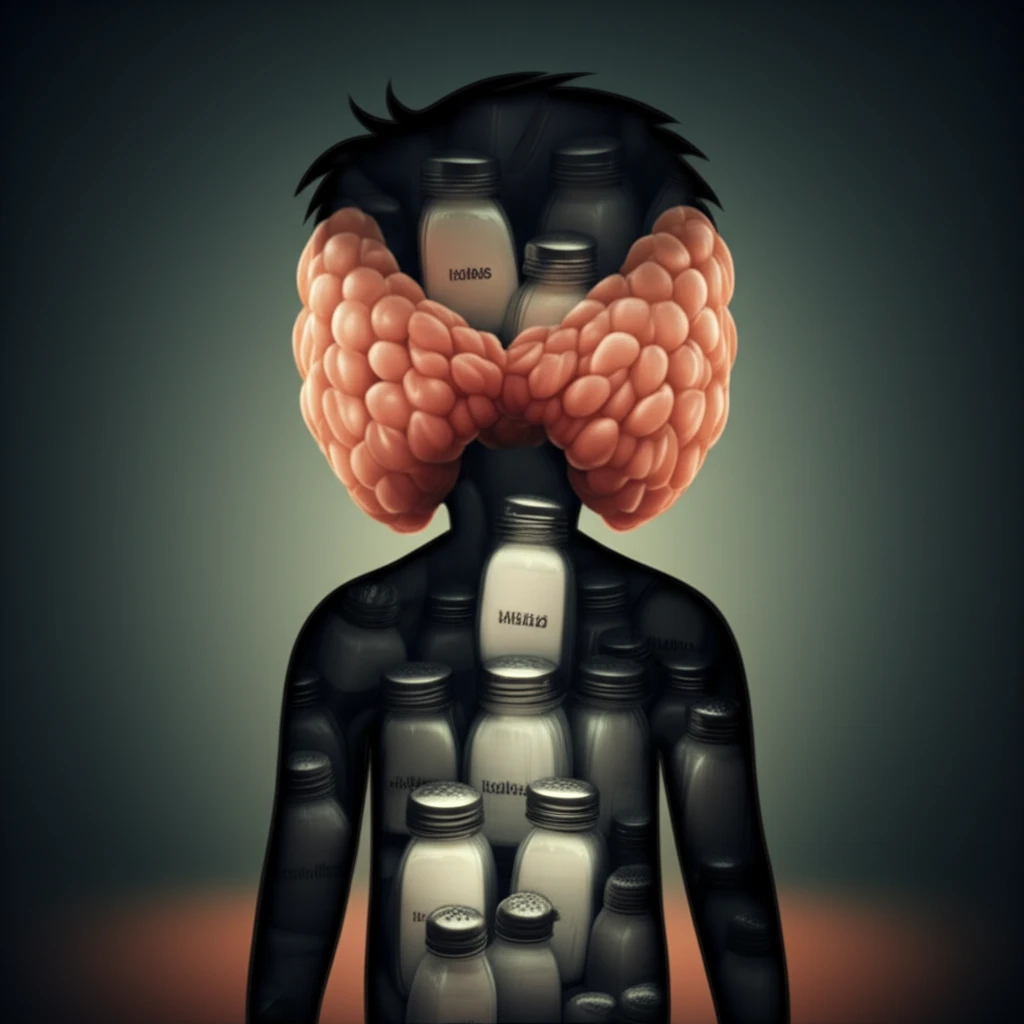
A child's silhouette filled with an iodized salt shaker landscape, against a backdrop of a concerned thyroid gland symbolizing iodine deficiency.

Iodine Levels in Kids: Are We Losing Ground?

"A new study from Brazil raises concerns about a potential resurgence of iodine deficiency in schoolchildren after a decade of progress."


Iodine is an essential nutrient, critical for thyroid hormone production, which in turn regulates growth and metabolism. Without enough iodine, the thyroid can't function properly, leading to a range of health problems, especially in children. These problems can include goiter (an enlarged thyroid gland), hypothyroidism (underactive thyroid), and impaired cognitive development.

For decades, public health initiatives have focused on ensuring adequate iodine intake, primarily through iodized salt. These programs have been largely successful in reducing iodine deficiency worldwide. However, maintaining this success requires constant monitoring and adaptation, as dietary habits and food policies can change.

Now, a new study is casting doubt on whether those gains are sustainable. Researchers in Brazil have found that iodine levels in schoolchildren are dropping, raising concerns about a potential resurgence of deficiency.

The Brazilian Study: A Closer Look

A child's silhouette filled with an iodized salt shaker landscape, against a backdrop of a concerned thyroid gland symbolizing iodine deficiency.

Researchers from the University of Ribeirão Preto and the Faculty of Medicine of Ribeirão Preto USP conducted a study comparing iodine concentrations in kitchen salt and urine samples from schoolchildren in 2007 and 2015. They also assessed thyroid volume through palpation. The study aimed to evaluate the impact of changes in salt iodization regulations in Brazil, which reduced the amount of iodine allowed in salt for domestic consumption from 20-60 mg/kg to 15-45 mg/kg in 2013.

Here's a breakdown of what they found:

  • Declining Iodine Levels: Urinary iodine concentrations in schoolchildren decreased significantly between 2007 and 2015.
  • Increase in Goiter Prevalence: The prevalence of goiter, an enlarged thyroid gland often caused by iodine deficiency, increased in one of the schools studied.
  • Variability in Salt Iodization: While salt samples in 2015 were more uniform in iodine content compared to 2007, some children still had iodine levels below the recommended threshold.
The study highlights a potential link between the change in salt iodization regulations and a decrease in iodine intake among schoolchildren. While the overall iodine intake of the students was generally satisfactory, individual iodine health was compromised, with some children showing urinary iodine levels lower than 100 µg/L and increased thyroid volumes.

What Does This Mean?

This study serves as a warning sign that we can't take the success of iodine fortification for granted. Constant monitoring and adaptation of public health strategies are crucial to ensure that future generations receive enough iodine for healthy development. Further research is needed to determine if this trend is isolated to Ribeirão Preto, or indicative of a broader problem. If the latter, adjustments to salt iodization levels and other interventions may be necessary.

About this Article -

This article was crafted using a human-AI hybrid and collaborative approach. AI assisted our team with initial drafting, research insights, identifying key questions, and image generation. Our human editors guided topic selection, defined the angle, structured the content, ensured factual accuracy and relevance, refined the tone, and conducted thorough editing to deliver helpful, high-quality information.See our About page for more information.

Everything You Need To Know

1

Why is iodine important for children's health?

Iodine is crucial for children because it is essential for the production of thyroid hormones. These hormones regulate growth and metabolism. Without adequate iodine, children can develop goiter, experience hypothyroidism (underactive thyroid), and suffer impaired cognitive development. These health problems can have long-lasting effects on a child's physical and mental well-being, underscoring the importance of ensuring sufficient iodine intake.

2

What did the study in Ribeirão Preto, Brazil, reveal about iodine levels in schoolchildren?

The study conducted in Ribeirão Preto, Brazil, revealed a concerning decline in iodine levels among schoolchildren between 2007 and 2015. Researchers found that urinary iodine concentrations decreased significantly. Furthermore, the prevalence of goiter, an indicator of iodine deficiency, increased in one of the schools studied. These findings suggest a potential reversal of the progress made in iodine intake over the past decade in the region, prompting worries about the children's health.

3

How did changes in salt iodization regulations in Brazil impact iodine levels in schoolchildren?

The study in Ribeirão Preto examined the effect of altered salt iodization regulations in Brazil. In 2013, the amount of iodine allowed in salt for domestic consumption was reduced from 20-60 mg/kg to 15-45 mg/kg. The study suggests a link between this regulatory change and the observed decline in iodine levels among schoolchildren. While salt samples in 2015 were more uniform in iodine content, some children still had iodine levels below the recommended threshold. The study indicates the importance of maintaining the right iodine levels in salt to ensure children receive enough iodine.

4

What are the implications of declining iodine levels in schoolchildren, as seen in the study?

The decline in iodine levels among schoolchildren, as shown in the Ribeirão Preto study, raises several critical implications. Primarily, it signals a potential resurgence of iodine deficiency and its associated health risks. This includes the increased risk of goiter, hypothyroidism, and impaired cognitive development. This study serves as a warning that public health initiatives focusing on iodine fortification, like the use of iodized salt, need continuous monitoring and adjustments to maintain their effectiveness. If the trend observed in Ribeirão Preto extends to other regions, modifications to salt iodization and other public health interventions may become necessary.

5

How can we ensure that children receive enough iodine for healthy development, given the study's findings?

To ensure children receive enough iodine, a multi-faceted approach is needed, as suggested by the study's implications. Constant monitoring of iodine levels in the population, particularly in schoolchildren, is crucial. This requires regular assessments of urinary iodine concentrations and thyroid health. Adjustments to salt iodization regulations may be necessary to ensure adequate iodine intake through this primary source. Furthermore, public health strategies should be adapted to address specific dietary habits and any changes in food policies that could affect iodine intake. Education campaigns about the importance of iodine-rich foods or iodine supplementation may also play a role, especially if iodine levels are significantly compromised.

Newsletter Subscribe

Subscribe to get the latest articles and insights directly in your inbox.