
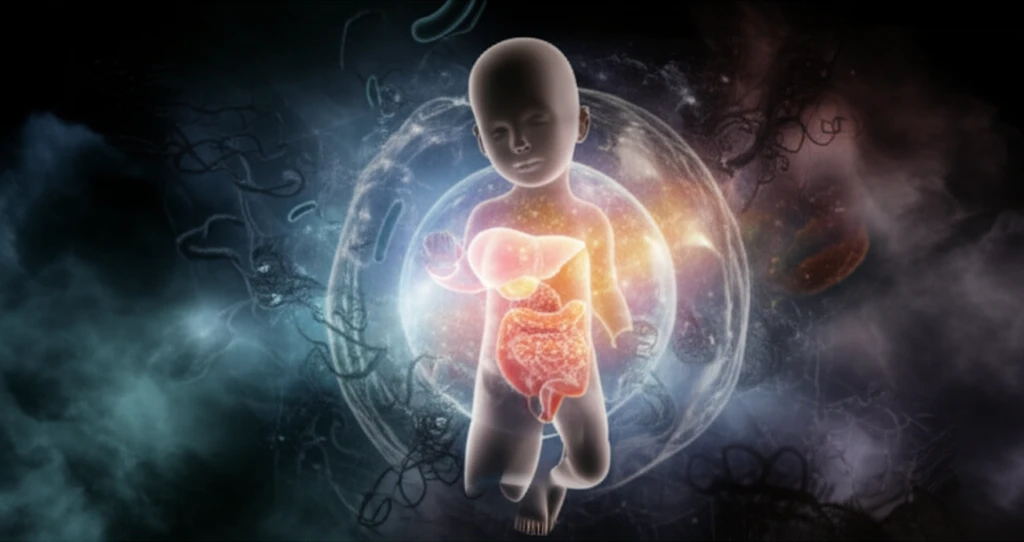
Illustration of a healthy infant's gut microbiome protecting the liver.

Infant Gut Health: Unlocking the Secrets to Prevent Cholestasis

"Groundbreaking research identifies key gut bacteria linked to liver health in infants, paving the way for targeted preventative strategies."


Cholestasis, a significant liver disease in infants, has been on the rise in recent years. This condition disrupts the flow of bile, a digestive fluid produced by the liver, leading to a buildup of bilirubin and other substances in the bloodstream. While the causes of infant cholestasis are diverse, ranging from infections to genetic disorders, a growing body of evidence suggests that the gut microbiota (GM) plays a crucial role in the development and progression of this disease.

The gut microbiota, the complex community of microorganisms residing in our intestines, is increasingly recognized as a key player in human health and disease. These microbes aid in digestion, synthesize vitamins, and modulate the immune system. Emerging research has linked gut microbiota imbalances to various liver diseases, including non-alcoholic steatohepatitis, cirrhosis, and hepatocellular carcinoma. However, the specific role of the gut microbiota in infant cholestasis has remained largely unexplored – until now.

A pioneering study published in "Frontiers in Microbiology" sheds light on the alterations in gut microbiota composition in infants with cholestasis and their correlation with hepatic function. This research offers valuable insights into the intricate relationship between the gut and the liver in early life, opening new avenues for preventative and therapeutic interventions.

What Gut Bacteria are Linked to Infant Cholestasis?

Illustration of a healthy infant's gut microbiome protecting the liver.

The study enrolled 43 cholestatic infants and 37 healthy infants, analyzing their gut microbiota using 16S rDNA sequencing. This advanced technique allows scientists to identify and quantify the different types of bacteria present in the gut.

The results revealed significant differences in the gut microbiota composition between the two groups:

  • Reduced Diversity: Cholestatic infants exhibited significantly lower diversity in their gut microbiota compared to healthy infants. A diverse gut microbiota is generally considered a sign of a healthy gut, as it provides a wider range of beneficial functions.
  • Specific Bacterial Imbalances: Several bacterial genera were found to be differentially enriched in cholestatic infants, including an increase in Streptococcus, Enterococcus, Staphylococcus, Megasphaera, Phyllobacterium, and Megamonas. Conversely, beneficial bacteria such as Bifidobacterium, Bacteroides, Blautia, Faecalibacterium, Roseburia, Anaerostipes, and Collinsella were reduced in cholestatic infants.
  • Disrupted Network: The complex network of interactions between different gut bacteria was also altered in cholestatic infants. In healthy infants, Ruminococcus played a central role in the network, with a positive association between Faecalibacterium and Erysipelatoclostridium. This association was absent in cholestatic infants, indicating a disruption in the communication and cooperation between these bacteria.
These findings suggest that specific imbalances in gut bacteria contribute to the development of infant cholestasis. The reduction in beneficial bacteria and the increase in potentially harmful bacteria may disrupt bile acid metabolism, promote inflammation, and impair liver function.

The Future of Infant Liver Health: Targeting the Gut Microbiota

This study provides a crucial foundation for developing targeted interventions to prevent and treat infant cholestasis by modulating the gut microbiota. Future research should focus on: <ul><li><b>Developing Diagnostic Tools:</b> Identifying specific gut bacteria as biomarkers for early detection of cholestasis.</li><li><b>Designing Targeted Therapies:</b> Creating interventions, such as probiotics or prebiotics, to restore gut microbiota balance and promote healthy liver function.</li><li><b>Personalized Approaches:</b> Tailoring interventions based on the individual gut microbiota composition and clinical characteristics of each infant.</li></ul>By harnessing the power of the gut microbiota, we can pave the way for a future where infant cholestasis is effectively prevented and treated, ensuring optimal liver health and overall well-being for our youngest population.

About this Article -

This article was crafted using a human-AI hybrid and collaborative approach. AI assisted our team with initial drafting, research insights, identifying key questions, and image generation. Our human editors guided topic selection, defined the angle, structured the content, ensured factual accuracy and relevance, refined the tone, and conducted thorough editing to deliver helpful, high-quality information.See our About page for more information.

Everything You Need To Know

1

What is Cholestasis and why is it a concern for infants?

Cholestasis is a significant liver disease in infants, where the flow of bile, a digestive fluid produced by the liver, is disrupted. This leads to a buildup of bilirubin and other substances in the bloodstream. It's a concern because it impairs liver function, which is crucial for overall health and development in infancy. The causes are diverse, but gut microbiota imbalances have emerged as a significant factor.

2

How does the gut microbiota relate to infant Cholestasis, according to the research?

The research indicates a strong connection between gut microbiota imbalances and infant Cholestasis. Specifically, the study found that cholestatic infants have reduced gut microbiota diversity and altered bacterial compositions compared to healthy infants. There's an increase in potentially harmful bacteria such as Streptococcus, Enterococcus, and a decrease in beneficial bacteria like Bifidobacterium and Bacteroides. This disruption is correlated with impaired liver function and bile acid metabolism.

3

What specific bacterial imbalances were identified in infants with Cholestasis?

The study pinpointed several specific bacterial imbalances. Cholestatic infants showed an increase in bacteria like Streptococcus, Enterococcus, Staphylococcus, Megasphaera, Phyllobacterium, and Megamonas. Conversely, there was a reduction in beneficial bacteria such as Bifidobacterium, Bacteroides, Blautia, Faecalibacterium, Roseburia, Anaerostipes, and Collinsella. These imbalances suggest a disrupted gut environment that may contribute to the development and progression of Cholestasis.

4

What are the implications of a disrupted gut microbiota network in infants with Cholestasis?

A disrupted network of interactions between different gut bacteria in cholestatic infants suggests impaired communication and cooperation among these microbes. In healthy infants, Ruminococcus plays a central role with a positive association between Faecalibacterium and Erysipelatoclostridium. This association is absent in cholestatic infants, indicating a loss of beneficial cross-talk. This disruption may impact bile acid metabolism, promote inflammation, and further impair liver function, thereby exacerbating Cholestasis.

5

What are the potential future interventions for infant Cholestasis based on this research?

The study lays the groundwork for targeted interventions by modulating the gut microbiota. Future directions include developing diagnostic tools using specific gut bacteria as biomarkers for early detection of Cholestasis, and designing therapies such as probiotics or prebiotics to restore gut microbiota balance and promote healthy liver function. The ultimate goal is personalized approaches tailored to each infant's gut microbiota composition and clinical characteristics, paving the way for effective prevention and treatment of Cholestasis.

Newsletter Subscribe

Subscribe to get the latest articles and insights directly in your inbox.