
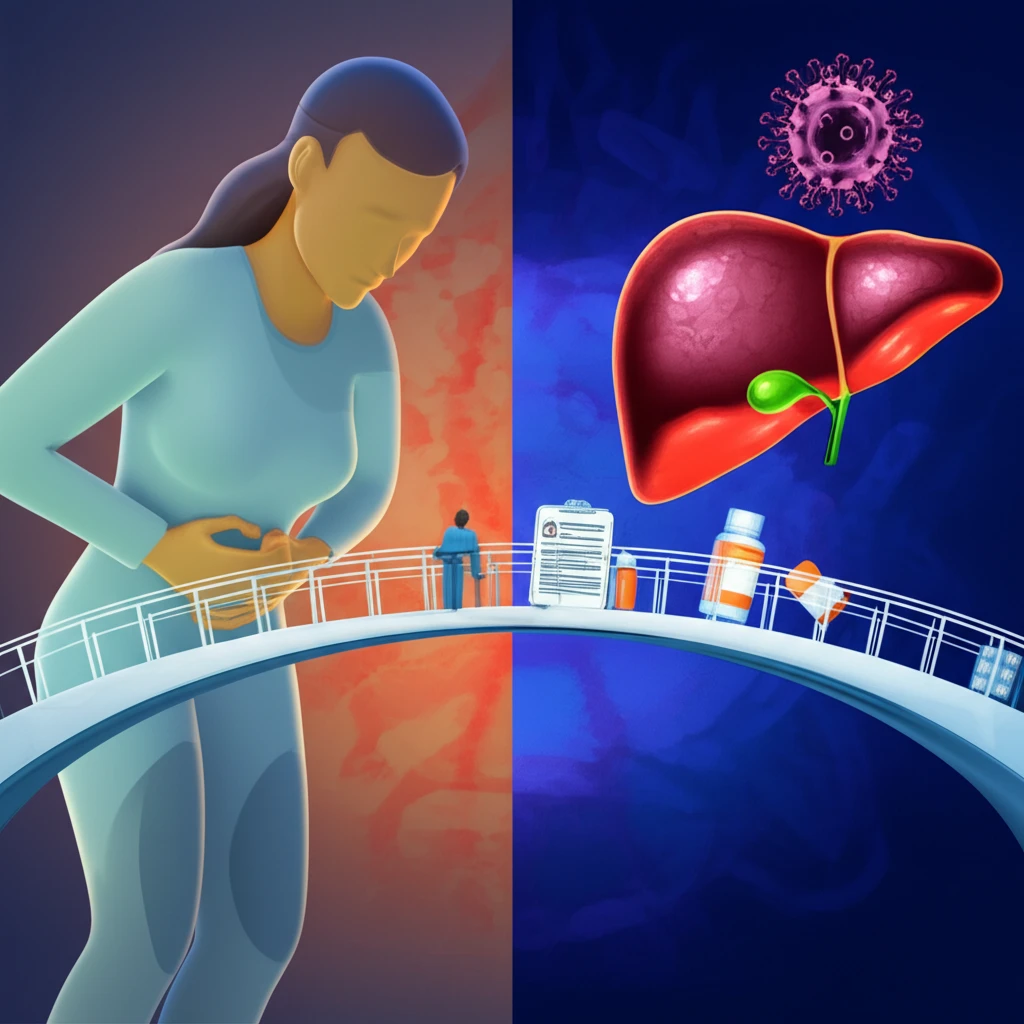
A surreal illustration representing the complexities of IBS and Hepatitis C, with bridges and figures representing various aspects of research, treatment, and patient care.

IBS, Hepatitis C, and Beyond: Unpacking the Complexities of Digestive and Liver Health in the US

"From IBS to Hepatitis C: Exploring the Impact of Chronic Digestive and Liver Conditions and How We're Tackling Them"


Digestive and liver health are often overlooked, yet they're critical components of our overall well-being. Conditions like Irritable Bowel Syndrome (IBS) and Hepatitis C (HCV) significantly affect millions of people worldwide, impacting their quality of life, healthcare costs, and even their access to care. This article delves into the complexities of these conditions, exploring the latest research findings and examining the impact of various treatment strategies and policies.

We'll journey through the latest research, from studies on healthcare utilization in the US Department of Defense population to investigations into the economic burden of Hepatitis C in China. You'll gain insights into how comorbid conditions, such as depression, can exacerbate the challenges faced by IBS patients. Furthermore, we'll look at how access to treatment and medication adherence profoundly affect patient outcomes.

This exploration isn't just about understanding the diseases; it's about grasping the implications they have on individuals, healthcare systems, and public health. By examining the intricate interplay of these factors, we aim to offer a comprehensive understanding of the challenges and potential solutions for these widespread health issues.

Unraveling the Impact of IBS: Healthcare Utilization and Costs

A surreal illustration representing the complexities of IBS and Hepatitis C, with bridges and figures representing various aspects of research, treatment, and patient care.

Irritable Bowel Syndrome (IBS) is a common gastrointestinal disorder that can cause significant distress and impact daily life. Recent studies have highlighted the substantial effects of IBS on healthcare utilization and costs, particularly when comorbid conditions are present. Research conducted on a multi-state Medicaid population reveals that individuals with IBS and depression tend to have significantly higher healthcare utilization rates and costs compared to those with IBS alone. This includes increased inpatient, outpatient, emergency room visits, and prescription drug expenses.

These findings underscore the importance of recognizing and managing comorbid conditions in IBS patients. The presence of depression can lead to a greater demand for healthcare resources, placing an additional financial burden on both the patient and the healthcare system. This underscores the need for better screening and treatment of depression in IBS patients to reduce healthcare utilization and improve patient outcomes. This highlights how the overall physical and mental health intersect to affect not just quality of life, but the financial burden too.

  • Increased healthcare utilization and costs are associated with comorbid depression.
  • More frequent inpatient, outpatient, and emergency room visits.
  • Higher prescription drug expenses.
  • The need for better screening and treatment of comorbid conditions.
Furthermore, studies within the US Department of Defense population underscore the significant healthcare burden associated with IBS. Compared to a matched comparator group, patients with IBS experienced higher rates of inpatient, emergency room, ambulatory, and pharmacy visits, in addition to longer hospital stays. These findings demonstrate the impact IBS can have on healthcare resource allocation and costs, emphasizing the need for effective management strategies and patient support.

Charting a Course for a Healthier Future

Understanding and addressing the challenges of IBS and Hepatitis C requires a multifaceted approach. It calls for increased awareness, early diagnosis, improved access to treatment, and a focus on medication adherence. By examining the latest research, supporting effective policies, and fostering open dialogue, we can make significant strides in improving the lives of those affected by these conditions. This means a combination of medical advancements, effective policies, and, most importantly, patient-centered care that addresses the diverse needs of those battling these diseases.

About this Article -

This article was crafted using a human-AI hybrid and collaborative approach. AI assisted our team with initial drafting, research insights, identifying key questions, and image generation. Our human editors guided topic selection, defined the angle, structured the content, ensured factual accuracy and relevance, refined the tone, and conducted thorough editing to deliver helpful, high-quality information.See our About page for more information.

Everything You Need To Know

1

How does Irritable Bowel Syndrome (IBS) affect healthcare costs and utilization, especially when other conditions are present?

Irritable Bowel Syndrome (IBS) significantly increases healthcare utilization and costs. Studies show that individuals with IBS, particularly those with comorbid conditions like depression, have higher rates of inpatient, outpatient, and emergency room visits. This leads to increased prescription drug expenses and a greater financial burden on both the patient and the healthcare system. Addressing comorbid conditions through better screening and treatment is crucial for reducing healthcare utilization and improving patient outcomes. Additionaly, beyond direct healthcare costs, lost productivity and decreased quality of life can contribute to the economic burden of IBS.

2

What impact does Hepatitis C (HCV) have on healthcare systems and patient outcomes, and what role do treatment access and medication adherence play?

Hepatitis C (HCV) poses a substantial burden on healthcare systems, impacting patient outcomes. Effective management of HCV requires access to treatment and consistent medication adherence. When patients have limited access to treatment or struggle to adhere to medication regimens, the disease can progress, leading to liver damage, cirrhosis, and even liver cancer, thereby increasing healthcare costs and negatively affecting patient survival and quality of life. This highlights the importance of policies that ensure equitable access to HCV treatment and support patient adherence to medication schedules. While this text does not provide specifics on the science of HCV treatment, improvements in access and adherence will drive improved outcomes.

3

What specific types of healthcare visits are more frequent for individuals with Irritable Bowel Syndrome (IBS), according to research on the US Department of Defense population?

Research on the US Department of Defense population indicates that patients with Irritable Bowel Syndrome (IBS) experience higher rates of inpatient, emergency room, ambulatory, and pharmacy visits compared to those without IBS. Additionally, these patients tend to have longer hospital stays. These findings highlight the significant impact of IBS on healthcare resource allocation and costs, emphasizing the need for effective management strategies and patient support programs to address the unique healthcare needs of this population.

4

What strategies can be implemented to improve the lives of individuals affected by Irritable Bowel Syndrome (IBS) and Hepatitis C (HCV)?

Improving the lives of individuals affected by Irritable Bowel Syndrome (IBS) and Hepatitis C (HCV) requires a multifaceted approach. Key strategies include increased awareness and early diagnosis to facilitate timely intervention, improved access to treatment to prevent disease progression and reduce complications, and a strong focus on medication adherence to ensure treatment effectiveness. Effective policies, patient-centered care, and open dialogue are also essential components of a comprehensive strategy to address the diverse needs of those battling these diseases. Further research into novel therapies and personalized treatment approaches may also offer hope for improved outcomes in the future.

5

Why is it important to address comorbid conditions like depression in patients with Irritable Bowel Syndrome (IBS)?

Addressing comorbid conditions like depression in patients with Irritable Bowel Syndrome (IBS) is crucial because the presence of depression can significantly increase healthcare utilization and costs. Individuals with both IBS and depression tend to have more frequent inpatient, outpatient, and emergency room visits, as well as higher prescription drug expenses. By recognizing and managing depression in IBS patients, healthcare providers can reduce the demand for healthcare resources, alleviate the financial burden on both the patient and the healthcare system, and ultimately improve patient outcomes and overall quality of life. Integrated treatment approaches that address both the physical and mental health aspects of IBS are therefore essential.

Newsletter Subscribe

Subscribe to get the latest articles and insights directly in your inbox.