
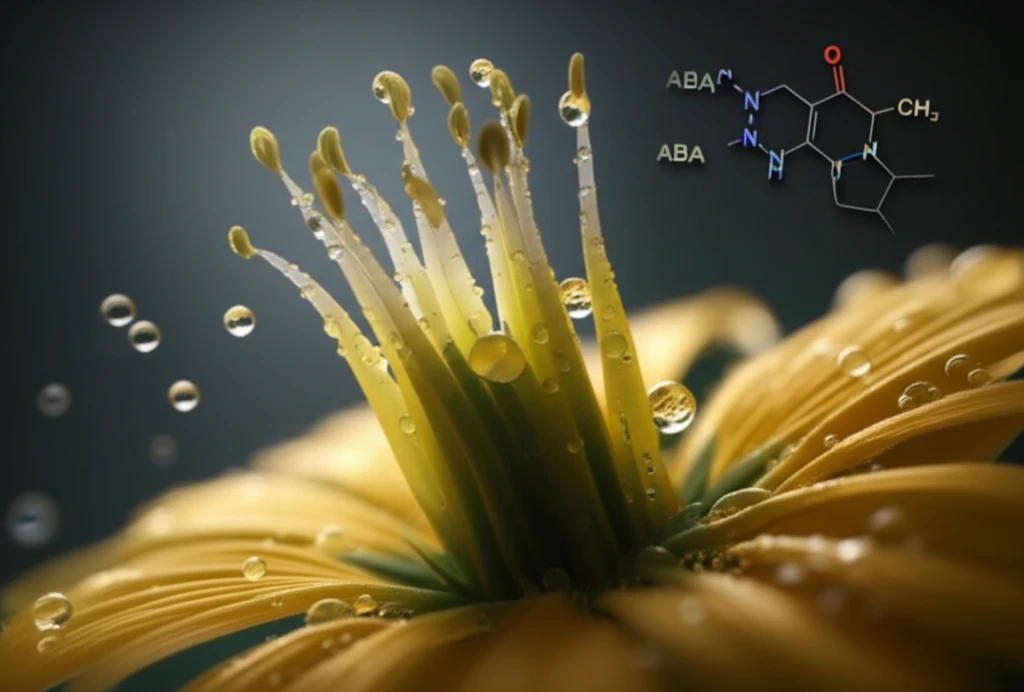
Arabidopsis flower with glistening papillae and ABA molecule.

Humidity Hacks: How Plants Adapt for Pollination Success

"Discover how abscisic acid (ABA) helps stigmatic papillae adjust to humidity, ensuring future generations of plants."


Reproduction is key for all living things to pass their genes on. Plants have developed intricate fertilization systems. In flowering plants, the process involves the male gametophyte (pollen) meeting the female gametophyte within the gynoecium, which includes the stigma, style, and ovary.

The stigma, particularly its papillae (specialized cells on the surface), plays a vital role in capturing pollen. In Brassicaceae plants, like Arabidopsis thaliana, these papillae are dry and unicellular. Scientists have found that papillae express over 15,000 genes. However, the exact mechanisms of papilla development remain unclear.

A new study sheds light on how Arabidopsis thaliana papillae can change their length in response to humidity. Genetic analysis suggests that abscisic acid (ABA), a stress hormone, plays a central role in this adaptation. These findings suggest that papillae elongation is a flexible process that helps plants adjust to their environment.

Unlocking the Secrets of Papillae Development: How Humidity Changes Everything

Arabidopsis flower with glistening papillae and ABA molecule.

Researchers observed that Arabidopsis thaliana plants grown in different conditions showed variations in papilla length. Suspecting humidity levels, they grew plants in controlled environments with 100% and 50% humidity. Papillae were significantly longer in high-humidity conditions.

To maintain consistent conditions, the team incubated Arabidopsis thaliana inflorescences on agar medium in petri dishes with high or normal humidity. Papillae length increased under high humidity after anthesis stage indicating flexibility after blooming.

  • Gynoecium Autonomy: Papilla elongation is controlled within the gynoecium itself.
  • Anther Cleavage: Under normal humidity, anthers split open. High humidity inhibits this process, potentially impacting pollination.
  • Pollen Viability: Pollen grains remain viable regardless of humidity levels, suggesting the papilla’s adaptation is more about capture than pollen health.
Experiments involving hand-pollination and removal of floral organs confirmed that papilla elongation is a gynoecium-autonomous response. This highlights the papillae's ability to adapt independently.

The Bigger Picture: ABA's Role and Future Implications

This study highlights the importance of stigmatic papillae in plant reproduction and presents a new understanding of how they adapt to environmental changes. The involvement of abscisic acid (ABA) as a regulator of papillae elongation opens new avenues for research.

Transcriptome data reveals that the ABA biosynthesis and signaling pathways are active in papilla cells, enabling rapid responses to abiotic stress. While rate-limiting NCED enzymes and downstream biosynthesis enzymes aren't activated, an ABA-mediated response is triggered when a precursor is converted into an active form.

This research offers insights into plant adaptation and could have implications for agriculture, helping us understand how plants can thrive in changing environments. Further studies could explore how this knowledge can be used to develop crops that are more resilient to stress.

About this Article -

This article was crafted using a human-AI hybrid and collaborative approach. AI assisted our team with initial drafting, research insights, identifying key questions, and image generation. Our human editors guided topic selection, defined the angle, structured the content, ensured factual accuracy and relevance, refined the tone, and conducted thorough editing to deliver helpful, high-quality information.See our About page for more information.

This article is based on research published under:

DOI-LINK: 10.1266/ggs.18-00025, Alternate LINK

Title: Abscisic Acid-Mediated Developmental Flexibility Of Stigmatic Papillae In Response To Ambient Humidity In ≪I≫Arabidopsis Thaliana≪/I≫

Subject: Genetics

Journal: Genes & Genetic Systems

Publisher: Genetics Society of Japan

Authors: Seiji Takeda, Kohki Ochiai, Yasuaki Kagaya, Wataru Egusa, Hiroaki Morimoto, Satomi Sakazono, Masaaki Osaka, Moe Nabemoto, Go Suzuki, Masao Watanabe, Keita Suwabe

Published: 2018-10-01

Everything You Need To Know

1

What is the main focus of this research?

The research focuses on *Arabidopsis thaliana*, a type of plant, and how its stigmatic papillae adapt to different humidity levels. These papillae, specialized cells on the stigma, are crucial for capturing pollen, a key step in plant reproduction. The study reveals that the length of these papillae changes depending on humidity, with longer papillae observed in high-humidity environments. This adaptation is critical for successful pollination and the continuation of the plant's species.

2

What is the role of abscisic acid (ABA) in this process?

The stress hormone abscisic acid (ABA) plays a central role in this adaptation. Experiments indicate that ABA regulates the elongation of the stigmatic papillae in *Arabidopsis thaliana*. This hormone is vital because it enables the papillae to adjust their length in response to changes in humidity, thus optimizing their ability to capture pollen and facilitate successful fertilization. The discovery of ABA's role opens new avenues for research into how plants cope with environmental stressors.

3

Why are these findings significant for agriculture?

The study's findings have implications for agriculture because understanding how plants like *Arabidopsis thaliana* adapt to environmental changes, such as humidity, could lead to strategies for improving crop pollination and resilience. The research shows that the gynoecium, including the stigma with its papillae, is capable of adapting independently to environmental changes. By understanding how the process works, we can potentially develop methods to enhance plant reproductive success in various conditions, which is crucial for food security.

4

What is the importance of the gynoecium in this context?

The gynoecium is the female reproductive part of a flower, consisting of the stigma, style, and ovary. The stigma, particularly its papillae, plays a crucial role in capturing pollen grains. This process is essential for fertilization, where the male gametophyte (pollen) meets the female gametophyte within the ovary. This research highlights that the papillae, which are part of the gynoecium, can independently adapt to environmental changes such as humidity, showing the importance of this female reproductive structure.

5

What does gynoecium autonomy mean in relation to the papillae?

Gynoecium autonomy means that papilla elongation is controlled within the gynoecium itself, independent of other floral parts. This means that the papillae have the intrinsic ability to respond to environmental cues, such as humidity levels, and adjust their length accordingly. Anther cleavage refers to the process where the anthers split open to release pollen, which is essential for pollination. High humidity inhibits this process in some cases. Pollen viability is maintained regardless of humidity levels, indicating the papillae's adaptation is more about capture efficiency than pollen health.

Newsletter Subscribe

Subscribe to get the latest articles and insights directly in your inbox.