
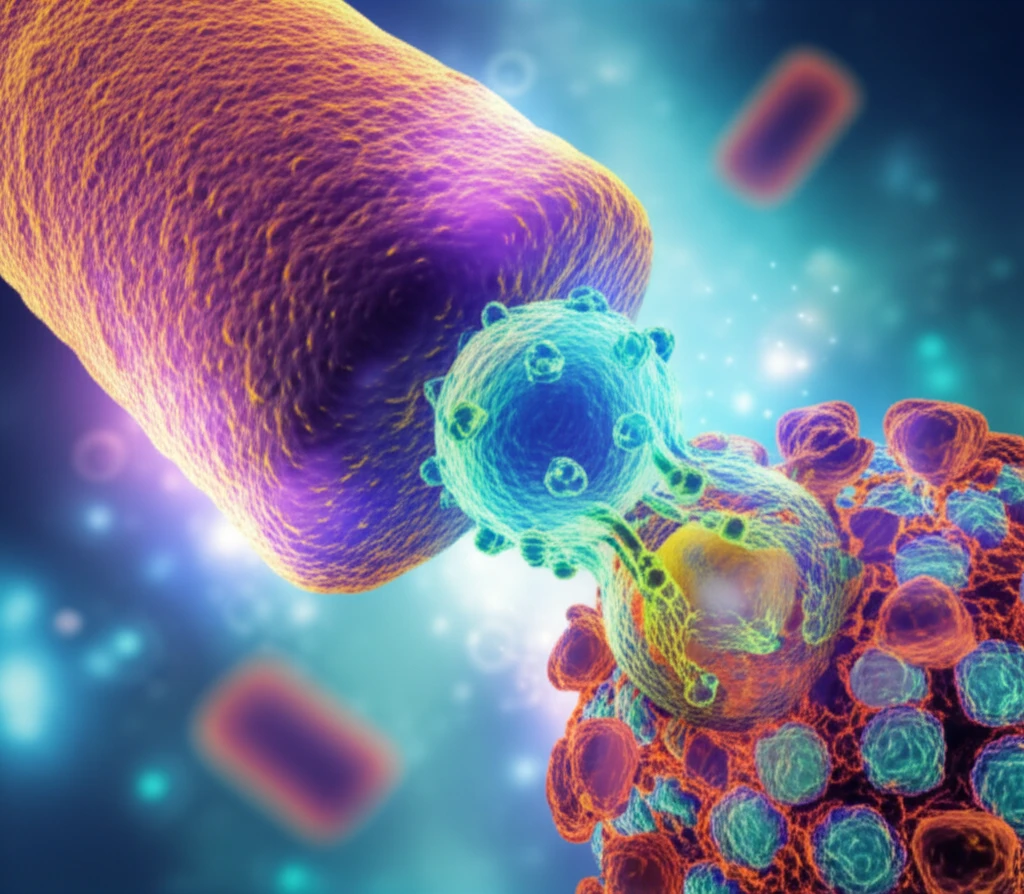
Digital illustration depicting the HTLV-1 virus infecting a human T-cell.

HTLV-1 Infection: Unveiling the Link Between a Rare Virus and Your Health

"New research sheds light on the complex relationship between the HTLV-1 virus, a rare infection, and its impact on the body, offering insights into potential health implications."


In the vast landscape of health concerns, some threats remain hidden in the shadows, often overlooked by the mainstream. One such concern is the human T-cell lymphotropic virus type 1, or HTLV-1, a retrovirus that, while rare, has the potential to significantly impact the lives of those infected. Unlike more widely known viruses, HTLV-1 operates in the background for many, but for some, it can lead to severe health complications. Recent research has illuminated some of the mechanisms at play, offering new insights into how this virus interacts with the human body.

This article delves into the world of HTLV-1, exploring the latest findings on how this virus operates and the potential implications for your health. We'll dissect the science behind HTLV-1 infection, the health conditions it's linked to, and what these insights might mean for those affected. Our goal is to provide a clear, accessible understanding of a complex topic, empowering you with knowledge that could be critical for your well-being or the well-being of someone you care about.

This article is for informational purposes only, and does not provide medical advice. Always consult with a qualified healthcare professional for any health concerns or before making any decisions related to your health or treatment.

Understanding HTLV-1: What It Is and How It Works

Digital illustration depicting the HTLV-1 virus infecting a human T-cell.

HTLV-1 is a retrovirus, meaning it uses RNA as its genetic material, which it then converts into DNA to insert into the host cell's genome. It's primarily transmitted through blood, sexual contact, and from mother to child through breastfeeding. The virus infects T-cells, a type of white blood cell crucial to the immune system. Once inside these cells, HTLV-1 can lie dormant for years, or even decades, before causing any noticeable symptoms. This latency period makes it challenging to diagnose and understand the full scope of its effects.

The prevalence of HTLV-1 varies geographically, with higher rates in certain regions, including parts of Japan, the Caribbean, and Africa. The virus is not as common as other viral infections like HIV, but its potential health consequences make it a significant concern for those affected. One of the key aspects of HTLV-1's impact lies in its ability to disrupt normal cellular functions, leading to chronic inflammation and, in some cases, severe diseases. This includes adult T-cell leukemia/lymphoma (ATLL), a rare and aggressive form of cancer, and HTLV-1-associated myelopathy/tropical spastic paraparesis (HAM/TSP), a progressive neurological disorder.

  • Transmission: Primarily through blood, sexual contact, and breastfeeding.
  • Target: Infects T-cells, a critical component of the immune system.
  • Latency: Can remain dormant for years before causing symptoms.
  • Geographic Distribution: More common in specific regions like Japan, the Caribbean, and Africa.
  • Health Risks: Linked to ATLL and HAM/TSP, among other conditions.
Recent studies have begun to unravel the complex molecular mechanisms through which HTLV-1 exerts its effects. These studies focus on viral proteins that interfere with cellular processes, leading to chronic inflammation, immune dysfunction, and, ultimately, disease. Understanding these mechanisms is crucial for developing effective treatments and preventative measures.

The Path Forward: Research and Awareness

The journey to understanding and managing HTLV-1 is ongoing. Continued research into the virus's mechanisms, its impact on the body, and potential treatments will be crucial. Increased awareness among healthcare professionals and the general public is also essential for early detection and effective care. If you or someone you know is at risk or has been diagnosed with HTLV-1, consult with your healthcare provider for personalized guidance and support. Together, we can advance our understanding of this rare but significant health concern, improving the lives of those affected.

About this Article -

This article was crafted using a human-AI hybrid and collaborative approach. AI assisted our team with initial drafting, research insights, identifying key questions, and image generation. Our human editors guided topic selection, defined the angle, structured the content, ensured factual accuracy and relevance, refined the tone, and conducted thorough editing to deliver helpful, high-quality information.See our About page for more information.

This article is based on research published under:

DOI-LINK: 10.1002/jmv.25371, Alternate LINK

Title: Thioredoxin Reductase Gene Expression And Activity Among Human T‐Cell Lymphotropic Virus Type 1–Infected Patients

Subject: Infectious Diseases

Journal: Journal of Medical Virology

Publisher: Wiley

Authors: Neda Yaghoubi, Masoud Youssefi, Seyed Isaac Hashemy, Houshang Rafat Panah, Barat Ali Mashkani, Farnaz Zahedi Avval

Published: 2018-12-10

Everything You Need To Know

1

What exactly is HTLV-1 and how does it operate differently from other viruses?

HTLV-1, or human T-cell lymphotropic virus type 1, is a retrovirus. Unlike many other viruses that use DNA, HTLV-1 uses RNA as its genetic material. It converts this RNA into DNA once inside a host cell. Then, it integrates this DNA into the host cell's genome, specifically targeting T-cells, a critical part of the immune system. This integration allows HTLV-1 to remain dormant for extended periods, complicating diagnosis and treatment, setting it apart from viruses with more immediate effects.

2

How is HTLV-1 transmitted and what are the primary risk factors I should be aware of?

HTLV-1 is primarily transmitted through three main routes: through blood, such as via shared needles or transfusions; through sexual contact; and from mother to child, particularly through breastfeeding. The key risk factors to be aware of include living in or traveling to regions with higher prevalence, such as parts of Japan, the Caribbean, and Africa. Other risks include engaging in unprotected sexual activity and sharing needles. It's important to note that HTLV-1 is not as widespread as other viral infections like HIV, but awareness of these transmission routes is crucial for prevention.

3

What are the potential long-term health consequences associated with HTLV-1 infection?

While many individuals infected with HTLV-1 may remain asymptomatic for years, the virus can lead to severe health complications in some cases. The two most notable conditions associated with HTLV-1 are adult T-cell leukemia/lymphoma (ATLL), an aggressive form of cancer affecting T-cells, and HTLV-1-associated myelopathy/tropical spastic paraparesis (HAM/TSP), a progressive neurological disorder that affects the spinal cord. HTLV-1 can disrupt normal cellular functions, leading to chronic inflammation and immune dysfunction, which contribute to the development of these conditions. However, it is important to note that only a small percentage of those infected with HTLV-1 will develop these severe diseases.

4

What is the significance of T-cells in the context of HTLV-1 infection?

T-cells are a critical component of the immune system, responsible for coordinating immune responses and directly attacking infected cells. HTLV-1 specifically targets these T-cells, inserting its genetic material into them and disrupting their normal function. This disruption can lead to a variety of health problems, including immune dysfunction, chronic inflammation, and the development of diseases like adult T-cell leukemia/lymphoma (ATLL) and HTLV-1-associated myelopathy/tropical spastic paraparesis (HAM/TSP). The virus's ability to infect and alter T-cells underscores its potential to cause significant harm to the immune system and overall health.

5

What kind of research is being done on HTLV-1 and what is the focus to better understand and treat the infection?

Current research on HTLV-1 is focused on unraveling the complex molecular mechanisms through which the virus exerts its effects. Scientists are studying viral proteins that interfere with cellular processes, leading to chronic inflammation, immune dysfunction, and diseases like ATLL and HAM/TSP. A key area of focus is understanding how HTLV-1 disrupts normal cellular functions and triggers chronic inflammation. This work aims to identify potential targets for new therapies and preventative measures. Increased awareness among healthcare professionals and the general public is also essential for early detection and effective care. This includes research into effective treatments.

Newsletter Subscribe

Subscribe to get the latest articles and insights directly in your inbox.