
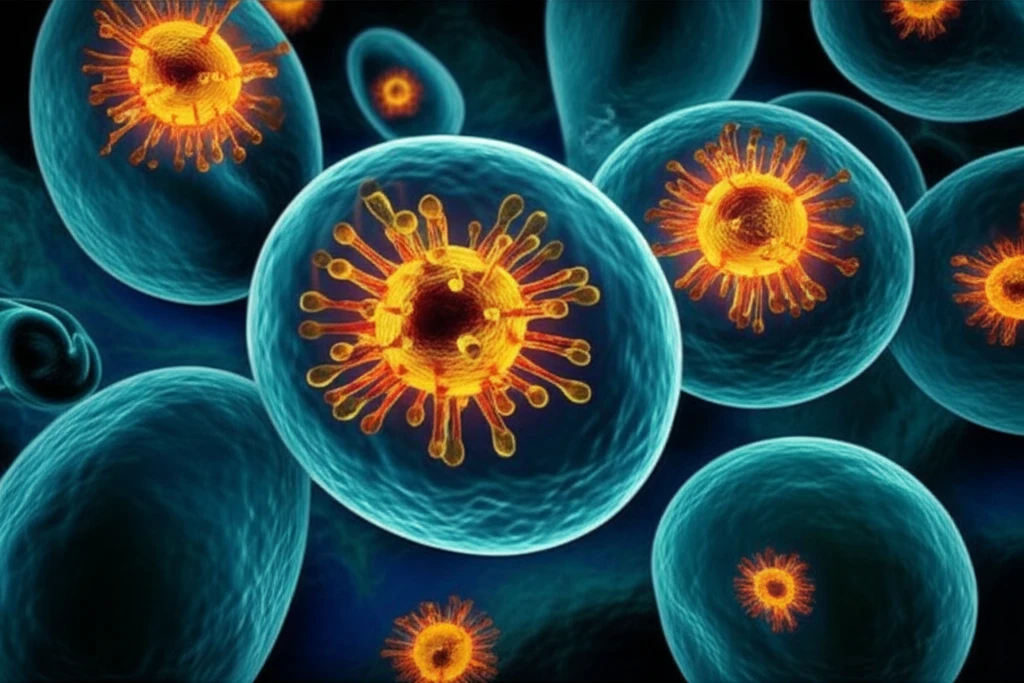
Microscopic view of cancer cells intertwined with a glowing HPV virus.

HPV and Oropharyngeal Cancer: What You Need to Know

"Unveiling the Link Between HPV, Prognosis, and Cutting-Edge Treatments"


Oropharyngeal cancer (OPC), a type of head and neck cancer (HNC), is increasingly linked to the human papillomavirus (HPV). Unlike traditional HNC, often associated with tobacco and alcohol use, HPV-positive OPC presents a distinct clinical profile, molecular biology, and a more favorable prognosis. This has led to significant changes in how doctors approach treatment.

This article explores the critical role HPV plays in OPC, focusing on how it affects prognosis and treatment strategies. We'll break down the science, treatment advancements, and what this means for those affected by this condition.

Reader Intent: Gain a clear understanding of how HPV impacts oropharyngeal cancer, its prognosis, and the latest treatment options available. Core Value: Provide accessible, actionable insights into the role of HPV in OPC, empowering readers with knowledge about diagnosis, treatment, and future directions.

HPV-Positive OPC: A Game Changer

Microscopic view of cancer cells intertwined with a glowing HPV virus.

HPV-positive OPC is no longer viewed as simply another type of head and neck cancer. It's now recognized as a distinct disease with unique characteristics. Traditionally, head and neck cancers were primarily linked to heavy alcohol and tobacco use. However, HPV-positive OPC often affects a different demographic—individuals with less exposure to these risk factors. Instead, it's strongly associated with HPV infection, particularly HPV16.

What makes HPV-positive OPC different?

  • Better prognosis: Patients with HPV-positive OPC tend to respond more favorably to treatment and have higher survival rates.
  • Different risk factors: The primary risk factor is HPV infection, contrasting with tobacco and alcohol for HPV-negative cancers.
  • Molecular distinctions: HPV-positive tumors exhibit unique molecular mechanisms that drive cancer development.
Recognizing these differences is essential because it directly impacts treatment decisions. The improved prognosis has spurred exploration of treatment de-intensification strategies, aiming to reduce side effects without sacrificing effectiveness.

The Future of HPV-Positive OPC Treatment

The recognition of HPV's role in oropharyngeal cancer has revolutionized the way this disease is understood and treated. The future holds promise for even more refined and personalized approaches.

Key takeaways to remember:

<ul><li>HPV-positive OPC is a distinct cancer type with a better prognosis.</li><li>Treatment strategies are evolving to reduce toxicity while maintaining effectiveness.</li><li>Ongoing research is exploring biomarkers and personalized approaches to optimize treatment.</li></ul>

About this Article -

This article was crafted using a human-AI hybrid and collaborative approach. AI assisted our team with initial drafting, research insights, identifying key questions, and image generation. Our human editors guided topic selection, defined the angle, structured the content, ensured factual accuracy and relevance, refined the tone, and conducted thorough editing to deliver helpful, high-quality information.See our About page for more information.

This article is based on research published under:

DOI-LINK: 10.1007/s10555-017-9686-9, Alternate LINK

Title: The Role Of Human Papillomavirus On The Prognosis And Treatment Of Oropharyngeal Carcinoma

Subject: Cancer Research

Journal: Cancer and Metastasis Reviews

Publisher: Springer Science and Business Media LLC

Authors: Nicholas Fung, Farhoud Faraji, Hyunseok Kang, Carole Fakhry

Published: 2017-08-15

Everything You Need To Know

1

How does HPV-positive oropharyngeal cancer differ from traditional head and neck cancers, and why is this distinction important?

Oropharyngeal cancer (OPC) that is positive for Human Papillomavirus (HPV) is distinct from head and neck cancer (HNC) traditionally linked to tobacco and alcohol use. HPV-positive OPC is associated with a more favorable prognosis, different risk factors (primarily HPV infection, especially HPV16), and unique molecular biology. These distinctions have led to changes in treatment approaches, including exploring treatment de-intensification strategies to reduce side effects while maintaining effectiveness. This is crucial because it acknowledges that HPV-positive OPC behaves differently and responds better to treatment than HPV-negative OPC.

2

What are the primary risk factors for HPV-positive oropharyngeal cancer, and how do they compare to the risk factors for other head and neck cancers?

Unlike traditional head and neck cancers, where tobacco and alcohol use are primary risk factors, HPV-positive oropharyngeal cancer (OPC) is primarily linked to Human Papillomavirus (HPV) infection, particularly HPV16. This means that individuals with less exposure to tobacco and alcohol can still develop OPC if they have an HPV infection. The prognosis is also generally better for HPV-positive OPC compared to HPV-negative OPC, which is more associated with tobacco and alcohol. This understanding shifts the focus towards HPV prevention and early detection in oropharyngeal cancer prevention.

3

What are 'treatment de-intensification strategies' in the context of HPV-positive oropharyngeal cancer, and what is their purpose?

The improved prognosis associated with HPV-positive oropharyngeal cancer (OPC) has led to the exploration of treatment de-intensification strategies. The goal is to reduce the side effects of treatment without compromising its effectiveness. This may involve using lower doses of radiation or chemotherapy or exploring alternative treatment combinations. This strategy aims to balance the need to eradicate the cancer with the desire to minimize long-term complications and improve the patient's quality of life.

4

In what ways do the molecular mechanisms of HPV-positive oropharyngeal cancer differ, and what are the implications for treatment?

Human Papillomavirus (HPV)-positive oropharyngeal cancer (OPC) exhibits distinct molecular mechanisms that drive cancer development compared to HPV-negative OPC. While the specifics aren't detailed here, these molecular distinctions play a crucial role in the development and progression of the cancer. Understanding these unique molecular drivers is essential for developing targeted therapies that can specifically attack HPV-positive OPC cells while sparing healthy cells. Future research may unveil new drug targets based on these distinctions, leading to more effective and personalized treatments.

5

What do experts envision for the future of HPV-positive oropharyngeal cancer treatment, and what advancements are expected?

Future treatments for HPV-positive oropharyngeal cancer (OPC) are likely to be more refined and personalized. This includes tailoring treatment approaches based on individual risk factors, tumor characteristics, and response to therapy. Advances in understanding the molecular biology of HPV-positive OPC may lead to the development of targeted therapies that specifically attack cancer cells while minimizing side effects. Clinical trials are ongoing to evaluate new treatment strategies and optimize existing ones. The focus is on improving survival rates and quality of life for patients with HPV-positive OPC.

Newsletter Subscribe

Subscribe to get the latest articles and insights directly in your inbox.