
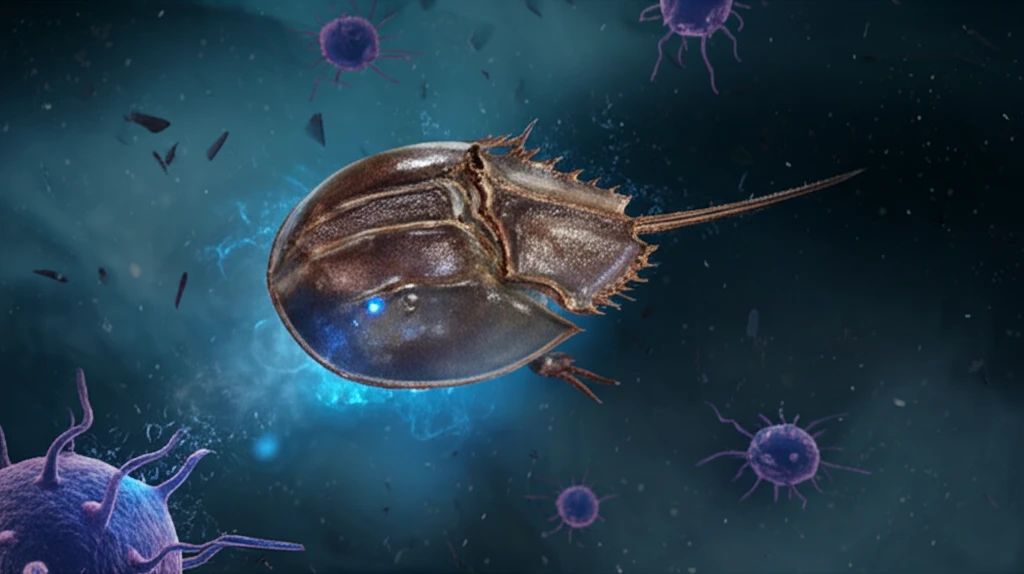
Horseshoe crab with blue blood destroying cancer cells.

Horseshoe Crab Blood: The Unexpected Key to Fighting Cancer?

"Scientists discover a novel peptide from horseshoe crab blood with potent cytotoxic effects, opening new doors for cancer research and treatment."


For centuries, horseshoe crabs have patrolled the ocean's depths, their unique blue blood playing a crucial role in modern medicine. While their blood is well-known for its use in detecting bacterial contamination in pharmaceuticals, a recent study has uncovered another potential application: fighting cancer.

Published in the journal Marine Drugs, the study focuses on polyphemusin III, a novel antimicrobial peptide found in the blood of the horseshoe crab Limulus polyphemus. Researchers have found that this peptide exhibits potent cytotoxic activity against a range of human cancer cells, potentially paving the way for new cancer therapies.

This article delves into the groundbreaking research, exploring the science behind polyphemusin III, its potential benefits, and the ethical considerations surrounding the use of horseshoe crab blood in medicine.

What Makes Polyphemusin III a Potential Cancer Fighter?

Horseshoe crab with blue blood destroying cancer cells.

Polyphemusin III belongs to a family of β-hairpin cationic antimicrobial peptides, known for their ability to combat bacteria, fungi, viruses, and protozoans. What sets polyphemusin III apart is its unique amino acid sequence, which gives it a strong positive charge. This positive charge allows it to interact with the negatively charged membranes of cancer cells, disrupting their integrity and leading to cell death.

The study evaluated polyphemusin III's effectiveness against various bacterial strains and human cell cultures, including cancer, transformed, and normal cells. The results revealed that polyphemusin III exhibited significant cytotoxic activity, particularly against human leukemia cells (HL-60), at concentrations lower than 10 µM (micromolar).

  • Potent Cytotoxicity: Polyphemusin III demonstrated strong cytotoxic effects against various human cancer cell lines.
  • Selective Action: It effectively targets cancer cells while showing similar or lower effects on normal cells.
  • Unique Mechanism: The peptide disrupts the plasma membrane of cancer cells, leading to cell death through a non-apoptotic pathway.
Further experiments showed that polyphemusin III caused rapid permeabilization of the cytoplasmic membrane in HL-60 cells. This means the peptide quickly compromised the cell's outer layer, leading to its demise. Notably, this cell death occurred independently of caspase activation, a process typically associated with apoptosis (programmed cell death). This suggests that polyphemusin III induces cell death through a different, necrotic-like mechanism.

A Promising Avenue, but Ethical Considerations Remain

The discovery of polyphemusin III's cytotoxic potential opens up exciting new avenues for cancer research and treatment. Its unique mechanism of action and selective toxicity make it a promising candidate for developing novel cancer therapies. However, it's important to acknowledge the ethical considerations surrounding the use of horseshoe crab blood. The harvesting of their blood can impact their populations, so sustainable practices are crucial to ensure the long-term survival of these ancient creatures while harnessing their medicinal benefits.

About this Article -

This article was crafted using a human-AI hybrid and collaborative approach. AI assisted our team with initial drafting, research insights, identifying key questions, and image generation. Our human editors guided topic selection, defined the angle, structured the content, ensured factual accuracy and relevance, refined the tone, and conducted thorough editing to deliver helpful, high-quality information.See our About page for more information.

This article is based on research published under:

DOI-LINK: 10.3390/md16120466, Alternate LINK

Title: Cytotoxic Potential Of The Novel Horseshoe Crab Peptide Polyphemusin Iii

Subject: Drug Discovery

Journal: Marine Drugs

Publisher: MDPI AG

Authors: Mariana Marggraf, Pavel Panteleev, Anna Emelianova, Maxim Sorokin, Ilia Bolosov, Anton Buzdin, Denis Kuzmin, Tatiana Ovchinnikova

Published: 2018-11-26

Everything You Need To Know

1

What is the significance of polyphemusin III in cancer research?

Polyphemusin III, a peptide found in the blood of the horseshoe crab Limulus polyphemus, is significant because it exhibits strong cytotoxic activity against human cancer cells. This means it can kill cancer cells. The research indicates that Polyphemusin III specifically targets cancer cells, showing less effect on normal cells, which makes it a promising candidate for developing new cancer therapies. Its unique mechanism of action, disrupting the plasma membrane of cancer cells, provides a novel approach to cancer treatment, distinct from traditional methods.

2

How does polyphemusin III work to kill cancer cells?

Polyphemusin III disrupts the integrity of cancer cells. It achieves this by exploiting its unique amino acid sequence that gives it a strong positive charge. This positive charge allows it to interact with the negatively charged membranes of cancer cells, causing rapid permeabilization of the cytoplasmic membrane. This interaction compromises the cell's outer layer, leading to cell death through a necrotic-like mechanism, independent of caspase activation, which is typically associated with apoptosis (programmed cell death).

3

What are the potential benefits of using horseshoe crab blood components in cancer treatment?

The potential benefits of using components like polyphemusin III from horseshoe crab blood in cancer treatment include a novel mechanism of action that selectively targets cancer cells while exhibiting reduced effects on normal cells. This selectivity minimizes side effects. It opens new avenues for therapies, potentially effective against cancers resistant to existing treatments. The cytotoxic activity of polyphemusin III against cancer cells, particularly human leukemia cells (HL-60), suggests its potential as a potent therapeutic agent.

4

What are the ethical considerations associated with using horseshoe crab blood in medicine?

The primary ethical consideration revolves around the harvesting of horseshoe crab blood. This process can impact their populations, as it involves extracting blood, a practice that can be stressful and potentially lethal for the crabs. Therefore, sustainable practices are essential to ensure the long-term survival of these ancient creatures. Balancing the benefits of using horseshoe crab blood components, such as polyphemusin III, in medicine with the need to protect the horseshoe crab population requires careful management and conservation efforts.

5

Besides fighting cancer, what is horseshoe crab blood known for in medicine?

Horseshoe crab blood is primarily known for its use in detecting bacterial contamination in pharmaceuticals. The blood contains a substance that reacts to bacterial toxins, making it invaluable for ensuring the safety of injectable drugs, vaccines, and medical devices. This function has been a cornerstone of modern medicine, ensuring that these products are free from harmful bacterial contaminants. The discovery of polyphemusin III adds another layer of importance to horseshoe crab blood, expanding its role from a safety measure to a potential therapeutic agent against cancer.

Newsletter Subscribe

Subscribe to get the latest articles and insights directly in your inbox.