
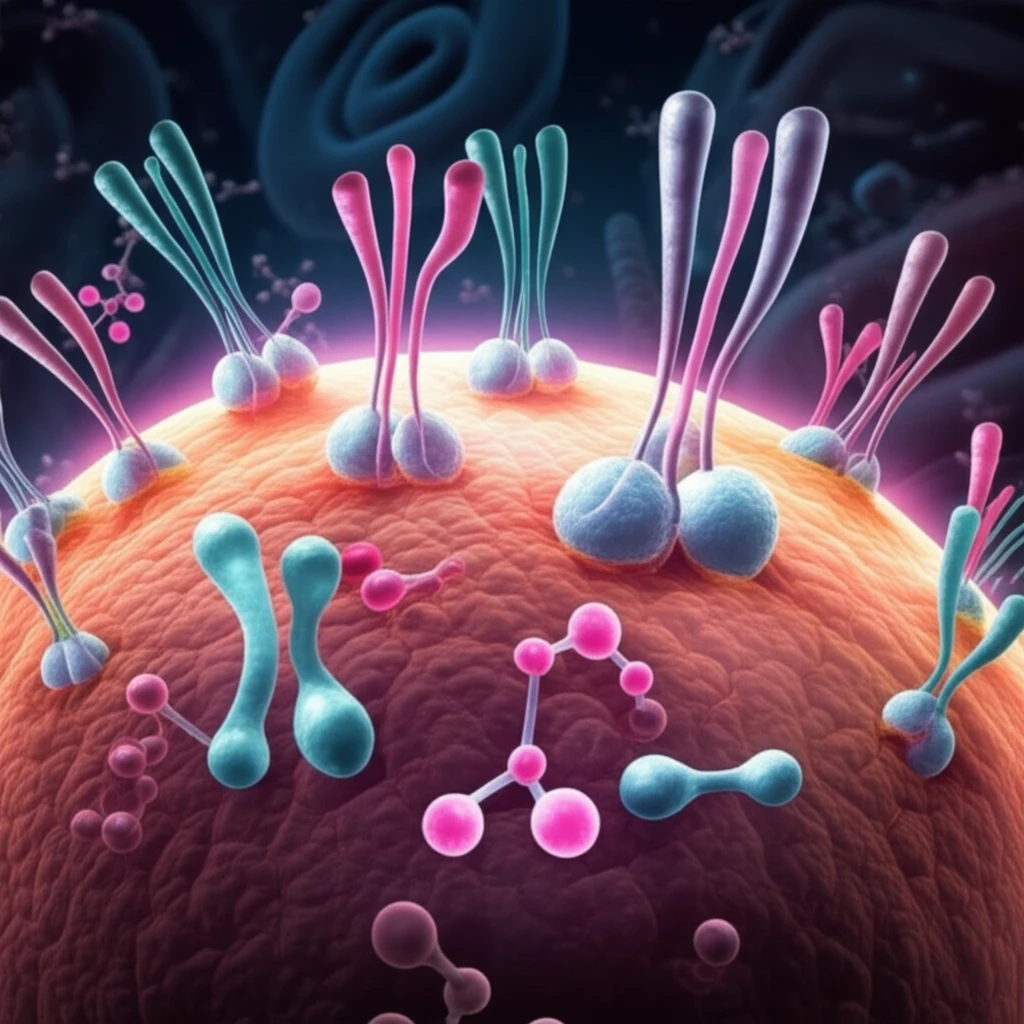
Hormone receptors interacting with estrogen and progestin molecules

Hormone Therapy & Breast Cancer Risk: Is There a Safer Path?

"New research sheds light on how certain hormone therapies may increase breast cancer risk, particularly in women with specific tumor cell characteristics. Could personalized hormone therapy strategies be the key to safer menopause management?"


The use of hormone therapy (HT) to manage menopausal symptoms has been a topic of ongoing debate, especially concerning its potential impact on breast cancer risk. While estrogen-only therapies have shown a relatively neutral or even slightly reduced risk in some studies, the combination of estrogen with certain progestogens, like norethisterone (NET), has been linked to increased risk.

Conventional understanding suggests that progestogens exert their effects by activating intracellular progesterone receptors (PRs). However, clinical observations don't always align with this model, and some research indicates that synthetic progestogens may even promote proliferation in breast cancer cells. The exact mechanisms behind these varying effects remain unclear, prompting scientists to investigate alternative pathways.

Recent research has focused on the role of progesterone receptor membrane component 1 (PGRMC1), a protein found in various cancer cells. This article will explore how the combination of estrogen and NET affects breast cancer cells that overexpress PGRMC1, both in laboratory settings and in animal models, potentially uncovering new insights into hormone therapy and breast cancer.

PGRMC1: A Key Player in Hormone-Related Breast Cancer?

Hormone receptors interacting with estrogen and progestin molecules

The study specifically investigated how NET, medroxyprogesterone acetate (MPA), and progesterone, alone and in combination with estradiol (E2), impact breast cancer cells that overexpress PGRMC1. The researchers used MCF-7 breast cancer cells, some stably transfected to overexpress PGRMC1 (WT-12 cells) and others with an empty vector as a control. These cells were then exposed to various hormone treatments, and their proliferation rates were measured.

The findings revealed some interesting results:

  • NET alone significantly increased the proliferation of WT-12 cells.
  • MPA was effective only at the two highest concentrations tested.
  • Progesterone had no effect on cell proliferation.
  • When combined with a low concentration of E2 (10-12 M), NET triggered a significant proliferative response, whereas MPA and progesterone did not.
  • In a mouse xenograft model, a sequential combination of NET and E2 significantly increased tumor growth of WT-12 cells.
These results suggest that NET, particularly in combination with estrogen, can promote the growth of breast cancer cells overexpressing PGRMC1. This effect was observed both in vitro (in cell cultures) and in vivo (in animal models).

Personalized Hormone Therapy: A Path Forward?

This research highlights the complex interplay between hormone therapy, breast cancer risk, and individual tumor cell characteristics. The study suggests that women with pre-existing breast cancer cells overexpressing PGRMC1 might be more susceptible to increased breast cancer risk with certain hormone therapies, particularly those involving NET.

The findings underscore the need for personalized approaches to hormone therapy. Considering individual risk factors, tumor cell characteristics, and the specific type and dosage of progestogens used could lead to safer and more effective management of menopausal symptoms.

Further research is needed to fully understand the role of PGRMC1 in hormone-related breast cancer and to identify which progestogens pose the lowest risk. However, this study provides valuable insights that could help guide future clinical decisions and improve the safety of hormone therapy for women experiencing menopause.

About this Article -

This article was crafted using a human-AI hybrid and collaborative approach. AI assisted our team with initial drafting, research insights, identifying key questions, and image generation. Our human editors guided topic selection, defined the angle, structured the content, ensured factual accuracy and relevance, refined the tone, and conducted thorough editing to deliver helpful, high-quality information.See our About page for more information.

This article is based on research published under:

DOI-LINK: 10.1097/gme.0b013e3182755c97, Alternate LINK

Title: Overexpression Of Progesterone Receptor Membrane Component 1

Subject: Obstetrics and Gynecology

Journal: Menopause

Publisher: Ovid Technologies (Wolters Kluwer Health)

Authors: Hans Neubauer, Xiangyan Ruan, Helen Schneck, Harald Seeger, Michael A. Cahill, Yayun Liang, Benfor Mafuvadze, Salman M. Hyder, Tanja Fehm, Alfred O. Mueck

Published: 2013-05-01

Everything You Need To Know

1

What is hormone therapy and why is it relevant to breast cancer risk?

Hormone therapy (HT) is used to manage menopausal symptoms. However, its use has been debated due to its potential impact on breast cancer risk. The research explores how the combination of estrogen and norethisterone (NET) affects breast cancer cells that overexpress PGRMC1, potentially uncovering new insights into hormone therapy and breast cancer. Estrogen-only therapies have shown a relatively neutral or even slightly reduced risk in some studies, but the combination of estrogen with certain progestogens, like norethisterone (NET), has been linked to increased risk.

2

What is PGRMC1 and what role does it play in the context of this research?

PGRMC1, or progesterone receptor membrane component 1, is a protein found in various cancer cells. This study specifically investigated how NET, medroxyprogesterone acetate (MPA), and progesterone, alone and in combination with estradiol (E2), impact breast cancer cells that overexpress PGRMC1. The findings indicate that NET, particularly in combination with estrogen, can promote the growth of breast cancer cells overexpressing PGRMC1. This effect was observed both in vitro (in cell cultures) and in vivo (in animal models).

3

How does norethisterone (NET) impact breast cancer cells?

Norethisterone (NET) is a synthetic progestogen used in hormone therapy. Research suggests that NET, especially when combined with estrogen, may increase the proliferation of breast cancer cells that overexpress PGRMC1. In the study, NET alone significantly increased the proliferation of WT-12 cells (MCF-7 breast cancer cells overexpressing PGRMC1). When combined with a low concentration of E2 (10-12 M), NET triggered a significant proliferative response, whereas medroxyprogesterone acetate (MPA) and progesterone did not. The research highlights that women with pre-existing breast cancer cells overexpressing PGRMC1 might be more susceptible to increased breast cancer risk with certain hormone therapies, particularly those involving NET.

4

What methods were used to investigate the effects of hormone therapy on breast cancer cells?

The study utilized MCF-7 breast cancer cells, some stably transfected to overexpress PGRMC1 (WT-12 cells) and others with an empty vector as a control. These cells were then exposed to various hormone treatments, and their proliferation rates were measured. Additionally, a mouse xenograft model was used to further investigate the effects of hormone combinations on tumor growth. The findings revealed that NET alone significantly increased the proliferation of WT-12 cells, and in the mouse model, a sequential combination of NET and E2 significantly increased tumor growth of WT-12 cells. These experiments were crucial to understand the impact of hormone therapies on cells.

5

What are the implications of these findings for personalized hormone therapy?

This research suggests that women with breast cancer cells overexpressing PGRMC1 might face an elevated breast cancer risk with certain hormone therapies, particularly those involving NET. These findings highlight the need for personalized hormone therapy strategies. The implications of the study include that doctors may need to assess individual tumor cell characteristics before prescribing hormone therapy. The research underscores the importance of considering individual factors, like PGRMC1 expression, when considering hormone therapy options. It opens the path to developing more personalized and safer approaches to managing menopause.

Newsletter Subscribe

Subscribe to get the latest articles and insights directly in your inbox.