
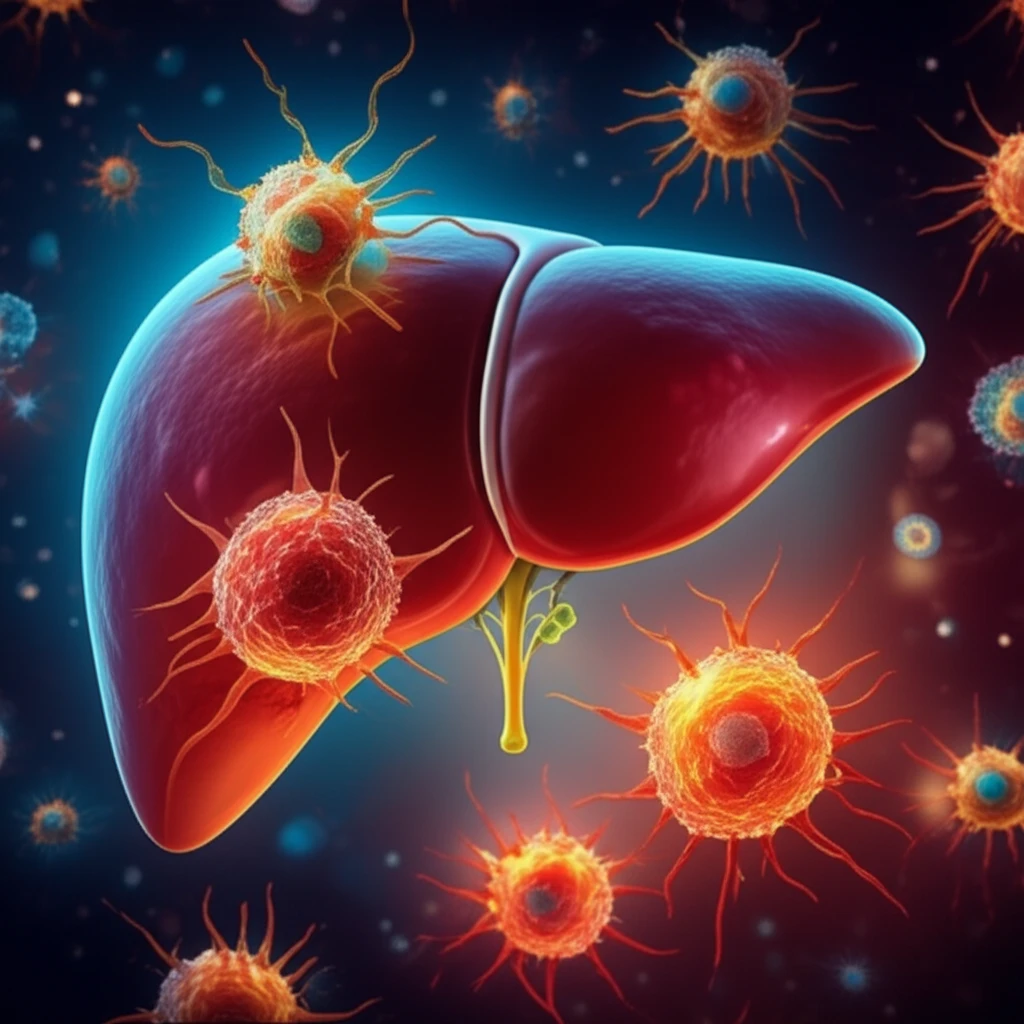
Microscopic view of immune cells attacking liver cancer cells, symbolizing hope for new treatments.

Hope on the Horizon: New Immunotherapy Shows Promise in Liver Cancer Treatment

"A Phase 3 trial explores the effectiveness of tislelizumab versus sorafenib for advanced hepatocellular carcinoma, offering a beacon of hope for patients."


Liver cancer, specifically hepatocellular carcinoma (HCC), represents a significant global health challenge. Unresectable HCC, accounting for approximately 70% of diagnosed cases, often presents limited treatment options, underscoring the urgent need for innovative therapies.

Traditional treatments like sorafenib have provided some benefit, but newer approaches, particularly immunotherapies, are showing promising results. Among these, tislelizumab, a humanized anti-PD-1 antibody, is under investigation for its potential to revolutionize first-line treatment for advanced HCC.

A Phase 3 clinical trial is underway to assess the efficacy and safety of tislelizumab compared to sorafenib in patients with advanced HCC. This article delves into the details of the trial, its design, and what the initial findings could mean for patients and the future of liver cancer treatment.

The Promise of Tislelizumab: How Does it Work?

Microscopic view of immune cells attacking liver cancer cells, symbolizing hope for new treatments.

Tislelizumab, known as BGB-A317, is engineered to target the programmed cell death receptor-1 (PD-1), a key protein that regulates the immune system's response to cancer cells. By blocking PD-1, tislelizumab helps to unleash the immune system's ability to recognize and destroy cancer cells. What sets tislelizumab apart is its unique design that minimizes binding to macrophages, potentially reducing T-cell clearance and enhancing its effectiveness.

A previous Phase 1A/1B study (NCT02407990) laid the groundwork for further investigation, demonstrating that tislelizumab was generally well-tolerated and exhibited anti-tumor activity in patients with advanced solid tumors, including HCC. These encouraging results paved the way for the current Phase 3 trial, designed to rigorously evaluate its efficacy against the current standard of care, sorafenib.

  • Mechanism of Action: Tislelizumab targets PD-1, boosting the immune system's ability to fight liver cancer.
  • Phase 1 Success: Early trials showed promising results in terms of tolerability and anti-tumor activity.
  • Optimized Design: Engineered to minimize macrophage binding, potentially enhancing its effectiveness.
The ongoing Phase 3 study (NCT03412773) is a global, randomized, multicenter trial aimed at evaluating the efficacy and safety of tislelizumab compared to sorafenib as a first-line treatment for unresectable HCC. The trial design involves enrolling adult patients (≥18 years) with histologically confirmed HCC, an ECOG score ≤1, Child-Pugh A classification, BCLC Stage C disease, or BCLC Stage B disease that has relapsed after loco-regional therapy, and who have not received prior systemic therapy.

What's Next? The Future of Liver Cancer Treatment

As the Phase 3 trial progresses, the medical community eagerly awaits the results, which could potentially reshape the treatment landscape for advanced HCC. If tislelizumab proves superior or even non-inferior to sorafenib, it could offer a new, more effective option for patients. The study's exploratory endpoints, including the assessment of predictive biomarkers and the characterization of the tislelizumab pharmacokinetic profile, may also provide valuable insights into patient selection and treatment optimization. These advancements bring renewed hope for improving outcomes and enhancing the quality of life for individuals affected by this challenging disease.

About this Article -

This article was crafted using a human-AI hybrid and collaborative approach. AI assisted our team with initial drafting, research insights, identifying key questions, and image generation. Our human editors guided topic selection, defined the angle, structured the content, ensured factual accuracy and relevance, refined the tone, and conducted thorough editing to deliver helpful, high-quality information.See our About page for more information.

Everything You Need To Know

1

What exactly is tislelizumab and how does it work to fight liver cancer?

Tislelizumab is an immunotherapy, specifically a humanized anti-PD-1 antibody. Its primary function is to block the programmed cell death receptor-1 (PD-1). PD-1 is a protein that regulates the immune system's response to cancer cells. By blocking PD-1, tislelizumab enhances the immune system's capability to identify and destroy cancer cells. Its unique design minimizes binding to macrophages, potentially reducing T-cell clearance and boosting its effectiveness.

2

Why is there so much focus on this Phase 3 clinical trial involving tislelizumab?

The Phase 3 clinical trial is significant because it compares tislelizumab to sorafenib, a current standard treatment, for advanced hepatocellular carcinoma (HCC). The trial assesses the efficacy and safety of tislelizumab as a first-line treatment for unresectable HCC. If tislelizumab proves superior, it could provide a new, more effective option for patients with limited treatment options. It could reshape the treatment landscape for advanced HCC.

3

What is sorafenib, and why is it being compared to tislelizumab in the study?

Sorafenib is a traditional treatment option for advanced hepatocellular carcinoma (HCC). However, its effectiveness is limited, creating the need for innovative therapies. In the context of the Phase 3 trial, sorafenib serves as the comparator against which tislelizumab's efficacy is measured. The trial aims to determine if tislelizumab offers a superior or non-inferior alternative to sorafenib, potentially improving outcomes for patients with advanced HCC.

4

Why was the Phase 1 study of tislelizumab so important?

The Phase 1 study was important because it demonstrated that tislelizumab was generally well-tolerated and exhibited anti-tumor activity in patients with advanced solid tumors, including HCC. These encouraging results laid the groundwork for the Phase 3 trial, designed to rigorously evaluate its efficacy against the current standard of care, sorafenib. It helped prove the drug was safe enough to use on humans and that it had a positive effect on tumors.

5

What are the specific criteria for patients to be included in the Phase 3 trial?

The trial enrolls adult patients (≥18 years) with histologically confirmed HCC, an ECOG score ≤1, Child-Pugh A classification, BCLC Stage C disease, or BCLC Stage B disease that has relapsed after loco-regional therapy, and who have not received prior systemic therapy. ECOG (Eastern Cooperative Oncology Group) score and Child-Pugh scores are used to measure the performance status (how the disease is affecting their daily living abilities) and liver function of the patient. BCLC (Barcelona Clinic Liver Cancer) staging system assesses the stage of the cancer. These criteria ensure that the trial focuses on patients with advanced HCC who have not received prior systemic treatment, allowing for a fair comparison between tislelizumab and sorafenib.

Newsletter Subscribe

Subscribe to get the latest articles and insights directly in your inbox.