
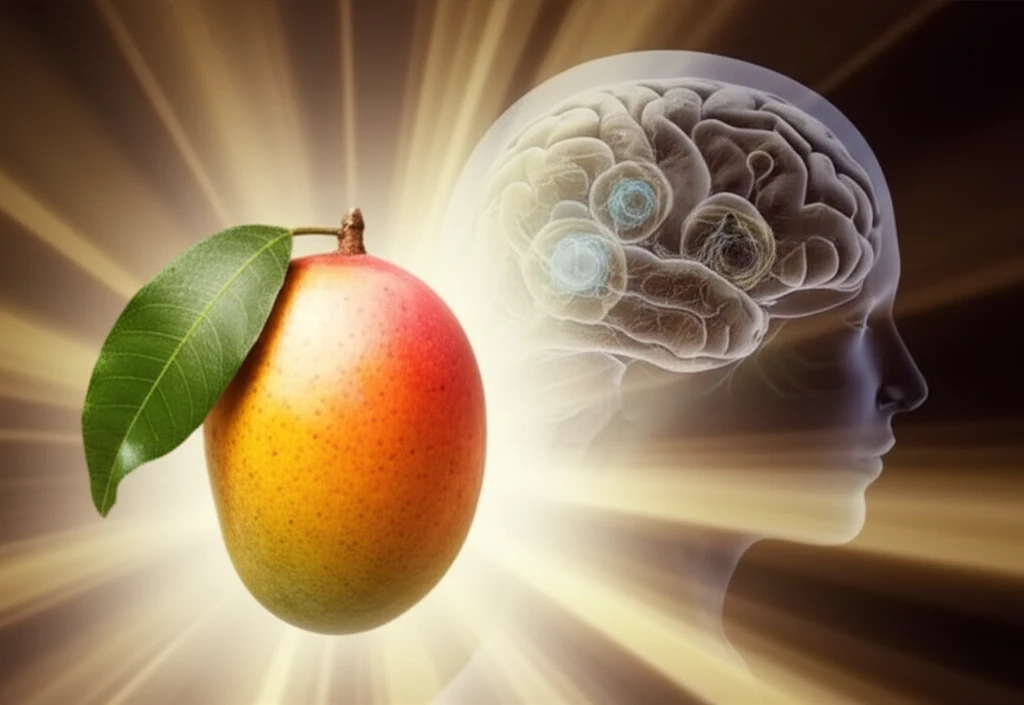
Illustration depicting the potential of mangiferin in treating glioblastoma.

Hope on the Horizon: Could a Mango Compound Revolutionize Glioblastoma Treatment?

"New research suggests that a compound found in mangoes could enhance the effectiveness of radiation therapy for this aggressive brain cancer."


Glioblastoma multiforme (GBM) is a particularly aggressive form of brain cancer, known for its rapid growth and resistance to conventional treatments. The current standard treatments, including surgery and radiation therapy, often fall short, with many patients experiencing a recurrence of the cancer within a year. This grim reality underscores the urgent need for innovative therapies that can improve outcomes and extend the lives of those affected.

Recent studies have illuminated the critical role of DNA repair mechanisms in the resistance of GBM cells to radiation therapy. Essentially, the cancer cells can repair the damage caused by radiation, allowing them to survive and proliferate. The development of new treatments that can interfere with these repair processes is, therefore, a promising avenue for improving the effectiveness of radiation therapy. This is where mangiferin, a compound derived from mangoes, enters the picture.

Mangiferin, known for its antioxidant and anti-inflammatory properties, has shown promise in various health applications. Emerging research suggests that it can also sensitize GBM cells to radiation. This article will delve into the details of how mangiferin works, the results of the latest studies, and the potential implications for future GBM treatment strategies.

Mangiferin: The Mango-Derived Compound with Promising Anti-Cancer Properties

Illustration depicting the potential of mangiferin in treating glioblastoma.

Mangiferin is a natural compound found in various parts of the mango plant, including the leaves, stem bark, and fruit peels. It's a type of xanthone, a class of organic compounds with diverse biological activities. Notably, mangiferin has gained attention in the medical community due to its potential anti-cancer properties. In addition to its antioxidant and anti-inflammatory characteristics, mangiferin has demonstrated anti-neoplastic effects in several cancer types, including lung, colon, and ovarian cancers.

The researchers sought to understand the impact of mangiferin on GBM cells, focusing on whether it could enhance the effects of radiation therapy. The study's findings provide compelling evidence for mangiferin's role in radio-sensitizing GBM cells. In experiments, GBM cells pre-treated with mangiferin exhibited decreased proliferation and increased DNA damage when exposed to radiation. This dual action suggests that mangiferin makes cancer cells more vulnerable to radiation therapy.

  • Mechanism of Action: Mangiferin appears to interfere with the non-homologous end-joining (NHEJ) pathway, a critical DNA repair mechanism in cells.
  • Inhibition of NHEJ: The study found that mangiferin inhibits the phosphorylation of key proteins in the NHEJ pathway, including ATM, 53BP1, and γ-H2AX.
  • In Vivo Results: In experiments using tumor-bearing mice, treatment with mangiferin and radiation led to smaller tumor volumes, reduced tumor weight, and an increased survival rate compared to radiation alone.
Further analysis of DNA damage revealed that mangiferin effectively inhibited DNA repair in GBM cells. Conversely, it did not trigger a similar effect in normal neuronal cells, underscoring the targeted action of this compound. Additionally, experiments on key proteins in the DNA repair pathway showed that mangiferin inhibited the phosphorylation of ATM, TP53-binding protein 1, and γ-H2AX. All of this data indicates that mangiferin is not only effective in combating GBM but also does so in a way that does not harm healthy cells. In the study, mangiferin decreased the number of γ-H2AX foci in GBM cells, indicating effective damage to cancer cells.

The Future of Glioblastoma Treatment

The findings on mangiferin offer a glimmer of hope in the fight against glioblastoma. Its ability to enhance the effectiveness of radiation therapy, combined with its potential to protect healthy cells, makes it a promising candidate for future GBM treatments. As research continues, mangiferin could become a vital addition to the arsenal against this challenging cancer, providing patients with new hope and improved outcomes. These findings represent a significant step forward and a call for further research to bring mangiferin into clinical practice.

About this Article -

This article was crafted using a human-AI hybrid and collaborative approach. AI assisted our team with initial drafting, research insights, identifying key questions, and image generation. Our human editors guided topic selection, defined the angle, structured the content, ensured factual accuracy and relevance, refined the tone, and conducted thorough editing to deliver helpful, high-quality information.See our About page for more information.

This article is based on research published under:

DOI-LINK: 10.3892/or.2018.6756, Alternate LINK

Title: Mangiferin Induces Radiosensitization In Glioblastoma Cells By Inhibiting Nonhomologous End Joining

Subject: Cancer Research

Journal: Oncology Reports

Publisher: Spandidos Publications

Authors: Faguang Mu, Ting Liu, Hanrui Zheng, Xiaofang Xie, Tiantian Lei, Xia He, Suya Du, Rongsheng Tong, Yi Wang

Published: 2018-10-01

Everything You Need To Know

1

What is Glioblastoma Multiforme (GBM), and why is it so difficult to treat?

Glioblastoma Multiforme (GBM) is a highly aggressive form of brain cancer characterized by rapid growth and resistance to conventional treatments. Its difficulty in treatment stems from its ability to repair DNA damage caused by radiation therapy, allowing cancer cells to survive and proliferate. Current treatments like surgery and radiation therapy often prove palliative due to the high rate of recurrence. Therefore, new therapies are needed to improve patient outcomes.

2

How does mangiferin, a compound found in mangoes, potentially improve Glioblastoma Multiforme (GBM) treatment?

Mangiferin, a natural compound derived from mangoes, has shown promise in enhancing the effectiveness of radiation therapy for Glioblastoma Multiforme (GBM). Research suggests that mangiferin can sensitize GBM cells to radiation by interfering with DNA repair mechanisms. Specifically, it appears to inhibit the non-homologous end-joining (NHEJ) pathway, a critical DNA repair mechanism in cells, making cancer cells more vulnerable to radiation. Mangiferin inhibits the phosphorylation of key proteins in the NHEJ pathway, including ATM, 53BP1, and γ-H2AX.

3

What is the non-homologous end-joining (NHEJ) pathway, and how does mangiferin affect it in Glioblastoma Multiforme (GBM) cells?

The non-homologous end-joining (NHEJ) pathway is a crucial DNA repair mechanism that allows cells to fix double-strand breaks in their DNA. In Glioblastoma Multiforme (GBM) cells, this pathway contributes to radiation resistance. Mangiferin interferes with NHEJ by inhibiting the phosphorylation of key proteins involved in the pathway, such as ATM, TP53-binding protein 1, and γ-H2AX. This inhibition impairs the cancer cells' ability to repair radiation-induced DNA damage, making them more susceptible to radiation therapy.

4

Does mangiferin only affect Glioblastoma Multiforme (GBM) cells, or does it also impact healthy cells in the brain?

Research indicates that mangiferin exhibits targeted action, primarily affecting Glioblastoma Multiforme (GBM) cells. Studies have shown that mangiferin effectively inhibits DNA repair in GBM cells without triggering a similar effect in normal neuronal cells. This suggests that mangiferin can enhance the effectiveness of radiation therapy against GBM while minimizing harm to healthy brain tissue. This targeted approach is a significant advantage in cancer treatment, reducing potential side effects.

5

What are the potential future implications of using mangiferin in Glioblastoma Multiforme (GBM) treatment, and what further research is needed?

The ability of mangiferin to enhance the effectiveness of radiation therapy while potentially protecting healthy cells offers new hope for improved outcomes in Glioblastoma Multiforme (GBM) treatment. Further research is needed to translate these findings into clinical practice. This includes conducting clinical trials to assess the safety and efficacy of mangiferin in human patients with GBM. Additionally, further studies could explore optimal dosages, delivery methods, and combinations with other therapies to maximize mangiferin's potential in combating this aggressive cancer. Future research could explore combining mangiferin with other targeted therapies that impact other GBM vulnerabilities.

Newsletter Subscribe

Subscribe to get the latest articles and insights directly in your inbox.