
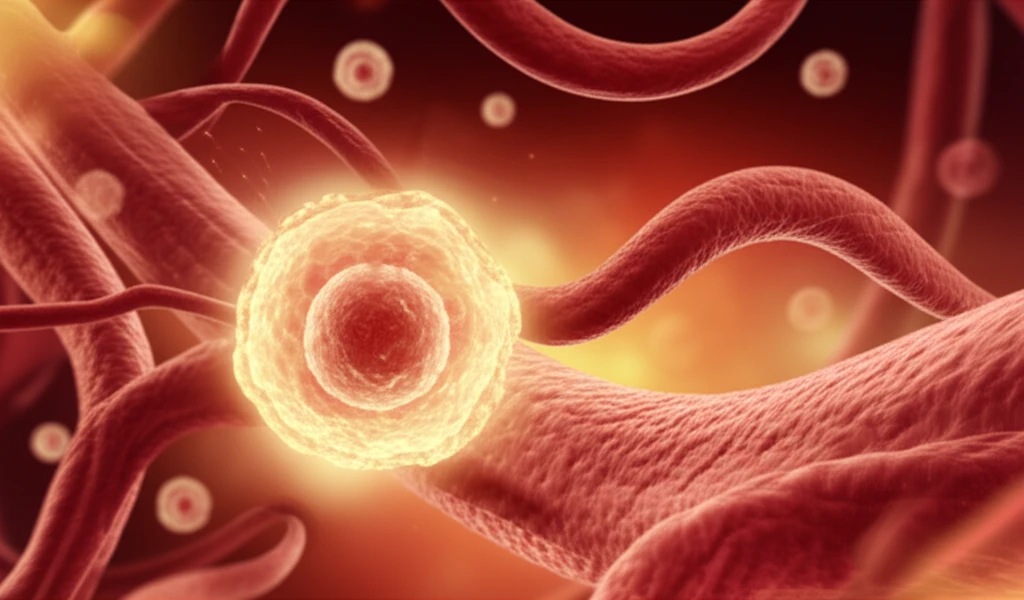
Illustration of a glowing extracellular vesicle (EV) within a network of blood vessels, representing the healing process in limb ischemia treatment.

Hope in a Needle: How Stem Cell-Derived Vesicles Could Revolutionize Ischemia Treatment

"New research reveals the potential of tiny, powerful packages from stem cells to mend damaged blood vessels and accelerate healing."


Limb ischemia, a condition where reduced blood flow starves limbs of oxygen, presents a significant health challenge, potentially leading to amputation. Current treatments often fall short, underscoring the need for innovative approaches. Thankfully, recent breakthroughs in medical science bring a beacon of hope: stem cell-derived extracellular vesicles (EVs).

These EVs are not just any particles; they are microscopic packages released by stem cells, acting as messengers to heal and regenerate. The latest research reveals that these tiny vesicles carry potent healing powers, particularly when it comes to restoring blood flow and repairing damaged tissues. This article delves into the science behind these EVs, exploring their potential to revolutionize the treatment of limb ischemia.

This article explores the exciting potential of EVs derived from mesenchymal stem cells (MSCs) in the context of treating limb ischemia. We will delve into the groundbreaking research that shows how these EVs can activate VEGF receptors, accelerate the recovery of hindlimb ischemia, and potentially change the landscape of treatment for this challenging condition.

Unpacking the Power of Extracellular Vesicles: Nature's Tiny Healers

Illustration of a glowing extracellular vesicle (EV) within a network of blood vessels, representing the healing process in limb ischemia treatment.

Extracellular vesicles (EVs) are microscopic bubbles released by cells, containing a wealth of biological materials like proteins, genetic material (RNA and microRNAs), and lipids. Think of them as tiny delivery vehicles, designed to communicate and transfer crucial information between cells. These vesicles are not just cellular byproducts; they are active participants in healing and regeneration, carrying signals that can influence the behavior of other cells.

In the context of limb ischemia, the regenerative potential of EVs is particularly exciting. Researchers have found that EVs from mesenchymal stem cells (MSCs), a type of stem cell, can play a critical role in restoring blood flow and repairing damaged tissues. Specifically, these MSC-derived EVs are capable of activating VEGF receptors, which are crucial for the formation of new blood vessels (angiogenesis).

  • What's Inside?: EVs carry proteins, genetic material, and lipids.
  • Cellular Messengers: They act as communicators between cells.
  • Healing Agents: In limb ischemia, they can promote blood vessel regeneration.
The innovative research examined in this article highlights how these EVs, when introduced into the affected area, can trigger the formation of new blood vessels and improve blood flow. The results suggest that EVs may be a new and effective approach to treating limb ischemia, offering hope for improved outcomes and potentially reducing the need for amputation. This approach could significantly impact the lives of those affected by this devastating condition.

A New Era for Ischemia Treatment: Hope for the Future

The research presented showcases the powerful potential of stem cell-derived EVs in the treatment of limb ischemia. These tiny vesicles, acting as nature's messengers, can trigger blood vessel regeneration and enhance tissue repair. This groundbreaking research offers hope for those affected by this condition and opens new avenues for innovative treatments that may improve patient outcomes and quality of life. As this field continues to advance, we can anticipate further discoveries and innovative therapies that harness the power of these remarkable particles.

About this Article -

This article was crafted using a human-AI hybrid and collaborative approach. AI assisted our team with initial drafting, research insights, identifying key questions, and image generation. Our human editors guided topic selection, defined the angle, structured the content, ensured factual accuracy and relevance, refined the tone, and conducted thorough editing to deliver helpful, high-quality information.See our About page for more information.

This article is based on research published under:

DOI-LINK: 10.1016/j.jconrel.2017.08.022, Alternate LINK

Title: Extracellular Vesicles From Mesenchymal Stem Cells Activates Vegf Receptors And Accelerates Recovery Of Hindlimb Ischemia

Subject: Pharmaceutical Science

Journal: Journal of Controlled Release

Publisher: Elsevier BV

Authors: Prakash Gangadaran, Ramya Lakshmi Rajendran, Ho Won Lee, Senthilkumar Kalimuthu, Chae Moon Hong, Shin Young Jeong, Sang-Woo Lee, Jaetae Lee, Byeong-Cheol Ahn

Published: 2017-10-01

Everything You Need To Know

1

What are stem cell-derived extracellular vesicles (EVs), and why are they being researched for treating limb ischemia?

Stem cell-derived extracellular vesicles (EVs) are microscopic packages released by stem cells. They contain proteins, genetic material like RNA and microRNAs, and lipids. In the context of limb ischemia, researchers are studying EVs, particularly those from mesenchymal stem cells (MSCs), because of their ability to regenerate blood vessels by activating VEGF receptors and repair damaged tissues, potentially improving blood flow to oxygen-starved limbs.

2

How do extracellular vesicles (EVs) function as 'messengers' in the context of limb ischemia treatment?

Extracellular vesicles (EVs) act as messengers by carrying biological materials like proteins and genetic information between cells. In limb ischemia treatment, these EVs, especially those derived from mesenchymal stem cells (MSCs), can deliver signals that stimulate the formation of new blood vessels (angiogenesis) by activating VEGF receptors. This improved blood flow helps to repair damaged tissues and alleviate the effects of ischemia. This process helps cells communicate and transfer crucial information to each other to facilitate healing and regeneration.

3

What is limb ischemia, and why is there a need for new treatment approaches like those involving stem cell-derived EVs?

Limb ischemia is a condition characterized by reduced blood flow to the limbs, depriving them of oxygen and potentially leading to tissue damage or even amputation. Current treatments for limb ischemia are often inadequate, making innovative approaches necessary. Stem cell-derived extracellular vesicles (EVs) offer a promising alternative because they can stimulate the regeneration of blood vessels and repair damaged tissues, potentially improving outcomes for patients with this condition.

4

What role do VEGF receptors play in the treatment of limb ischemia using mesenchymal stem cell-derived EVs?

VEGF receptors are crucial for the formation of new blood vessels (angiogenesis). Mesenchymal stem cell-derived extracellular vesicles (EVs) can activate these receptors, promoting the growth of new blood vessels in the affected area. By stimulating angiogenesis, these EVs help to restore blood flow to ischemic limbs, thereby promoting tissue repair and potentially preventing amputation. The ability of MSC-derived EVs to activate VEGF receptors is key to their therapeutic potential in treating limb ischemia.

5

What are the potential implications of using stem cell-derived extracellular vesicles (EVs) for treating limb ischemia, and what future advancements can be anticipated?

The use of stem cell-derived extracellular vesicles (EVs) offers hope for improved outcomes and reduced need for amputation for those affected by limb ischemia. These EVs can stimulate blood vessel regeneration and enhance tissue repair, improving patients' quality of life. Future advancements may include the development of more targeted and efficient EVs, as well as combination therapies that leverage the regenerative potential of these particles alongside existing treatments. As research progresses, there's the potential for innovative therapies that can significantly impact the treatment of this condition.

Newsletter Subscribe

Subscribe to get the latest articles and insights directly in your inbox.