
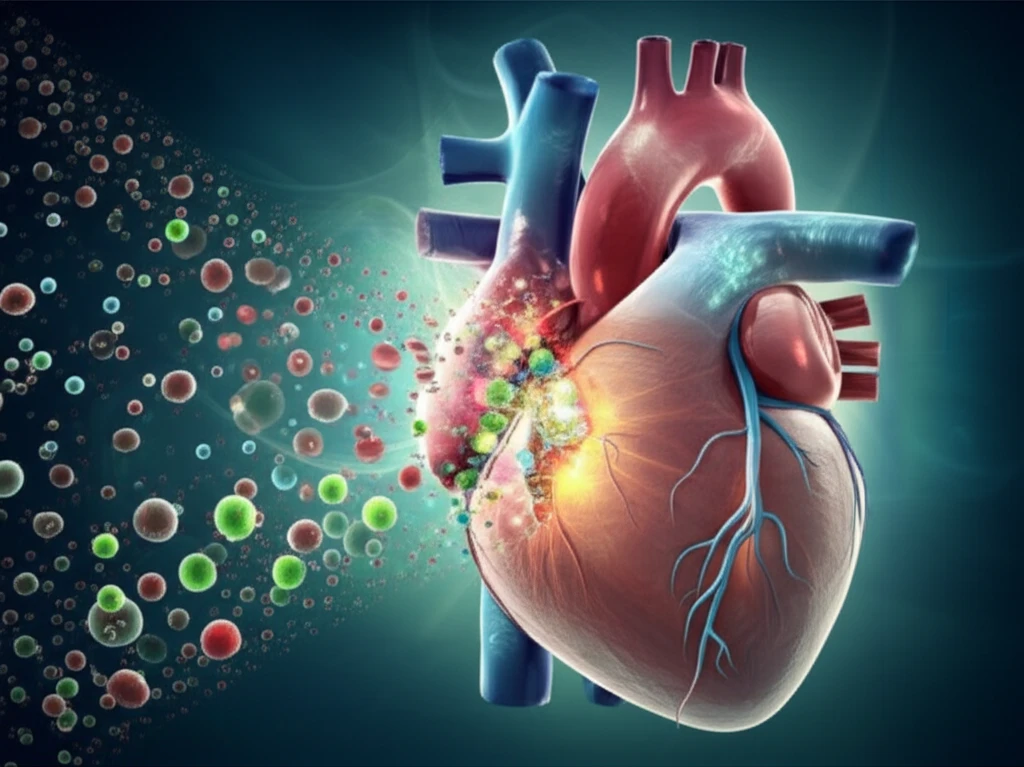
Hope for Hearts: Tiny Particles Offer Big Promise in Treating Heart Attacks

"New research reveals that microscopic particles could revolutionize how we treat heart attacks, offering a potential pathway to heal and regenerate damaged heart tissue."
Imagine a future where heart attacks don't lead to permanent damage, where the heart can heal itself. This isn't science fiction; it's the potential reality unveiled by recent research. Scientists are exploring innovative ways to repair hearts damaged by heart attacks, and the results are nothing short of remarkable.
Heart attacks, a leading cause of death globally, inflict lasting damage on the heart muscle. The aftermath often involves chronic conditions and a diminished quality of life. Traditional treatments focus on immediate survival, but they don't always address the long-term damage. This is where the latest breakthroughs come into play.
This article dives into an exciting area of medical research that offers a new approach to treating heart attacks. We'll explore the potential of tiny particles to not only limit damage but also stimulate the heart's natural ability to heal and regenerate. Get ready to explore a new chapter in cardiac care, with a focus on hope and the power of innovation.
Microscopic Marvels: How Tiny Particles are Changing Heart Attack Treatment
The cutting-edge research focuses on using microscopic particles to repair the damage caused by heart attacks. These particles, loaded with therapeutic agents, act as targeted delivery systems, going directly to the injured heart tissue. The goal is to reduce inflammation, promote healing, and encourage the heart to regenerate itself.
- Targeted Delivery: The particles are designed to go directly to the damaged heart tissue, ensuring that the therapeutic agents are delivered where they're needed most.
- Reduced Inflammation: By targeting inflammation, the particles create a more favorable environment for healing, helping to reduce further damage.
- Regeneration: The therapeutic agents encourage the heart to repair and regenerate itself, repairing the damaged tissue.
Looking Ahead: A Future of Heart Health and Innovation
The path from research to practical application takes time, but these findings offer a promising vision for the future of heart attack treatment. With ongoing research and clinical trials, these microscopic particles could offer new hope for millions affected by heart disease. The journey to improved heart health is ongoing, and these breakthroughs show how innovation and science can lead the way to a healthier future.