
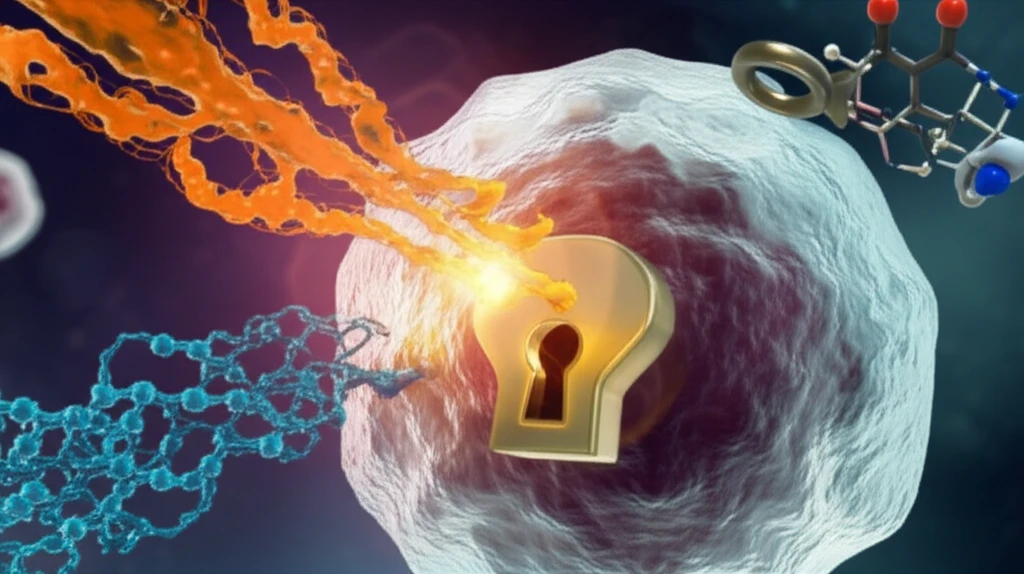
Omacetaxine molecule battling mutated proteins in a white blood cell.

Hope for CML: How Omacetaxine Overcomes Drug Resistance

"A deep dive into a novel therapy offering new possibilities for patients battling chronic myeloid leukemia."


Chronic Myeloid Leukemia (CML) is a type of cancer affecting the blood and bone marrow. While tyrosine kinase inhibitors (TKIs) have significantly improved outcomes, resistance to these drugs remains a major challenge for many patients. This resistance often arises from mutations in the BCR-ABL oncogene, the driving force behind CML.

Omacetaxine mepesuccinate offers a beacon of hope for those who have developed TKI resistance. Approved by the FDA in 2014, this drug works through a completely different mechanism than TKIs, inhibiting protein synthesis rather than directly targeting the BCR-ABL kinase. This unique approach makes it effective even when mutations render TKIs useless.

This article explores how Omacetaxine mepesuccinate works, its benefits for CML patients, potential side effects, and its role in the future of CML therapy. We'll break down the science in an accessible way, providing clear insights into this groundbreaking treatment.

How Omacetaxine Bypasses TKI Resistance: A New Approach to CML

Omacetaxine molecule battling mutated proteins in a white blood cell.

TKIs work by competing with ATP (the energy currency of the cell) to bind to the ABL kinase domain of the BCR-ABL protein. However, mutations in this domain can prevent TKIs from binding effectively, leading to resistance. Omacetaxine, on the other hand, doesn't target BCR-ABL directly.

Instead, Omacetaxine inhibits protein synthesis, specifically by interfering with the initial elongation step of translation. This means it prevents the production of all proteins, including the mutated BCR-ABL kinase. This unique mechanism makes Omacetaxine effective even against cells resistant to TKIs due to mutations like T315I, which confers resistance to many TKIs.

  • Direct vs. Indirect: TKIs directly inhibit the BCR-ABL kinase, while Omacetaxine indirectly reduces its production.
  • Mutation Independence: Omacetaxine's effectiveness isn't affected by mutations in the BCR-ABL kinase domain.
  • Broader Impact: By inhibiting protein synthesis, Omacetaxine may also affect other proteins that contribute to CML progression, such as heat shock protein 90 (HSP90).
Research has also shown that Omacetaxine can trigger a re-introduction or 'rechallenge' of TKI therapy in previously TKI-resistant CML patients. This suggests that Omacetaxine can help to overcome resistance mechanisms and restore sensitivity to TKIs.

The Future of Omacetaxine in CML and Beyond

Omacetaxine mepesuccinate represents a significant advancement in CML treatment, particularly for patients facing TKI resistance. Its unique mechanism of action offers a valuable alternative and can even pave the way for re-introducing TKI therapy.

While Omacetaxine has shown great promise, it's important to be aware of potential side effects, such as myelosuppression (reduced blood cell production) and non-hematologic effects like fatigue and gastrointestinal issues. Ongoing research aims to optimize its use and minimize these side effects.

Furthermore, researchers are exploring Omacetaxine's potential in treating other cancers, including acute myeloid leukemia (AML) and myelodysplastic syndrome (MDS). As our understanding of its mechanisms and effects grows, Omacetaxine may play an increasingly important role in cancer therapy.

About this Article -

This article was crafted using a human-AI hybrid and collaborative approach. AI assisted our team with initial drafting, research insights, identifying key questions, and image generation. Our human editors guided topic selection, defined the angle, structured the content, ensured factual accuracy and relevance, refined the tone, and conducted thorough editing to deliver helpful, high-quality information.See our About page for more information.

This article is based on research published under:

DOI-LINK: 10.4149/neo_2016_401, Alternate LINK

Title: Protein Synthesis Inhibitors Of Natural Origin For Cml Therapy: Semisynthetic Homoharringtonine (Omacetaxine Mepesuccinate)

Subject: Cancer Research

Journal: Neoplasma

Publisher: AEPress, s.r.o.

Authors: L. Novotny, N. F. Al-Tannak, L. Hunakova

Published: 2016-01-01

Everything You Need To Know

1

What is Chronic Myeloid Leukemia (CML)?

Chronic Myeloid Leukemia (CML) is a type of cancer that affects the blood and bone marrow. The disease is characterized by the overproduction of specific white blood cells. This overproduction is caused by a genetic abnormality called the BCR-ABL oncogene. Left untreated, CML can progress to more aggressive phases, so early treatment is critical.

2

How do tyrosine kinase inhibitors (TKIs) work in treating CML, and what are the challenges?

Tyrosine kinase inhibitors (TKIs) are a class of drugs that have revolutionized the treatment of CML. They work by directly targeting the BCR-ABL kinase, effectively halting the cancer's progression. However, a major challenge with TKIs is that resistance to them can develop, often due to mutations in the BCR-ABL oncogene. These mutations can prevent the TKI from binding and doing its job.

3

What is Omacetaxine mepesuccinate, and how does it work?

Omacetaxine mepesuccinate is a drug approved by the FDA in 2014 as a treatment option for CML, especially for patients who have developed resistance to TKIs. Unlike TKIs that directly target the BCR-ABL kinase, Omacetaxine works by inhibiting protein synthesis. This different mechanism allows it to be effective even when mutations have rendered TKIs useless. Specifically, it interferes with the elongation step of protein translation, preventing the production of all proteins, including the mutated BCR-ABL kinase.

4

What are the benefits of using Omacetaxine for CML?

The main benefit of Omacetaxine is its effectiveness in treating patients with CML who have become resistant to TKIs. Because it works through a different mechanism, inhibiting protein synthesis instead of directly targeting BCR-ABL, it bypasses many of the resistance mechanisms that make TKIs ineffective. Furthermore, research suggests that Omacetaxine can restore sensitivity to TKIs, potentially allowing for the re-introduction of TKI therapy.

5

Why is Omacetaxine important for the future of CML treatment?

Omacetaxine mepesuccinate represents a major step forward in CML treatment, specifically in managing TKI resistance. Its unique approach to combatting CML, offers a valuable alternative. This is important because it expands the treatment options available to patients who have exhausted other therapies. The ability of Omacetaxine to potentially restore sensitivity to TKIs also points to the promise of combination therapies, improving patient outcomes.

Newsletter Subscribe

Subscribe to get the latest articles and insights directly in your inbox.