
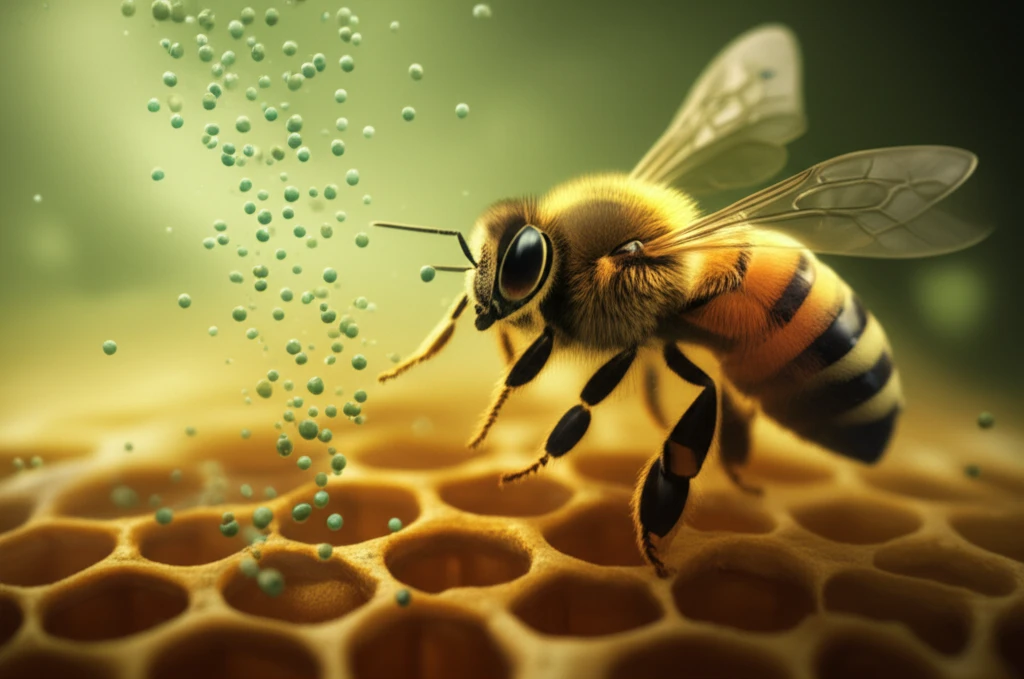
Honeybee colony under attack by pesticides

Honeybee Havoc: Are Pesticides Silently Killing Our Pollinators?

"New research uncovers the insidious effects of neonicotinoids on bee behavior and colony health, revealing a threat to our food supply."


For years, scientists have been sounding the alarm about the decline of honeybee populations. While various factors contribute to this crisis, one culprit has emerged as a prime suspect: neonicotinoid pesticides. These chemicals, widely used in agriculture, are designed to protect crops from pests, but their impact on beneficial insects like honeybees is causing widespread concern.

Neonicotinoids (Neonics) are a class of neuro-active insecticides chemically similar to nicotine. They are systemic, meaning they are absorbed by the plant and distributed throughout its tissues, including pollen and nectar. Bees, in turn, are exposed to these chemicals when they forage for food, leading to a range of adverse effects.

While the lethal effects of neonicotinoids have been well-documented, a new study published in Science sheds light on the more subtle, yet equally damaging, impacts of these pesticides on bee behavior. This research uncovers how neonicotinoid exposure disrupts essential tasks within the hive, ultimately threatening colony survival.

The Silent Sabotage: How Neonicotinoids Disrupt Bee Behavior

Honeybee colony under attack by pesticides

The Science study, led by James Crall et al., employed sophisticated real-time monitoring of bumblebee colonies to assess the effects of neonicotinoid exposure. The researchers meticulously tracked individual bee behaviors within the nest, revealing a disturbing pattern of disruption.

The study revealed that bees exposed to neonicotinoids exhibited significant changes in their behavior. Specifically, the researchers observed a reduction in:

  • Nursing Behavior: Nurse bees, responsible for caring for developing larvae, showed decreased activity.
  • Care-Taking Activities: Bees involved in general hive maintenance and upkeep were less active.
  • Thermoregulation: The colony's ability to maintain a stable temperature, crucial for brood development, was compromised.
These behavioral changes, seemingly small on their own, had a cascading effect on the entire colony. Reduced nursing and care-taking impacted productivity, while impaired thermoregulation threatened the survival of young bees. Even at non-lethal doses, neonicotinoid exposure significantly decreased colony viability.

What Can Be Done? Protecting Our Pollinators and Food Supply

The findings of this study underscore the urgent need to re-evaluate the use of neonicotinoid pesticides. While these chemicals may offer short-term benefits for crop protection, their long-term consequences for pollinator health and food security are far-reaching. Moving forward, a multi-pronged approach is essential:

About this Article -

This article was crafted using a human-AI hybrid and collaborative approach. AI assisted our team with initial drafting, research insights, identifying key questions, and image generation. Our human editors guided topic selection, defined the angle, structured the content, ensured factual accuracy and relevance, refined the tone, and conducted thorough editing to deliver helpful, high-quality information.See our About page for more information.

Everything You Need To Know

1

What exactly are neonicotinoid pesticides and why should I be concerned?

Neonicotinoids are a class of insecticides chemically related to nicotine. They're systemic, meaning plants absorb them and distribute them throughout their tissues, including pollen and nectar. This is significant because when bees forage, they're exposed to these chemicals, potentially harming them. The implications of this exposure include disruption of bee behavior, impacting their ability to perform essential tasks within the hive and threatening colony survival.

2

What does it mean when the research mentions a decline in nursing behavior, care-taking activities, and thermoregulation?

The decline in nursing behavior involves nurse bees, who are responsible for caring for developing larvae, showing decreased activity. This is important because it impacts the productivity of the hive. The decrease in care-taking activities means that bees involved in general hive maintenance and upkeep are less active, which threatens the overall health and organization of the colony. Impaired thermoregulation means that the colony's ability to maintain a stable temperature, which is crucial for brood development, is compromised. This can lead to the death of young bees.

3

How did this study monitor the effects of neonicotinoids on bee behavior, and what did they find?

The study by James Crall et al. revealed that neonicotinoid exposure disrupts essential tasks within the hive. This is significant because it demonstrates how seemingly small changes in individual bee behaviors can have a cascading effect on the entire colony. The implications are far-reaching, as reduced nursing and care-taking activities impact productivity, while impaired thermoregulation threatens the survival of young bees. Even at non-lethal doses, neonicotinoid exposure significantly decreased colony viability.

4

What's the main takeaway from this research regarding the use of neonicotinoid pesticides?

The study emphasizes the urgent need to re-evaluate the use of neonicotinoid pesticides. This is important because, while these chemicals may offer short-term benefits for crop protection, their long-term consequences for pollinator health and food security are far-reaching. The researchers suggest that a multi-pronged approach is essential to protect pollinators and our food supply. The specific elements of this approach are not detailed here.

5

Why are neonicotinoids so important in the discussion about bee health and our food supply?

Neonicotinoids are significant because they are systemic insecticides that can affect bees through pollen and nectar. The implications of bees being exposed to neonicotinoids include behavioral changes such as reduced nursing, impaired care-taking, and thermoregulation issues. These changes can decrease colony productivity and threaten the survival of young bees. The bigger picture of the impact could include effects on our food supply.

Newsletter Subscribe

Subscribe to get the latest articles and insights directly in your inbox.