
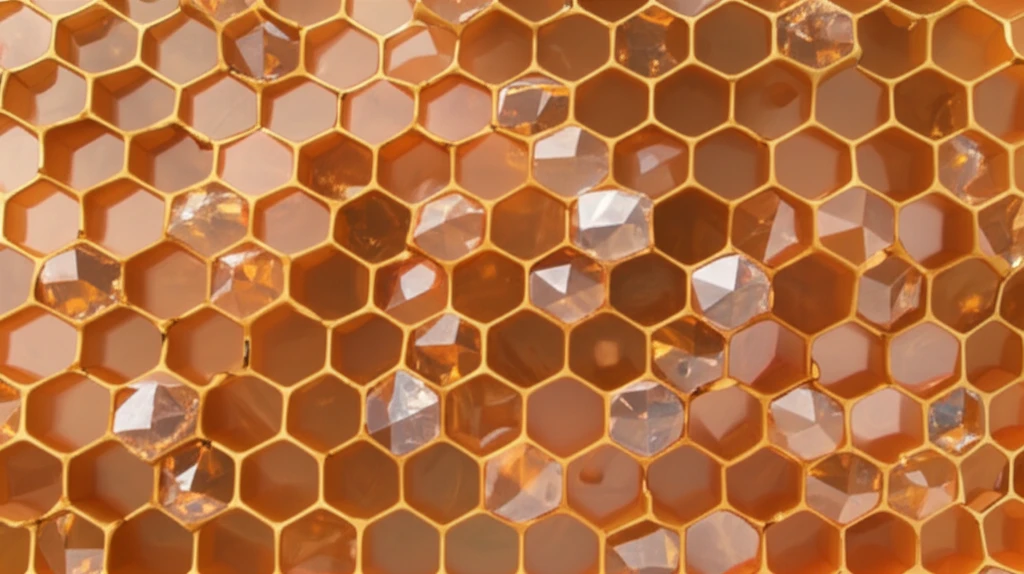
Honey, I Crystallized the Facts: Decoding Honey Crystallization for Sweet Success

"Unlock the secrets of honey crystallization: Learn how temperature, water activity, and honey composition influence this natural process and discover tips to maintain optimal honey quality."
Honey, a timeless natural sweetener, has captivated humanity for centuries with its delightful flavor and health benefits. Composed primarily of fructose and glucose, honey's unique sugar profile contributes to its tendency to crystallize – a process that can both intrigue and frustrate consumers. Understanding the science behind honey crystallization is crucial for beekeepers, food producers, and honey enthusiasts alike.
Crystallization in honey is a natural phenomenon influenced by factors like sugar concentration, water content, floral source, and storage conditions. While some consumers view crystallization as a sign of spoilage, it's actually an indicator of honey's purity and natural composition. However, uncontrolled crystallization can lead to undesirable textures and separation, impacting the product's appeal.
This article explores the factors that influence honey crystallization, drawing upon scientific research to provide practical insights. We'll delve into the roles of temperature, water activity, and honey composition, offering guidance on how to manage crystallization and maintain optimal honey quality. Whether you're a beekeeper, food producer, or simply a honey lover, this comprehensive guide will equip you with the knowledge to navigate the complexities of honey crystallization with confidence.
Why Does Honey Crystallize? The Science Behind the Sweetness
Honey crystallization occurs when glucose, one of the main sugars in honey, separates from the liquid and forms crystals. This happens because glucose is less soluble than fructose, especially at lower temperatures. These crystals create a semi-solid or solid consistency, altering the honey's texture and appearance.
- Temperature: Honey crystallizes fastest at around 57°F (14°C). Warmer temperatures (above 77°F or 25°C) can slow down or even prevent crystallization, while colder temperatures (below 50°F or 10°C) can accelerate it.
- Water Content: Honey with higher water content tends to crystallize more slowly. Lowering the water content reduces water availability, increasing the likelihood of crystallization.
- Glucose-to-Fructose Ratio: Honeys with a higher glucose content compared to fructose crystallize more readily. The ratio varies depending on the floral source.
- Pollen and Other Particles: Small particles like pollen grains, beeswax, and propolis can act as crystallization nuclei, providing surfaces for glucose crystals to form around.
Sweet Solutions: Managing Honey Crystallization
While honey crystallization is a natural process, there are several ways to manage it and maintain your honey's desired consistency. Gentle warming can dissolve crystals, but avoid overheating, which can damage the honey's flavor and nutritional properties. Proper storage in airtight containers at room temperature helps minimize crystallization. For beekeepers, controlling water content during honey production and selecting floral sources with lower glucose-to-fructose ratios can also help.