
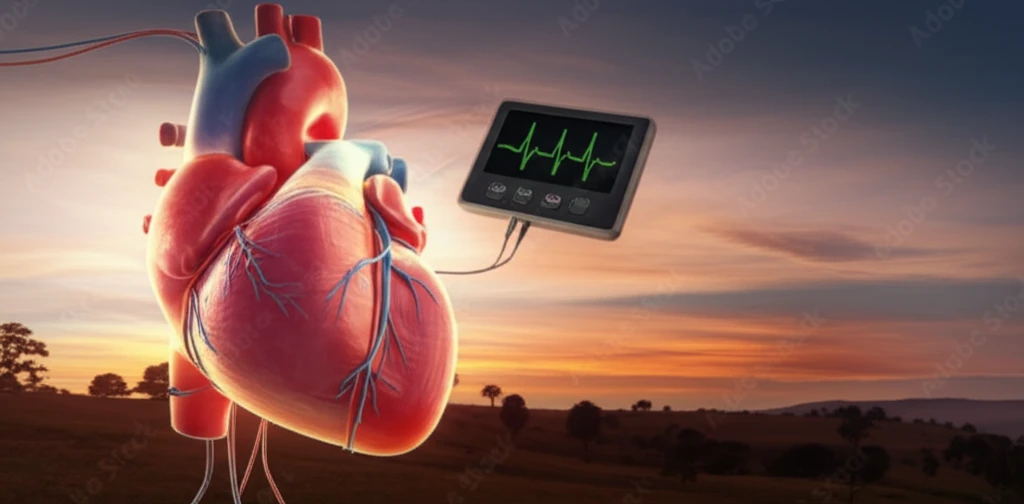
Holter Monitor Insights: What Hypertensive and Diabetic Patients Need to Know

"Decoding Heart Arrhythmias: A Nigerian Study Reveals Key Indicators for Hypertensive and Diabetic Individuals Using 24-Hour Holter ECG Monitoring"
Hypertension and diabetes are significant health challenges globally, and Nigeria is no exception. These conditions often coexist and can lead to severe cardiovascular complications, including heart arrhythmias. Detecting these arrhythmias early is crucial for effective management and improved patient outcomes.
A Holter monitor, or ambulatory electrocardiogram (ECG), is a vital tool for identifying heart rhythm abnormalities that may not be apparent during a routine ECG. This device continuously records the heart's electrical activity over 24 hours or longer, capturing intermittent arrhythmias and providing a comprehensive view of heart function. Understanding the role and findings of Holter monitoring is particularly important for individuals with hypertension and diabetes.
This article delves into a study conducted at Obafemi Awolowo University Teaching Hospitals Complex (OAUTHC) in Ile-Ife, Nigeria, which investigated the use of 24-hour Holter ECGs in hypertensive and diabetic patients. The research aimed to evaluate the indications for Holter monitoring, identify common arrhythmic patterns, and assess heart rate variability (HRV) in these patients. By exploring the study's findings, we can gain valuable insights into managing cardiovascular health in individuals with these conditions.
Why is Holter Monitoring Important for Hypertensive and Diabetic Patients?
The Nigerian study involved 79 patients, including those with hypertensive heart disease (HHD) with and without heart failure and those with type 2 diabetes mellitus (T2DM). Researchers used a Schiller type (MT-101) Holter ECG machine to continuously monitor heart activity over a 24-hour period.
- Common Indications: The most frequent reason for Holter monitoring was palpitation (38%), followed by syncope (20.3%).
- Arrhythmic Patterns: Premature ventricular contraction (PVC) was the most common arrhythmia observed, especially among patients with hypertensive heart failure (HHF).
- Heart Rate Variability (HRV): HRV, measured by the standard deviation of all normal-to-normal intervals (SDNN), was significantly reduced in T2DM patients compared to those with HHD without heart failure.
- Correlation between T2DM Duration and HRV: There was a negative correlation between the duration of T2DM and HRV, indicating that longer duration of diabetes is associated with reduced HRV.
Takeaways for Managing Your Heart Health
Understanding the insights from the Nigerian study can empower hypertensive and diabetic patients to take proactive steps in managing their heart health. Regular check-ups, including Holter monitoring when recommended by your healthcare provider, can help detect and manage arrhythmias early. Maintaining a healthy lifestyle, controlling blood pressure and blood sugar levels, and adhering to prescribed medications are crucial for reducing cardiovascular risks and improving overall well-being.