
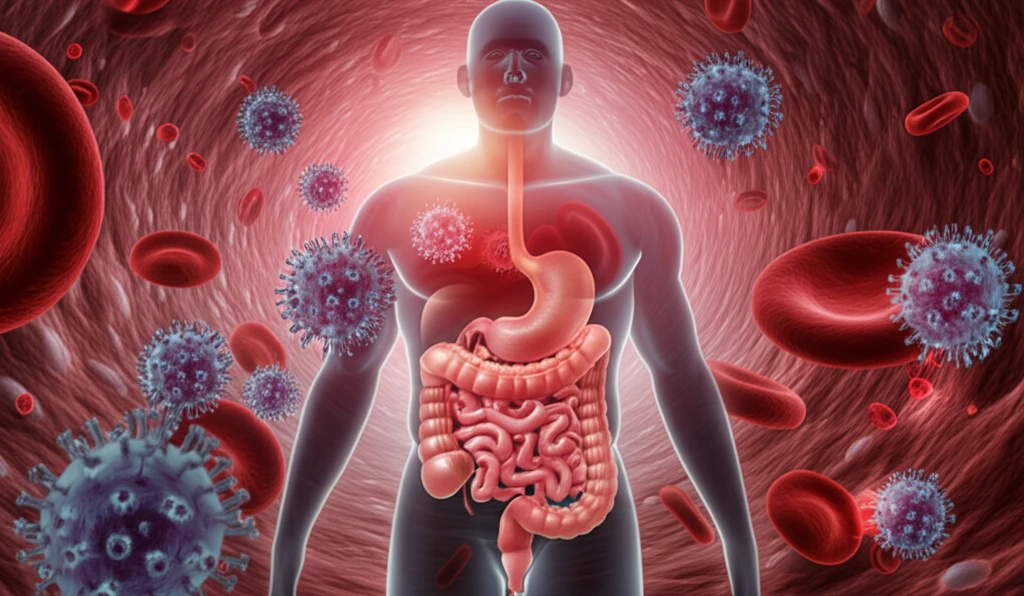
HIV's Hidden Battleground: How Gut and Blood Differences Impact the Fight Against Latency

"Groundbreaking research reveals that the mechanisms governing HIV latency differ significantly between the gut and blood, suggesting new strategies for a potential cure."
For decades, the quest to cure HIV has been hampered by the virus's ability to hide within the body, establishing what's known as latency. This means HIV can remain dormant, evading detection and treatment, only to reactivate later. Scientists have primarily focused on understanding this process in blood cells, but a groundbreaking study now reveals a more complex picture.
Most HIV-infected cells actually reside in lymphoid tissues, particularly in the gut. The gut provides a unique environment, teeming with immune cells and constantly exposed to various stimuli. Researchers at the University of California, San Francisco (UCSF), and the San Francisco Veterans Affairs Medical Center hypothesized that this unique environment might influence how HIV establishes and maintains latency.
Their research has uncovered a significant difference in how HIV transcription – the process of creating new virus – is blocked in the gut compared to the blood. This discovery has profound implications for future HIV cure strategies, suggesting that a one-size-fits-all approach may not be sufficient.
The Latent HIV Reservoir: A Persistent Threat
HIV latency represents one of the most formidable obstacles in the fight against AIDS. When HIV enters a latent state, it becomes virtually invisible to the immune system and cannot be targeted by antiretroviral drugs, allowing the virus to persist indefinitely in infected individuals. This dormancy mechanism means that even patients with undetectable viral loads on ART remain at risk of viral reactivation. The molecular basis of this latency involves complex interactions between viral proteins like Tat and host cellular factors that are still being elucidated.
Current Methodological Challenges
Researchers employ high-dimensional phenotyping techniques like CyTOF to trace latently infected cells, though the inability to directly phenotype these cells in vivo remains a significant limitation. The size of the latent reservoir is influenced by multiple factors including host immune response, cellular metabolism, and timing of ART initiation. Post-integration latency presents the most complex mechanism for evading both the immune system and HAART-based therapies. Various in vitro latency models have been developed, but translating findings to in vivo conditions continues to pose challenges.
Understanding Latency: Key Breakthroughs
Despite decades of research, the origin of latently infected cells has remained elusive, representing a major gap in our understanding of HIV persistence. A landmark study provided new insights into the mechanism that results in HIV-1 latency, offering potential pathways for reactivating and destroying latent proviruses. More than 20 years after the development of combination antiretroviral therapy, complete eradication of HIV infection has not been achieved, underscoring the multifaceted nature of the latency challenge. These foundational discoveries continue to shape current approaches to HIV cure research.
Unlocking HIV's Tissue-Specific Secrets
The study, published in PLOS Pathogens, meticulously examined HIV transcription in both the gut and blood of individuals on suppressive antiretroviral therapy (ART). Researchers used a novel technique to quantify various HIV transcripts, each representing a different stage in the viral replication process. These included transcripts indicative of:
- Transcriptional interference ("Read-through"): Whether the virus's genetic code is being disrupted by surrounding DNA.
- Initiation (TAR): The very first step of HIV RNA creation.
- Elongation (Long LTR): Copying the HIV genetic code into RNA.
- Distal Transcription (Nef): Further copying into the HIV genetic code to create RNA.
Cutting-Edge Discoveries in Latency Research
Human immunodeficiency virus latency remains the major hurdle in HIV eradication, with the process involving multiple molecular pathways that are still being characterized. Recent research has highlighted that HIV latency is not a passive state but an actively maintained condition involving complex interactions between viral and host factors. The development of latency-reversing agents and other therapeutic strategies continues to evolve as our understanding of these mechanisms deepens. These advances bring us closer to developing effective cure strategies, though significant challenges remain.
Challenges and Conceptual Shifts
The failure of highly active antiretroviral therapy to eradicate HIV, even in patients with undetectable viral loads for years, underscores the profound challenges in combating this infection. Researchers have proposed that latency may not be an accidental byproduct of infection but rather a deliberate survival strategy employed by HIV. This conceptual shift suggests that the virus has evolved mechanisms to establish latency as a way to ensure its long-term persistence. Such insights challenge traditional approaches and open new avenues for therapeutic intervention.
Comparing Latency Models and Delivery Methods
Researchers have developed innovative lipid nanoparticle formulations capable of transfecting resting primary human T cells, enabling delivery of mRNAs that reactivate latent HIV. Comprehensive comparisons of different HIV latency models reveal that protein kinase C agonists and PHA reactivate latent HIV uniformly across models, though drugs in most other classes show variable efficacy. Studies comparing various in vitro models suggest that latent infection may be associated with disrupted viral RNA sensing, interferon signaling, and interferon-stimulated gene activation. These comparative approaches are essential for identifying the most reliable experimental systems for testing cure strategies.
Implications for Future HIV Cure Strategies
These findings have critical implications for the development of future HIV cure strategies. The discovery that HIV latency is governed by different mechanisms in the gut and blood underscores the need for tailored approaches. Therapies designed to reactivate the virus from latency may need to be optimized for specific tissue compartments to be truly effective. The lower levels of HIV transcriptional initiation in the gut suggest that this site may be enriched for latently-infected cells, cells in a "deeper" state of latency, or cells in which latency is maintained by different mechanisms. This discovery provides important insight into the ongoing struggle against HIV, potentially paving the way for strategies that target the virus wherever it hides.
Expert Perspectives on Cure Strategies
Histone deacetylase inhibitors (HDACis) represent a promising class of latency-reversing agents that can shock latently infected CD4+ T cells into producing viral proteins, making them visible to the immune system. The depletion of the HIV reservoir is considered the only way to end the epidemic, driving intense research into these and other therapeutic approaches. Expert opinion emphasizes that eradication of HIV from anatomical reservoirs like the brain will require specific methodologies tailored to different patient populations. These insights highlight the need for multi-pronged strategies that address latency across all tissue compartments.
The Path Forward
One priority in HIV cure research is purging latent reservoirs, but the mechanisms responsible for latency and the anatomical locations of latently infected cells remain active areas of investigation. The persistence of latent HIV reservoirs that evade immune detection, even during effective antiretroviral therapy, continues to present the primary challenge to eradication. Emerging research into cell surface markers of HIV latency may provide new targets for therapeutic intervention and diagnostic tools. These frontiers represent critical steps toward developing functional cures for HIV.
Latency as a Fundamental Barrier
Viral latency remains one of the premier challenges in developing an HIV cure, as it enables the virus to enter a hibernation state that escapes eradication by currently available antiretroviral therapies. This persistence mechanism underscores why even the most effective treatment regimens cannot completely eliminate the virus from the body. The challenge extends beyond individual treatment to broader public health implications, as latent reservoirs ensure continued viral persistence in the population. Addressing this barrier requires innovative approaches that go beyond traditional antiretroviral strategies.
Clinical Implications and Ongoing Research
Studies have shown that HIV latency establishment capacity differs across viral subtypes according to the sequence of the LTR AP-1 binding motif, suggesting that genetic variation influences clinical outcomes. Researchers are investigating whether certain proteins involved in latency ultimately prove beneficial or counterproductive in the context of HIV, which favors a latency phenotype. Additionally, HIV has been shown to lie dormant in the brain, with post-integration DNA levels highest in specimens obtained before HAART and enriched in white matter. These findings highlight the importance of considering anatomical and genetic factors in the development of effective cure strategies.