
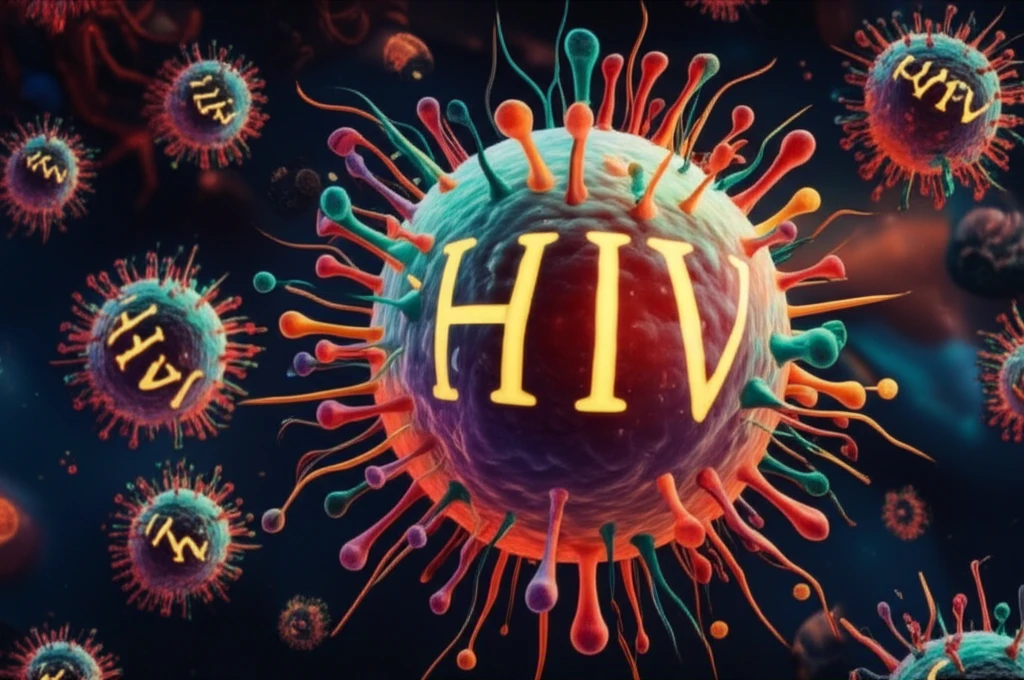
Illustration of the HIV virus mutating in response to drug treatments.

HIV Drug Resistance: Understanding the Threat and What You Need to Know

"A Comprehensive Guide to Drug Resistance, Prevention, and the Latest Research."


In the ongoing battle against HIV, a new challenge has emerged: drug resistance. As antiretroviral therapies (ART) become more widely available, the virus has shown a remarkable ability to adapt and evolve, leading to strains that are less susceptible to these life-saving medications. This article explores the complex issue of HIV drug resistance, providing essential information for those living with HIV, healthcare professionals, and anyone seeking to understand this critical aspect of the epidemic.

HIV drug resistance occurs when the virus mutates, making the standard medications less effective. These mutations can develop spontaneously or are promoted by various factors, including inconsistent medication adherence, drug interactions, and the use of suboptimal treatment regimens. Understanding these factors is crucial in preventing and managing drug resistance.

This comprehensive guide aims to break down the science of HIV drug resistance, highlighting the current research, discussing the latest trends, and offering practical advice for prevention and management. By understanding the nuances of this issue, individuals can make informed decisions, work with healthcare providers, and contribute to the global effort to combat HIV effectively.

What is HIV Drug Resistance and How Does It Develop?

Illustration of the HIV virus mutating in response to drug treatments.

HIV drug resistance occurs when the human immunodeficiency virus (HIV) changes, or mutates, in a way that makes antiviral drugs less effective. These changes happen within the virus's genetic material, making it harder for medications to block the virus's replication. This is a natural phenomenon that can occur with any virus, including HIV. The development of resistance is influenced by several factors, including the type of medication, the patient's adherence to treatment, and the specific characteristics of the virus itself.

The process of drug resistance often begins with a single mutation within the virus. When a person with HIV takes antiretroviral drugs, these drugs target specific parts of the virus's replication process. If the virus mutates in one of these areas, the drug may no longer be able to effectively bind to or interfere with the virus. As a result, the virus can continue to replicate, leading to increased viral load and a decline in the patient's immune system.

  • Mutation: The virus mutates spontaneously.
  • Drug Pressure: Antiretroviral drugs exert pressure on the virus, forcing it to adapt.
  • Replication: The mutated virus replicates and spreads, becoming the dominant strain.
  • Resistance: The virus becomes resistant to one or more drugs.
Various factors influence the speed and extent of drug resistance development. Poor adherence to medication is a primary driver, as inconsistent drug levels can create an environment where the virus has an opportunity to mutate and survive. The choice of initial antiretroviral regimen is another factor. Using a regimen with a low genetic barrier to resistance (meaning it requires fewer mutations to become resistant) increases the risk of developing resistance. Lastly, individual characteristics such as the presence of other infections (e.g., hepatitis B) may also play a role.

Conclusion: Staying Informed and Proactive

HIV drug resistance is a complex and evolving challenge in the fight against HIV. By understanding the causes, risks, and prevention strategies, individuals can protect their health and contribute to the global effort to combat this issue. Ongoing research and surveillance are critical to staying ahead of the virus and ensuring that effective treatment options remain available. Consulting with healthcare professionals, adhering to prescribed medications, and staying informed about the latest developments are key steps in managing HIV and preventing the development of drug resistance.

About this Article -

This article was crafted using a human-AI hybrid and collaborative approach. AI assisted our team with initial drafting, research insights, identifying key questions, and image generation. Our human editors guided topic selection, defined the angle, structured the content, ensured factual accuracy and relevance, refined the tone, and conducted thorough editing to deliver helpful, high-quality information.See our About page for more information.

Everything You Need To Know

1

What exactly is HIV drug resistance, and why is it a concern in managing HIV?

HIV drug resistance is when HIV mutates, making antiretroviral drugs less effective at suppressing the virus. This is concerning because resistant strains can lead to treatment failure, increased viral load, declined immune system, and disease progression. Developing resistance undermines the effectiveness of antiretroviral therapies (ART), which are crucial for managing HIV and preventing its progression to AIDS. Further research and development in treatment options is needed to combat resistance.

2

What are the primary factors that contribute to the development of HIV drug resistance?

Several factors contribute to the development of HIV drug resistance. Poor adherence to prescribed medications is a significant factor because inconsistent drug levels give the virus opportunities to mutate and survive. Additionally, using an antiretroviral regimen with a low genetic barrier to resistance increases the risk of resistance. Characteristics of individuals, such as co-infections like hepatitis B, can also play a role. The virus mutates spontaneously, then antiretroviral drugs exert pressure on the virus, forcing it to adapt. The mutated virus replicates and spreads becoming the dominant strain, ultimately the virus becomes resistant to one or more drugs.

3

Can you elaborate on the process by which HIV develops resistance to antiretroviral drugs?

The process of HIV developing resistance to antiretroviral drugs involves several steps. First, the virus undergoes a mutation in its genetic material. When a person takes antiretroviral drugs, these medications target specific parts of the virus's replication process. If the virus mutates in one of these targeted areas, the drug may no longer effectively bind to or interfere with the virus. As a result, the virus can continue to replicate, leading to increased viral load and a decline in the patient's immune system. This mutated, drug-resistant virus then becomes the dominant strain.

4

How does inconsistent medication adherence specifically lead to HIV drug resistance?

Inconsistent medication adherence is a key driver of HIV drug resistance. When antiretroviral drugs are not taken consistently, drug levels in the body fluctuate. These fluctuating levels provide 'windows of opportunity' for the virus to replicate in the presence of suboptimal drug concentrations. This allows the virus to mutate and develop resistance to the drug. If medication is not taken as prescribed the virus mutates spontaneously then antiretroviral drugs exert pressure on the virus, forcing it to adapt. The mutated virus replicates and spreads becoming the dominant strain, ultimately the virus becomes resistant to one or more drugs.

5

What role does ongoing research play in combating HIV drug resistance, and how can patients stay informed about the latest developments?

Ongoing research is critical in combating HIV drug resistance by helping to identify new mutations, understand resistance mechanisms, and develop new antiretroviral drugs that can overcome resistance. Research also focuses on optimizing treatment strategies to minimize the risk of resistance. Patients can stay informed by consulting regularly with their healthcare providers, who can provide updates on the latest research and treatment guidelines. Staying informed about research and developments are key steps in managing HIV and preventing the development of drug resistance.

Newsletter Subscribe

Subscribe to get the latest articles and insights directly in your inbox.