
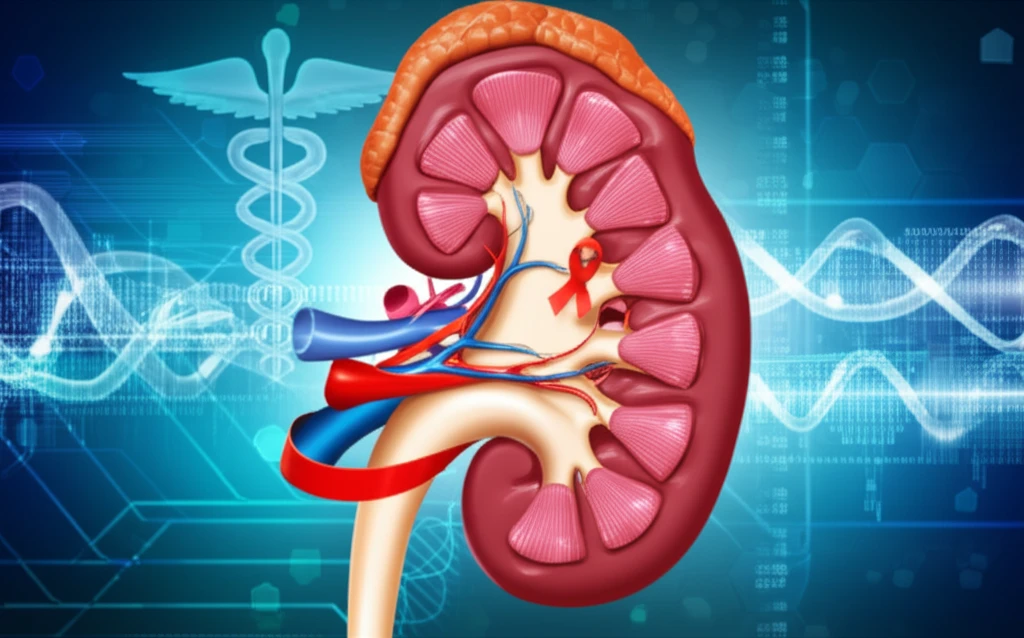
Surreal illustration of a healthy kidney intertwined with an HIV care ribbon.

HIV and Kidney Transplants: Navigating the Complexities of SRTR Data

"Explore the insights and limitations of using Scientific Registry of Transplant Recipients (SRTR) data to improve outcomes for HIV-positive kidney transplant recipients."


In a recent issue of the American Journal of Transplantation (AJT), Sawinski et al. delved into the impact of combined antiretroviral therapy (cART) on kidney transplant outcomes in HIV-infected recipients. Their analysis, which utilized the Scientific Registry of Transplant Recipients (SRTR) data linked to IMS pharmacy refills, revealed critical insights into the role of protease inhibitors (PI) in transplant success.

The study highlighted a concerning trend: cART regimens based on protease inhibitors (PI) appeared to have a detrimental effect on patient and graft survival. This finding raises important questions about the complexities of managing HIV-positive recipients undergoing kidney transplantation.

While the reasons behind these poorer outcomes remain unclear, the research suggests that drug-drug interactions in PI-based regimens may alter immunosuppression exposure, leading to potential toxicities. This article will explore the strengths and weaknesses of using SRTR data to guide the management of HIV-infected kidney transplant recipients, drawing upon the original research and other relevant studies.

The Role of Protease Inhibitors and Their Impact on Transplant Outcomes

Surreal illustration of a healthy kidney intertwined with an HIV care ribbon.

Protease inhibitors (PIs) have long been a cornerstone of HIV treatment, but their use in transplant recipients presents unique challenges. Several studies have indicated significantly higher rejection rates following kidney and liver transplantation in HIV-positive recipients, ranging from 30% to 40%. While this elevated rejection rate is partly due to immune dysregulation in HIV-infected individuals, PIs also play a significant role.

One of the primary concerns with PIs is their inhibition of the cytochrome P450 3A4 (CYP3A4) system. This inhibition necessitates significant dose reductions and irregular dosing intervals for calcineurin inhibitors (CNIs), commonly used immunosuppressants. Inadequate exposure to CNIs can lead to higher rejection rates, while excessive inhibition can result in toxic CNI levels, impacting both patient and graft survival.

  • Higher rejection rates: Studies show a 30-40% rejection rate in HIV-positive recipients post-transplant.
  • CYP3A4 inhibition: Protease inhibitors disrupt the CYP3A4 system, affecting CNI dosing.
  • CNI exposure variability: Poor CNI exposure leads to rejection; excessive levels cause toxicity.
Sawinski et al.'s study highlights the difficulty in detecting differences in rejection rates within SRTR data. This limitation stems from the reliance on transplant centers to report rejection events to the UNOS registry, a process that can be inconsistent due to being an unfunded mandate. Therefore, accurately capturing rejection rates across different regimens remains a challenge.

Moving Forward: Optimizing Care for HIV-Positive Transplant Recipients

The insights gained from SRTR data, despite its limitations, are invaluable in shaping the management of HIV-positive kidney transplant recipients. As Sawinski et al.'s analysis demonstrates, integrase-based cART regimens offer a promising alternative to PI-based regimens, reducing the risk of drug-drug interactions and improving overall outcomes. During pre-transplant evaluation, all HIV positive recipients should be evaluated by HIV/infectious disease specialists, who can determine if a switch to a non-Pl based cART is a feasible strategy. If a switch to a non-PI based regimen can safely be done based on resistance patterns, post-transplant management will be greatly facilitated by eliminating potentially dangerous drug-drug interactions. The ongoing efforts to refine data collection and analysis will undoubtedly contribute to further advancements in the field, ultimately enhancing the survival and quality of life for these vulnerable patients.

About this Article -

This article was crafted using a human-AI hybrid and collaborative approach. AI assisted our team with initial drafting, research insights, identifying key questions, and image generation. Our human editors guided topic selection, defined the angle, structured the content, ensured factual accuracy and relevance, refined the tone, and conducted thorough editing to deliver helpful, high-quality information.See our About page for more information.

This article is based on research published under:

DOI-LINK: 10.1111/ajt.14479, Alternate LINK

Title: Strengths And Weaknesses Of Using Srtr Data To Shape The Management Of The Hiv-Infected Kidney Transplant Recipient

Subject: Pharmacology (medical)

Journal: American Journal of Transplantation

Publisher: Wiley

Authors: Peter G. Stock

Published: 2017-09-23

Everything You Need To Know

1

How does the Scientific Registry of Transplant Recipients (SRTR) data contribute to managing HIV-infected kidney transplant recipients?

Scientific Registry of Transplant Recipients (SRTR) data provides insights into outcomes for HIV-positive kidney transplant recipients, helping to shape their management. Analysis of the Scientific Registry of Transplant Recipients (SRTR) data, like the study by Sawinski et al., reveals trends related to antiretroviral therapies, such as the impact of protease inhibitors (PIs) on patient and graft survival. While the Scientific Registry of Transplant Recipients (SRTR) data has limitations, such as inconsistencies in reporting rejection events, it remains invaluable for identifying potential areas for improvement in transplant care. Efforts to refine data collection can further enhance the survival and quality of life for these patients.

2

What are the challenges associated with using protease inhibitors (PIs) in HIV-positive kidney transplant recipients, and why do they pose a risk?

Protease inhibitors (PIs), while effective for HIV treatment, present challenges in transplant recipients due to their inhibition of the cytochrome P450 3A4 (CYP3A4) system. This inhibition necessitates dose adjustments for calcineurin inhibitors (CNIs), common immunosuppressants. Inadequate calcineurin inhibitors (CNIs) exposure can lead to higher rejection rates, while excessive inhibition can result in toxic calcineurin inhibitors (CNIs) levels. Sawinski et al.'s study indicated that protease inhibitor (PI)-based regimens might have a detrimental effect on patient and graft survival. Switching to non-protease inhibitor (PI) based regimens using integrase inhibitors can reduce drug-drug interactions and improve overall outcomes.

3

What did the Sawinski et al. study reveal about the impact of combined antiretroviral therapy (cART) on kidney transplant outcomes in HIV-infected recipients, using the Scientific Registry of Transplant Recipients (SRTR) data?

The Sawinski et al. study, which utilized the Scientific Registry of Transplant Recipients (SRTR) data, revealed that combined antiretroviral therapy (cART) regimens based on protease inhibitors (PI) appeared to have a detrimental effect on patient and graft survival in HIV-infected kidney transplant recipients. This finding highlights the complexities of managing HIV-positive recipients undergoing kidney transplantation. The Scientific Registry of Transplant Recipients (SRTR) data linked to IMS pharmacy refills provided critical insights into the role of protease inhibitors (PIs) in transplant success, suggesting that integrase-based cART regimens offer a promising alternative to protease inhibitor (PI)-based regimens.

4

How can the risks associated with protease inhibitors (PIs) be mitigated in HIV-positive kidney transplant recipients, according to current recommendations?

To mitigate the risks associated with protease inhibitors (PIs) in HIV-positive kidney transplant recipients, HIV/infectious disease specialists should evaluate all HIV-positive recipients during pre-transplant evaluation. These specialists can determine if switching to a non-protease inhibitor (PI)-based combined antiretroviral therapy (cART) regimen is feasible. If a switch to a non-protease inhibitor (PI)-based regimen can be safely done based on resistance patterns, post-transplant management will be greatly facilitated by eliminating potentially dangerous drug-drug interactions. Integrase-based combined antiretroviral therapy (cART) regimens offer a promising alternative to protease inhibitor (PI)-based regimens, reducing the risk of drug-drug interactions and improving overall outcomes.

5

What are the limitations of relying on Scientific Registry of Transplant Recipients (SRTR) data for assessing rejection rates in HIV-positive kidney transplant recipients?

One of the key limitations of relying on Scientific Registry of Transplant Recipients (SRTR) data for assessing rejection rates is the inconsistency in reporting rejection events. Transplant centers are responsible for reporting rejection events to the UNOS registry, but this process is an unfunded mandate, leading to variations in reporting practices. Therefore, accurately capturing rejection rates across different regimens remains a challenge. Sawinski et al.'s study highlights the difficulty in detecting differences in rejection rates within Scientific Registry of Transplant Recipients (SRTR) data due to these inconsistencies, making it essential to interpret the Scientific Registry of Transplant Recipients (SRTR) data with caution and consider alternative data sources for a comprehensive understanding.

Newsletter Subscribe

Subscribe to get the latest articles and insights directly in your inbox.