
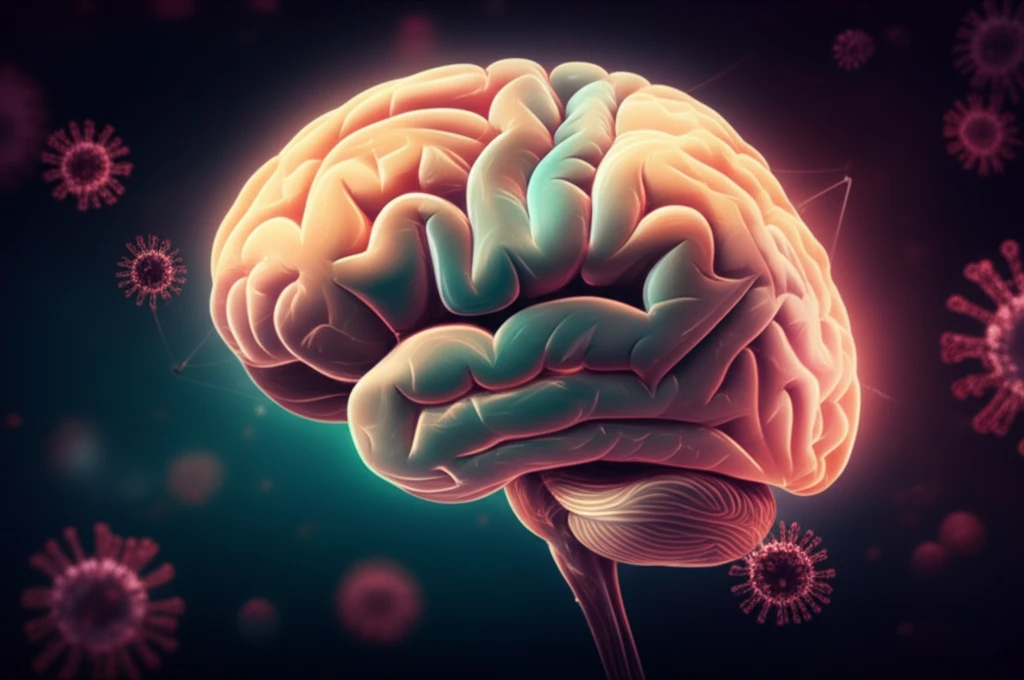
Glowing brain intertwined with colorful viral structures representing HIV-1 subtype C

HIV-1 Subtype C and the Brain: Unraveling the Mystery of Asymptomatic Meningitis

"A Deep Dive into Genetic Compartmentalization and Biomarker Dynamics"


Human Immunodeficiency Virus (HIV) presents a complex challenge, especially when it comes to how it affects different parts of the body. Genetic compartmentalization, where the virus shows genetic differences in various tissue compartments, adds another layer of intricacy. A recent study has shed light on this phenomenon, particularly concerning HIV-1 subtype C and its impact on the central nervous system (CNS).

HIV-1 can infiltrate the CNS soon after transmission, potentially leading to neurodegeneration. While studies have extensively characterized HIV-1 subtype B's effects on the CNS, less is known about subtype C, which is globally more prevalent. Researchers have been investigating how HIV evades the body's defenses, sometimes leading to what's known as 'CSF viral escape.' This is when the virus persists in the cerebrospinal fluid (CSF) despite being suppressed in the blood through antiretroviral therapy.

A new case study, published in the Journal of NeuroVirology, details a unique instance of asymptomatic meningitis in a patient with HIV-1 subtype C. The study explores the dynamics of inflammation, immune responses, and neuronal injury by assessing biomarkers in CSF and serum samples collected over time. What makes this case particularly interesting is that the patient's condition resolved spontaneously without antiretroviral treatment.

Decoding Genetic Compartmentalization and its Impact on the Brain

Glowing brain intertwined with colorful viral structures representing HIV-1 subtype C

Genetic compartmentalization happens when HIV in different parts of the body evolves differently, creating distinct viral populations. This study looked at a person infected with HIV-1 subtype C, who wasn't on antiretroviral treatment. Researchers closely monitored inflammation, immune responses, and any damage to nerve cells by regularly checking their cerebrospinal fluid (CSF) and blood samples. The aim was to see how HIV behaves differently in the CNS compared to the rest of the body.

The initial CSF sample revealed some surprising findings. There was a noticeable increase in white blood cells (382 cells/mm³) along with elevated levels of certain cytokines and chemokines, including TNFα, IL-10, IP-10, and RANTES. These substances typically indicate inflammation and immune activity. Interestingly, the serum sample analysis showed normal cytokine levels, with only IP-10 slightly elevated. This suggested that the immune response in the CNS was somewhat independent from the overall immune response in the body.

  • Persistent Immune Stimulation: The patient had consistently high levels of sCD14, neopterin, and β2M, pointing to ongoing immune stimulation in the CNS.
  • Asymptomatic Meningitis: The patient experienced a transient episode of asymptomatic meningitis.
  • Spontaneous Resolution: The condition resolved without antiretroviral therapy, showcasing the body's potential to manage the infection in specific cases.
Further genetic analysis revealed distinct differences between the HIV found in the CSF and that in the blood, confirming compartmentalization. This means the virus in the CNS was genetically different from the virus circulating in the rest of the body. This case study not only highlights the neurotropic nature of HIV-1 subtype C but also underscores the importance of understanding compartmentalization. By understanding these dynamics, researchers can develop targeted strategies to prevent neurological complications in people living with HIV.

What Does This Mean for People Living with HIV?

This case study offers a new perspective on how HIV-1 subtype C affects the brain. The fact that the patient's meningitis resolved on its own suggests that the body has mechanisms to control the virus in the CNS, at least in some instances. However, it's crucial to remember that this is just one case, and more research is needed to understand how common this phenomenon is and what factors contribute to it.

About this Article -

This article was crafted using a human-AI hybrid and collaborative approach. AI assisted our team with initial drafting, research insights, identifying key questions, and image generation. Our human editors guided topic selection, defined the angle, structured the content, ensured factual accuracy and relevance, refined the tone, and conducted thorough editing to deliver helpful, high-quality information.See our About page for more information.

Everything You Need To Know

1

What is Genetic Compartmentalization in the context of HIV-1 subtype C?

Genetic compartmentalization refers to the phenomenon where HIV-1, specifically subtype C in this context, evolves differently within various parts of the body. This leads to distinct viral populations in different tissue compartments, such as the central nervous system (CNS) compared to the blood. The study confirmed this by finding genetic differences between the virus found in the cerebrospinal fluid (CSF) and that in the blood of the patient. This is crucial because it implies that the virus within the CNS might behave differently than the virus circulating elsewhere in the body, potentially affecting treatment strategies and disease progression.

2

What were the key findings regarding the patient with asymptomatic meningitis caused by HIV-1 subtype C?

The case study revealed several important findings. First, the patient experienced asymptomatic meningitis, meaning inflammation of the meninges (membranes surrounding the brain and spinal cord) without noticeable symptoms. Second, the patient exhibited an elevated white blood cell count in the cerebrospinal fluid (CSF) and increased levels of cytokines and chemokines, including TNFα, IL-10, IP-10, and RANTES, indicating inflammation and immune activity within the central nervous system (CNS). Third, the patient's condition resolved spontaneously without antiretroviral therapy, suggesting the body's capacity to manage the infection in certain cases. Finally, genetic analysis confirmed that the virus in the CSF was genetically distinct from the virus in the blood, highlighting compartmentalization.

3

How did the immune response in the central nervous system (CNS) differ from the overall immune response in the patient's body?

The study revealed that the immune response within the central nervous system (CNS) was somewhat independent from the systemic immune response. While the cerebrospinal fluid (CSF) showed elevated levels of inflammatory markers such as cytokines and chemokines, the serum sample analysis showed normal cytokine levels, with only IP-10 slightly elevated. This suggests that the immune response in the brain was more pronounced locally, with a stronger inflammatory reaction compared to the rest of the body. The patient also exhibited persistent immune stimulation in the CNS, as indicated by consistently high levels of sCD14, neopterin, and β2M.

4

What are the implications of 'CSF viral escape' in the context of HIV-1 subtype C and how does it relate to this case study?

CSF viral escape occurs when HIV persists in the cerebrospinal fluid (CSF) despite being suppressed in the blood through antiretroviral therapy. This phenomenon highlights the complexity of HIV-1 infection, particularly within the central nervous system (CNS). While this specific case study did not explicitly address CSF viral escape in terms of antiretroviral treatment failure in the CSF, it explored a related concept. The study investigated how HIV-1 subtype C interacts with the CNS, and the patient's asymptomatic meningitis and subsequent spontaneous resolution are related to the body's ability to control the virus in the CNS. Understanding the mechanisms behind these processes could inform the development of targeted therapies to prevent or treat neurological complications associated with HIV-1 infection.

5

What does this case study tell us about the neurotropic nature of HIV-1 subtype C and what further research is needed?

This case study underscores the neurotropic nature of HIV-1 subtype C, meaning its tendency to affect the central nervous system (CNS). The presence of asymptomatic meningitis and the distinct viral populations in the cerebrospinal fluid (CSF) versus the blood support this. The spontaneous resolution of the meningitis suggests the body's ability to control the virus in some instances. However, further research is needed to understand how common this phenomenon is, the factors that contribute to it, and how to develop targeted strategies to prevent neurological complications in people living with HIV-1 subtype C. Further investigation into genetic compartmentalization and the specific immune responses within the CNS is also crucial for developing effective treatments and interventions.

Newsletter Subscribe

Subscribe to get the latest articles and insights directly in your inbox.