
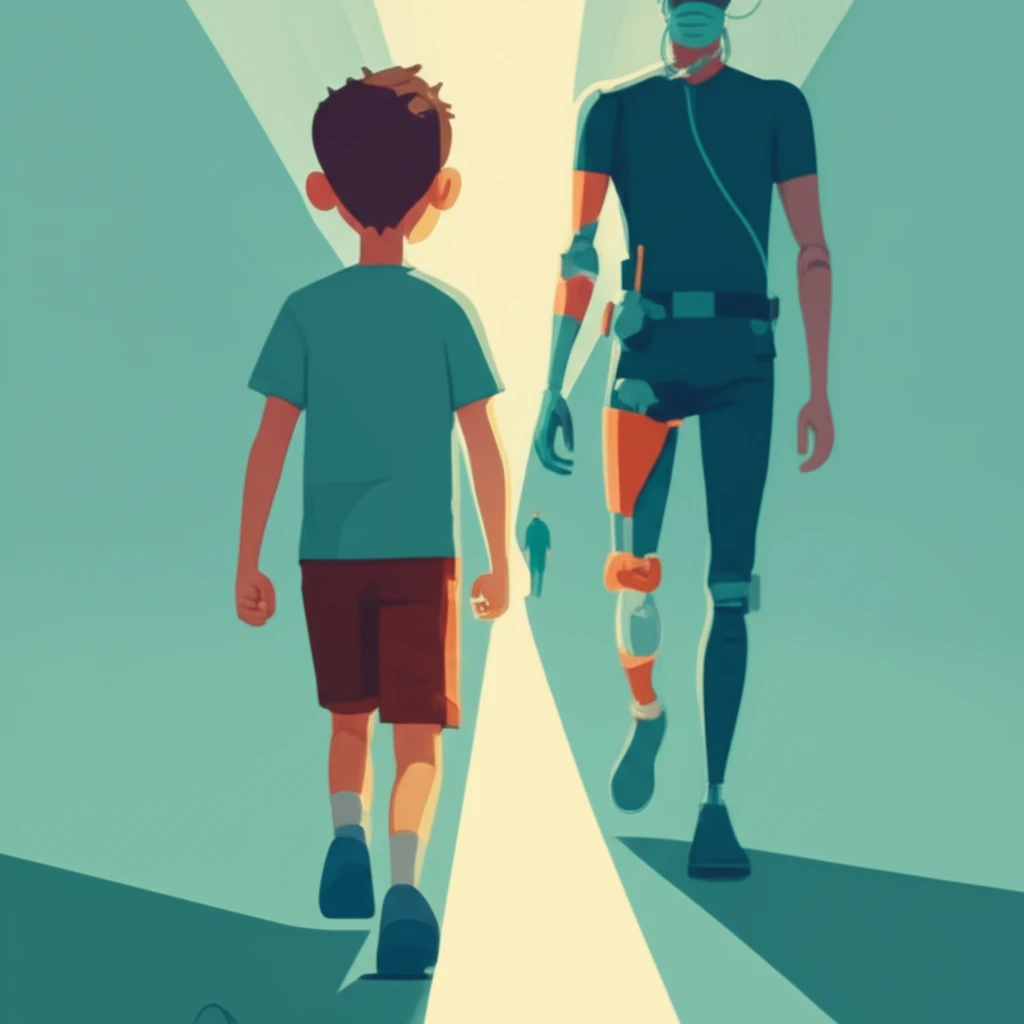
Child with cerebral palsy walking towards a bright future with hip surveillance support.

Hip Surveillance in Children with Cerebral Palsy: Why It Matters and What You Need to Know

"Discover the importance of hip surveillance programs for children with cerebral palsy, addressing practice variations and improving quality of care."


Cerebral palsy (CP) encompasses a group of conditions affecting movement and posture due to non-progressive disturbances in the developing brain. A significant concern for children with CP is the risk of hip displacement, which can lead to pain, impaired mobility, and reduced quality of life. Studies show that approximately 35% of children with CP experience hip displacement.

Hip surveillance programs are designed to detect progressive hip displacement early, enabling timely referral for orthopedic assessment and management. Early intervention can prevent hip dislocation and avoid the need for more extensive salvage surgery later on. While these programs have been adopted in various countries, a standardized approach is lacking in the United States.

A 2016 survey of the Pediatric Orthopaedic Society of North America (POSNA) aimed to understand current orthopedic practices regarding hip surveillance in children with CP, identify areas of variation, and explore the potential for developing national guidelines.

Understanding Hip Surveillance for Cerebral Palsy

Child with cerebral palsy walking towards a bright future with hip surveillance support.

The POSNA survey revealed several key insights. A majority of respondents (90%) agreed that a dislocated hip in a child with CP is painful and should be prevented through hip surveillance and surgical treatment. An overwhelming 93% indicated they would support a national surveillance program if one were available. Critical elements for a hip surveillance program were identified as age (79%), Gross Motor Function Classification System (GMFCS) level (81%), and migration percentage (MP) (78%).

Despite the consensus on the importance of hip surveillance, the survey highlighted significant variations in current practices. Only 18% of respondents followed a regular CP hip surveillance program, with about half of those adopting the Australian guidelines. The majority (75%) reported that their hospital or institution does not currently follow a specific CP hip surveillance protocol.

  • Age and GMFCS Level: When to start the first screening.
  • Migration Percentage (MP): A key indicator of hip displacement.
  • Radiographic Views: Standardized methods for taking radiographs.
The survey also explored thresholds for intervention. Most respondents (57%) felt that a hip "at risk" for displacement had an MP between 20% and 30%, while surgery should be considered once the MP exceeded 40% (50% of respondents). Orthopedic surgeons were identified as critical participants in a successful hip surveillance program (95%).

Moving Forward: Standardizing Hip Surveillance

The POSNA survey underscores the need for a standardized approach to hip surveillance in children with CP in the United States. While there is agreement on the importance of early detection and intervention, significant practice variations exist. The American Academy of Cerebral Palsy and Developmental Medicine (AACPDM), with input from POSNA members, is developing a clinical care pathway for hip surveillance. This initiative aims to synthesize current surveillance programs into a unified guideline, ultimately improving the quality and value of care for patients and families.

About this Article -

This article was crafted using a human-AI hybrid and collaborative approach. AI assisted our team with initial drafting, research insights, identifying key questions, and image generation. Our human editors guided topic selection, defined the angle, structured the content, ensured factual accuracy and relevance, refined the tone, and conducted thorough editing to deliver helpful, high-quality information.See our About page for more information.

Everything You Need To Know

1

What are hip surveillance programs and why are they needed?

Hip surveillance programs are designed to detect early signs of progressive hip displacement in children with Cerebral Palsy (CP). The goal is to enable timely orthopedic assessment and management. Early intervention is important to prevent hip dislocation and the need for extensive salvage surgery later in life. Hip surveillance programs typically involve regular screenings that monitor the hip's condition.

2

Why is hip displacement a concern for children with Cerebral Palsy?

Hip displacement is a common issue in children with Cerebral Palsy (CP), with studies suggesting that approximately 35% are affected. If hip displacement is not addressed, it can lead to pain, impaired mobility, and a reduced quality of life. Hip surveillance programs help to prevent these complications by enabling early detection and intervention.

3

What is the Gross Motor Function Classification System (GMFCS) and how is it used in hip surveillance?

The Gross Motor Function Classification System (GMFCS) is a key element in hip surveillance programs. It is a standardized system used to classify the motor abilities of children with Cerebral Palsy (CP). The GMFCS level, along with age and migration percentage (MP), helps determine when to start the first screening and to evaluate the risk of hip displacement. Knowing a child's GMFCS level helps tailor the surveillance program to their specific needs.

4

What is Migration Percentage (MP) and why is it important in hip surveillance?

Migration Percentage (MP) is a critical indicator of hip displacement used in hip surveillance programs. It is a measurement taken from radiographs to assess the degree to which the hip is displaced. Orthopedic surgeons use the MP to determine the risk of hip dislocation and to decide when intervention, such as surgery, is necessary. Most surgeons consider a hip "at risk" when the MP is between 20% and 30%, and surgery is often considered when it exceeds 40%.

5

What efforts are being made to standardize hip surveillance for children with Cerebral Palsy?

The American Academy of Cerebral Palsy and Developmental Medicine (AACPDM), with input from the Pediatric Orthopaedic Society of North America (POSNA), is developing a clinical care pathway for hip surveillance. The aim is to create a unified guideline that synthesizes current surveillance programs, reduces practice variations, and improves the overall quality of care for children with Cerebral Palsy (CP) and their families. The goal is to improve the effectiveness and consistency of hip surveillance across different healthcare settings.

Newsletter Subscribe

Subscribe to get the latest articles and insights directly in your inbox.