
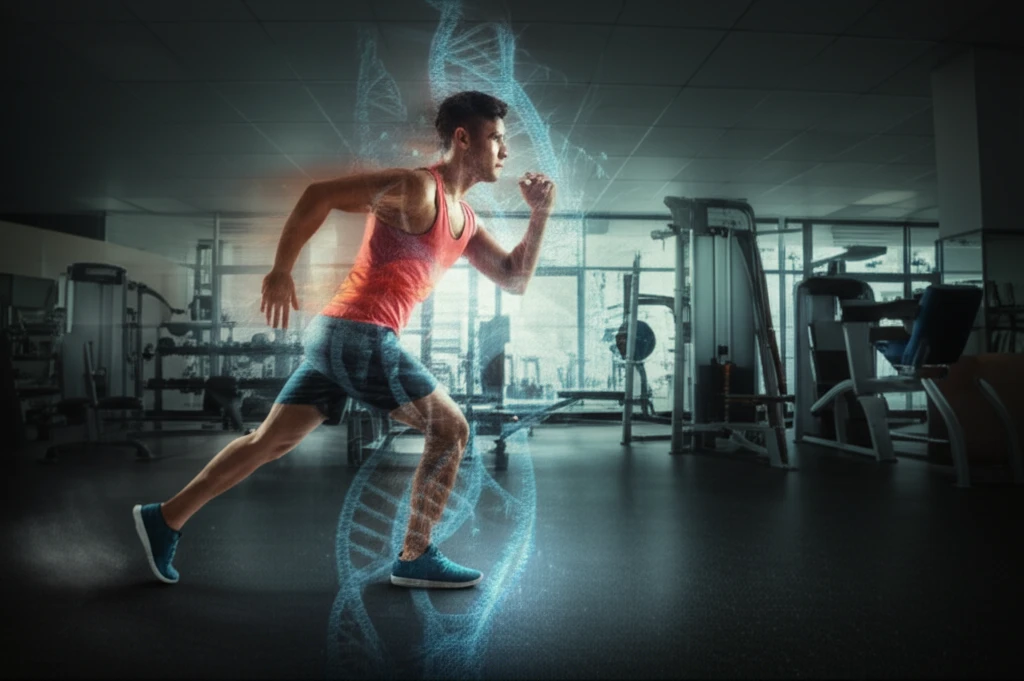
HIIT workout with half the body in fast-forward and slow-motion, symbolizing workout efficiency.

HIIT Showdown: Is a Quickie Workout as Good as a Long Sweat Session?

"The truth about growth markers and whether your 5-minute blitz is really stacking up against a 15-minute burn."


In today's fast-paced world, squeezing in a workout often feels like a win. High-Intensity Functional Training (HIFT) has surged in popularity because it promises maximum results in minimal time. But is a quick five-minute HIFT session as effective as a more extended 15-minute workout? That's the question many fitness enthusiasts are asking.

Exercise programming is continuously evolving to meet the demands of modern lifestyles, where efficiency is key. High-intensity workouts, circuit training, and interval training have become staples for those looking to optimize their fitness routines. The goal is to manipulate variables like intensity and duration to achieve both aerobic and anaerobic benefits without spending hours at the gym.

While the fitness industry buzzes with anecdotal evidence and trendy routines, solid scientific research is essential to separate fact from fiction. A recent study published in the Journal of Strength and Conditioning Research dives into the acute effects of short versus long HIFT sessions on key physiological markers related to growth. This article breaks down the study's findings, offering a clear picture of what’s really happening in your body during those intense workouts.

The Study: Short vs. Long HIFT—What's the Real Difference?

HIIT workout with half the body in fast-forward and slow-motion, symbolizing workout efficiency.

Researchers at Kennesaw State University and other institutions sought to determine whether different durations of HIFT workouts elicit different responses in growth-related biomarkers. The study focused on two representative HIFT bouts, conveniently labeled “short” (under 5 minutes) and “long” (around 15 minutes). Ten healthy men, with an average age of 28, participated in a randomized crossover design, performing both HIFT routines with blood samples collected at various intervals to measure key markers.

The biomarkers of interest included:

  • Growth Hormone (GH)
  • Insulin-Like Growth Factor 1 (IGF-1)
  • Insulin-Like Growth Factor Binding Proteins 1 and 2 (IGFBP-1 and IGFBP-2)
  • Vascular Endothelial Growth Factor (VEGF)
  • Blood Lactate Concentration ([La])
The “short” bout consisted of 30 power clean and jerks at 61.4 kg using an Olympic barbell, performed as quickly as possible. The “long” bout was a 15-minute circuit comprising a 250-meter row on a rowing ergometer, 20 kettlebell swings at 16 kg, and 15 dumbbell thrusters with two 13.6 kg dumbbells, completed as many times as possible.

The Bottom Line: Tailor Your HIIT to Fit Your Goals and Time

In summary, while a longer HIFT session may give you a more significant GH spike, both short and long bouts appear to be similarly effective in stimulating other growth-related markers. This means you can tailor your HIIT workouts to fit your schedule and preferences without sacrificing potential benefits. Whether you're squeezing in a quickie or committing to a slightly longer session, the key is to stay consistent and challenge yourself.

About this Article -

This article was crafted using a human-AI hybrid and collaborative approach. AI assisted our team with initial drafting, research insights, identifying key questions, and image generation. Our human editors guided topic selection, defined the angle, structured the content, ensured factual accuracy and relevance, refined the tone, and conducted thorough editing to deliver helpful, high-quality information.See our About page for more information.

Everything You Need To Know

1

What are the key growth markers examined in the study to compare short and long High-Intensity Functional Training (HIFT) sessions?

The study focused on several key biomarkers to assess the effects of High-Intensity Functional Training (HIFT). These include Growth Hormone (GH), Insulin-Like Growth Factor 1 (IGF-1), Insulin-Like Growth Factor Binding Proteins 1 and 2 (IGFBP-1 and IGFBP-2), Vascular Endothelial Growth Factor (VEGF), and Blood Lactate Concentration ([La]). These markers were selected to provide a comprehensive understanding of the body's physiological response to different HIFT durations, offering insights into muscle growth, recovery, and overall fitness adaptation. Examining these markers helps in understanding how effectively different HIFT session lengths stimulate growth-related processes.

2

How did the researchers structure the 'short' and 'long' High-Intensity Functional Training (HIFT) sessions for comparison in the study?

The study used two distinct HIFT routines: a 'short' session and a 'long' session. The 'short' session involved performing 30 power clean and jerks at 61.4 kg using an Olympic barbell, with the aim of completing them as quickly as possible. The 'long' session was a 15-minute circuit composed of a 250-meter row on a rowing ergometer, 20 kettlebell swings at 16 kg, and 15 dumbbell thrusters with two 13.6 kg dumbbells. Participants repeated this circuit as many times as possible during the 15-minute period. This structured comparison allowed researchers to analyze the impact of different HIFT durations on various growth markers.

3

What were the primary findings regarding the impact of short versus long High-Intensity Functional Training (HIFT) sessions on Growth Hormone (GH) and other growth-related markers?

The study revealed that a longer High-Intensity Functional Training (HIFT) session generally resulted in a more significant spike in Growth Hormone (GH) compared to the shorter session. However, both short and long HIFT sessions demonstrated a similar effectiveness in stimulating other growth-related markers, such as Insulin-Like Growth Factor 1 (IGF-1), Insulin-Like Growth Factor Binding Proteins 1 and 2 (IGFBP-1 and IGFBP-2), Vascular Endothelial Growth Factor (VEGF), and Blood Lactate Concentration ([La]). This suggests that while longer sessions might boost GH more, shorter sessions still effectively trigger various growth-related processes.

4

How can individuals use the study's findings to tailor their High-Intensity Functional Training (HIFT) workouts to fit their personal fitness goals and time constraints?

Based on the study's findings, individuals can customize their High-Intensity Functional Training (HIFT) routines according to their objectives and available time. If maximizing Growth Hormone (GH) release is a priority, incorporating longer HIFT sessions might be beneficial. However, the study indicates that both shorter and longer sessions can effectively stimulate various growth-related markers. Consequently, individuals can opt for shorter sessions to accommodate busy schedules without compromising the potential benefits. The key is consistency and challenging the body, regardless of the session's duration, to ensure continuous improvement. Understanding the impact on markers like Insulin-Like Growth Factor 1 (IGF-1), Insulin-Like Growth Factor Binding Proteins 1 and 2 (IGFBP-1 and IGFBP-2), Vascular Endothelial Growth Factor (VEGF), and Blood Lactate Concentration ([La]) helps make informed decisions.

5

Besides the specific growth markers, what broader implications do the study's conclusions have for the effectiveness of High-Intensity Functional Training (HIFT) as a fitness strategy?

The study's conclusions validate the flexibility and effectiveness of High-Intensity Functional Training (HIFT) as a fitness strategy. The findings suggest that both short and long HIFT sessions can yield significant benefits in stimulating growth-related processes. This implies that individuals can successfully integrate HIFT into their routines, whether they have limited time or the flexibility for more extended workouts. The ability to tailor HIFT sessions to personal schedules makes it a versatile approach. Considering the impact on biomarkers like Growth Hormone (GH), Insulin-Like Growth Factor 1 (IGF-1), Insulin-Like Growth Factor Binding Proteins 1 and 2 (IGFBP-1 and IGFBP-2), Vascular Endothelial Growth Factor (VEGF), and Blood Lactate Concentration ([La]), HIFT is a viable option for those seeking to optimize fitness gains efficiently. The importance lies in regular engagement and challenging the body to achieve desired outcomes, regardless of the session's length.

Newsletter Subscribe

Subscribe to get the latest articles and insights directly in your inbox.