
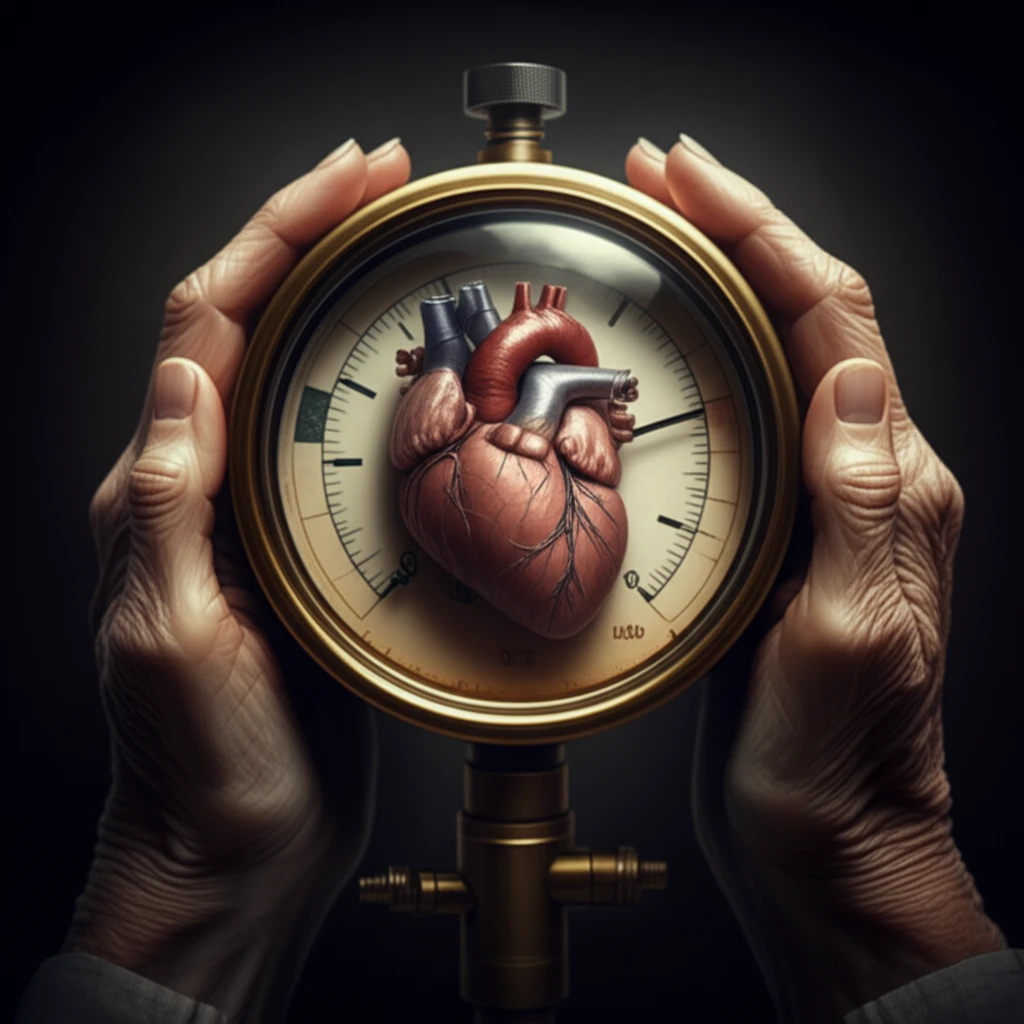
High Blood Pressure in Older Adults: Are We Doing Enough?

"A new study reveals the challenges of hypertension management in the elderly, highlighting the need for better prevention and treatment strategies."
Hypertension, or high blood pressure, is a major health concern that dramatically increases the risk of heart disease, stroke, and kidney problems. While it's a common condition, it's also one that can be managed effectively with the right approach. Public health policies recognize hypertension as both preventable and controllable, yet challenges persist, especially among older adults.
Globally, hypertension affects a significant portion of the adult population, with prevalence rates differing across countries and age groups. While wealthier nations have seen a decline in hypertension cases, low to middle-income countries are facing an increasing number of affected individuals. This shift is driven by demographic and social changes, emphasizing the need for improved lifestyle interventions and increased awareness.
A recent study focused on older adults in Tabriz, Iran, sheds light on the specific challenges of hypertension management in this population. By examining the prevalence, awareness, and control rates of high blood pressure, the study underscores the importance of tailored strategies to combat this widespread condition. Let's delve into the key findings and what they mean for our approach to heart health.
The Scale of Hypertension
The CDC reports that 48.1% of U.S. adults had hypertension, defined as measured high blood pressure and/or use of antihypertensive medication, during 2017-March 2020. The CDC also reports 56.8 million physician-office visits in which essential hypertension was the primary diagnosis. County-level maps may underreport the burden because about 1 in 6 adults with high blood pressure is unaware of the condition. Hypertension increases the risk of heart disease and stroke, according to Million Hearts.
Limits of Cross-Sectional Evidence
The cited study on the nutritional status of community-dwelling elderly people in Tabriz, Iran, is described as a descriptive cross-sectional study. Its sampling method had been described elsewhere. Because the source identifies the work by design rather than reporting treatment outcomes, it supports understanding the study's observational approach but does not establish how nutritional status changes over time. It therefore offers limited evidence about causation or longitudinal effects.
Hypertension in the Elderly: A Closer Look at the Numbers
The study, published in the Journal of Cardiovascular and Thoracic Research, involved a cross-sectional analysis of individuals aged 60 and older in Tabriz. Researchers collected data on blood pressure, awareness of hypertension, treatment approaches, and other relevant health factors. Here’s a snapshot of what they found:
- Awareness: Among those with hypertension, 81.8% were aware of their diagnosis.
- Treatment: 78% of hypertensive individuals were receiving antihypertensive medications.
- Control: However, only 46.2% of those being treated had their blood pressure adequately controlled.
- Gender Differences: Women had a significantly higher prevalence of hypertension (74%) compared to men (60.7%). They were also more likely to be aware of their condition and receive treatment.
Lifestyle and Social Factors
A cross-sectional study of older women with hypertension concluded that physical activity and dietary habits are crucial in managing the condition. The TOPS Study assessed blood pressure, loneliness, and social support using a standard mercury sphygmomanometer, the 6-item De Jong Gierveld Loneliness Scale, and the Duke Social Support Index. A literature review examined traditional music therapy and blood pressure among elderly people with hypertension in Iran, where one cited estimate reported that 68% of elderly people experienced hypertension. These studies point to behavioral, social, and nonpharmacological factors as active areas of hypertension research.
Awareness Does Not Ensure Control
A survey of elderly people in northwest Iran reported that 78% of hypertensive patients were aware of their condition, but only 52.8% were receiving antihypertensive medication. The same source describes appropriate treatment as mandatory because aging is accompanied by rising blood pressure and older adults face greater cardiovascular risk. More broadly, hypertension control remains a largely unmet public-health challenge despite improved blood-pressure measurement techniques and the availability of effective and safe antihypertensive drugs. These findings show that recognition of hypertension does not automatically translate into treatment or adequate control.
Comparing Treatment Strategies
A comparison of hypertension guidelines reports that patients with high-normal blood pressure or grade 1 hypertension without high-risk factors should first use lifestyle medicine for 3–6 months. If blood pressure remains uncontrolled, the guidance recommends starting medication. This staged approach places lifestyle intervention before pharmacological treatment for the specified lower-risk group. The cited recommendation does not apply equally to every patient, because it is explicitly limited to people without high-risk factors.
The Path Forward: Improving Hypertension Management
The findings from this study emphasize the need for a multi-faceted approach to hypertension management in older adults. While medication is a crucial component, lifestyle modifications, increased awareness, and regular monitoring are equally important. By addressing these factors, healthcare systems can work towards better prevention, control, and overall heart health for this vulnerable population.
Broadening the Clinical Lens
A 2026 Frontiers editorial identifies several newer hypertension paradigms, including how the age at hypertension onset shapes long-term renal risk and the role of chronotherapy in treatment. It also highlights recurrent hypoglycemia-triggered secondary hypertension, nasal turbinate lymphatic obstruction in the pathogenesis of essential hypertension, and the impact of cuff placement on blood-pressure readings. Additional topics include lay advisor-led interventions and elevated hemoglobin as an independent factor. Together, these topics suggest a research agenda that extends beyond conventional blood-pressure measurement and medication alone.
Scaling Detection and Control
The WHO's Global report on hypertension 2025 calls for expanded detection, treatment, and control of high blood pressure at the primary-health-care level. It presents proven solutions, country successes, and recommendations for governments and partners. The CDC identifies self-measured blood-pressure monitoring with clinical support, team-based care, community health workers, and pharmacy-based interventions as evidence-based approaches. At the same time, projections research reports that hypertension-related deaths continue to challenge U.S. public-health systems despite advances in detection and treatment.
A Global and Unequal Burden
Hypertension affects more than 1 billion people worldwide and is increasing, according to JAMA. Untreated or uncontrolled hypertension is described as the largest contributor to cardiovascular disease, including stroke, heart failure, and coronary artery disease, and it also contributes substantially to kidney disease. A 2024 review estimates that hypertension affects 30–40% of adults worldwide and carries a major cardiovascular-morbidity and mortality burden. Disparities are also substantial: a 2023 review reports that low- and middle-income countries experience more uncontrolled blood pressure and cardiovascular deaths, while Black individuals in the United States face up to four times higher cardiovascular mortality.