
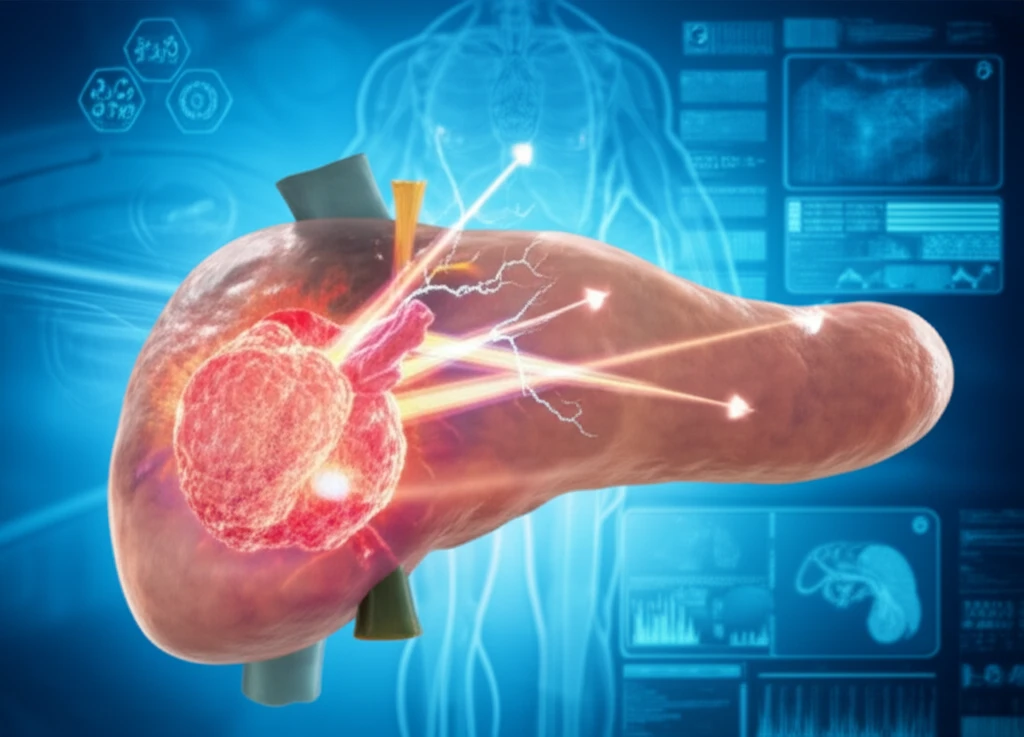
HIFU: A Non-Invasive Hope for Pancreatic Abalation

"Exploring High-Intensity Focused Ultrasound as a Safe and Effective Alternative for Pancreatic Abalation."
Pancreatic cancer is a formidable digestive system malignancy with grim prognosis. Surgical intervention, while potentially curative, often isn't feasible due to late-stage diagnosis. This reality underscores the urgent need for effective, non-operative treatment alternatives.
High-Intensity Focused Ultrasound (HIFU) emerges as a promising solution, a minimally invasive technique for precisely targeting and treating solid tumors. HIFU transmits acoustic energy from outside the body, creating localized lesions without harming surrounding tissue. This groundbreaking approach has seen successful applications in treating various solid tumors, including liver, kidney, and prostate cancers.
This article delves into a study investigating the feasibility and safety of HIFU for pancreatic ablation, offering insights into its potential as a transformative treatment option. We'll explore how HIFU works, its proven effectiveness in preclinical trials, and what this could mean for the future of pancreatic interventions.
How Does HIFU Work?
HIFU utilizes focused ultrasound waves to generate intense heat at a specific point within the body, effectively ablating (destroying) the targeted tissue. Think of it as a magnifying glass focusing sunlight to burn a leaf, but with sound waves instead of light. This precision is key to HIFU's effectiveness, minimizing damage to surrounding healthy tissue.
- Each animal tolerated the HIFU ablation well.
- Complete necrosis (tissue death) was observed in the targeted regions.
- Margins of the necrotic regions were clearly delineated from the surrounding normal tissues.
- Blood and urine amylase levels (indicators of pancreatic inflammation) remained relatively stable after HIFU.
- No acute pancreatitis or severe complications occurred.
The Future of Pancreatic Treatment with HIFU
This research offers a promising glimpse into the future of pancreatic treatment. HIFU's non-invasive nature and precision could revolutionize how we approach pancreatic diseases, offering new hope to patients who are not candidates for surgery.
While these results are encouraging, further research is crucial. Clinical trials in humans are needed to confirm the safety and effectiveness of HIFU for pancreatic ablation. Additionally, long-term studies are necessary to assess the durability of the treatment and its impact on patient outcomes.
High-Intensity Focused Ultrasound holds immense potential as a transformative tool in medicine. As technology advances and research progresses, HIFU may emerge as a cornerstone of non-invasive therapies, improving the lives of countless individuals facing pancreatic and other solid tumor challenges.