
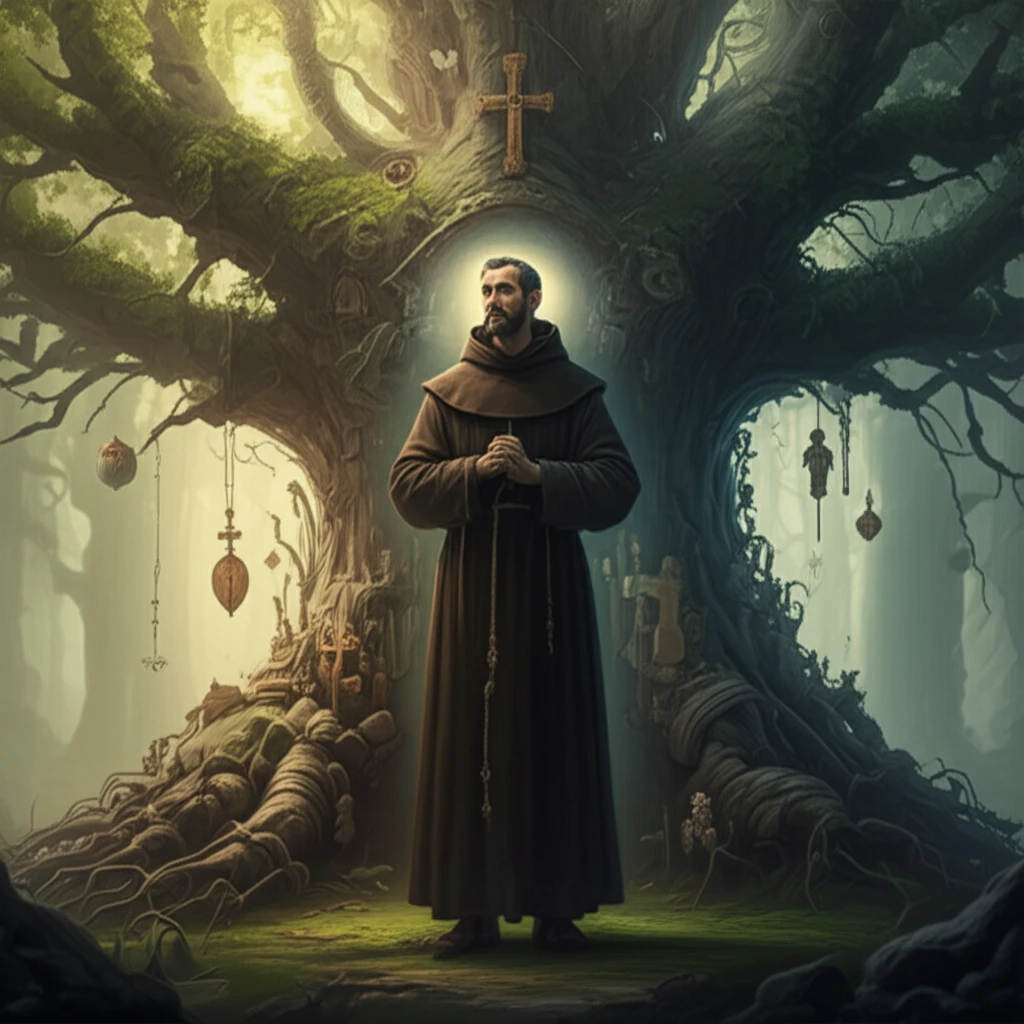
Saint Giovanni of Capestrano amidst a Franciscan family tree.

Hidden in Plain Sight: The Untold Stories Behind Religious Art

"Uncover the fascinating symbolism and hidden figures in Franciscan art and how they impact our understanding of history and faith."


Religious art isn't just about pretty pictures; it's a visual language packed with stories, symbolism, and historical context. Every brushstroke, color choice, and figure placement tells a tale that can deepen our understanding of faith and culture. But often, the real stories are hidden in plain sight, waiting to be discovered.

Take Franciscan art, for example. These artistic representations, often found in churches and museums, are rich tapestries woven with the lives of saints, the teachings of the Church, and the political realities of the time. Figures like Saint Giovanni of Capestrano, though not always prominently featured, hold fascinating keys to unlocking this history.

In this article, we'll embark on a journey to explore the hidden stories behind religious art, focusing on the figures and symbolism within Franciscan family tree depictions. We’ll uncover how these artworks reflect the evolution of religious thought, the dynamics of power, and the enduring human quest for meaning.

Why Should We Decipher Religious Art?

Saint Giovanni of Capestrano amidst a Franciscan family tree.

Religious art serves as more than just decoration; it encapsulates theological, spiritual, and political statements. Understanding the symbolism and the context helps to interpret these artworks and reveals fascinating aspects of history. The purpose is to understand art's role in shaping cultural identities and documenting historical narratives.

For centuries, art has been used as a powerful tool for communication, especially in religious contexts where literacy rates were low. Visual depictions conveyed complex theological concepts in an accessible way, making them essential for education and devotion. To truly appreciate this art, one must look beyond the surface and delve into the meanings embedded within.

  • Historical Insight: Religious art provides a visual record of historical events, social structures, and cultural values.
  • Theological Understanding: Symbols and figures represent complex religious concepts and doctrines.
  • Cultural Identity: Art helps shape and reinforce cultural identities within religious communities.
  • Personal Connection: Understanding the art can deepen one's personal connection to their faith and heritage.
The ability to interpret religious art enriches our understanding of history, faith, and the human experience, providing insight into how societies and individuals have found meaning and expressed their beliefs through art.

Unlocking the Past Through Art

Religious art invites us to look closer, to question, and to learn. By uncovering the hidden stories and understanding the symbolism, we gain a richer appreciation of both the art itself and the historical context that shaped it. Whether you're a seasoned art historian or a curious observer, the world of religious art offers endless opportunities for discovery and insight.

About this Article -

This article was crafted using a human-AI hybrid and collaborative approach. AI assisted our team with initial drafting, research insights, identifying key questions, and image generation. Our human editors guided topic selection, defined the angle, structured the content, ensured factual accuracy and relevance, refined the tone, and conducted thorough editing to deliver helpful, high-quality information.See our About page for more information.

This article is based on research published under:

DOI-LINK: 10.1353/frc.2017.0010, Alternate LINK

Title: Saint Giovanni Of Capestrano In The Artistic Representations Of The Franciscan Family Tree

Subject: General Medicine

Journal: Franciscan Studies

Publisher: Project Muse

Authors: Giuseppe Cassio

Published: 2017-01-01

Everything You Need To Know

1

What exactly is religious art?

Religious art is more than just aesthetically pleasing; it functions as a visual language. It's packed with stories, symbolism, and historical context. Deciphering elements such as brushstrokes, color choices, and figure placements can significantly deepen our understanding of faith and culture, revealing narratives that might otherwise remain hidden.

2

Why is it important to understand the symbolism in religious art?

Understanding religious art is important because it serves as a record of historical events, social structures, and cultural values. The symbols and figures often represent complex religious concepts and doctrines, while also helping to shape and reinforce cultural identities within religious communities. It provides insight into how societies and individuals have expressed their beliefs through art.

3

Can you tell me more about Franciscan art?

Franciscan art, commonly found in churches and museums, are rich tapestries woven with the lives of saints, the teachings of the Church, and the political realities of the time. Figures like Saint Giovanni of Capestrano, though not always prominently featured, hold fascinating keys to unlocking this history. These depictions reflect the evolution of religious thought, the dynamics of power, and the enduring human quest for meaning.

4

Why was art so important in teaching religion?

Art has been a powerful communication tool, especially in religious contexts where literacy rates were low. Visual depictions conveyed complex theological concepts in an accessible way, making them essential for education and devotion. Appreciating this art involves looking beyond the surface and delving into the meanings embedded within.

5

How does understanding religious art improve our appreciation of history?

Interpreting religious art enriches our understanding of history, faith, and the human experience. By uncovering the hidden stories and understanding the symbolism, we gain a richer appreciation of both the art itself and the historical context that shaped it. This provides insight into how societies and individuals have found meaning and expressed their beliefs through art.

Newsletter Subscribe

Subscribe to get the latest articles and insights directly in your inbox.