
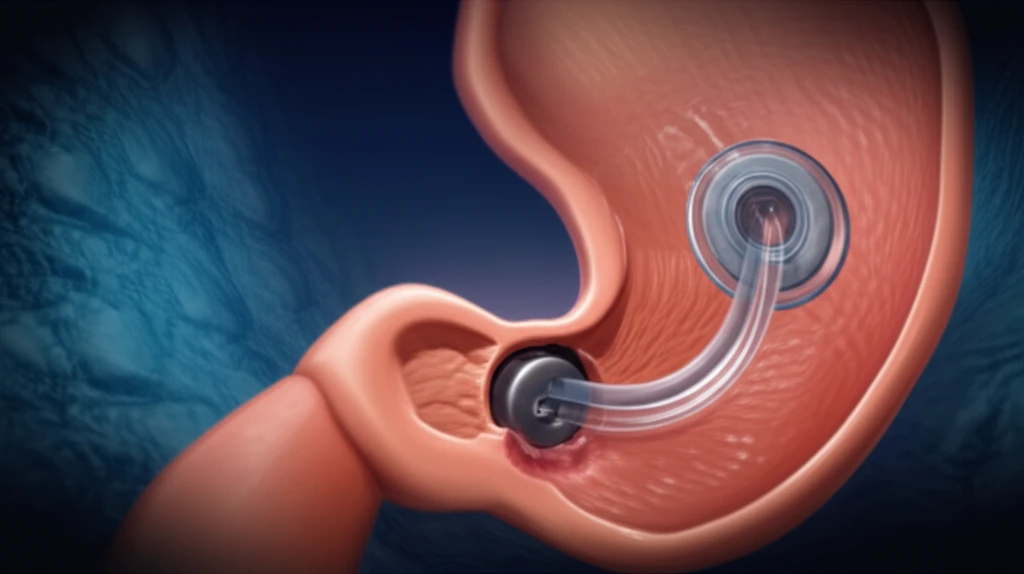
Hidden Danger: How a PEG Tube Can Cause Gastric Ulcers

"A Case Study and What You Need to Know About Percutaneous Endoscopic Gastrostomy"
Percutaneous endoscopic gastrostomy (PEG) tubes are commonly used to provide nutrition for patients who have difficulty swallowing or eating. While generally safe, complications can occur. A recent case study highlights a rare but important complication: gastric ulcers hidden beneath the internal PEG bumper.
An 83-year-old male with Alzheimer's disease was admitted to a hospital with melena (dark, tarry stools indicating internal bleeding). He had a PEG tube placed three weeks prior due to aspiration pneumonia and wasn't taking gastrotoxic medications. His hematocrit level was low, indicating blood loss.
An esophagogastroduodenoscopy (EGD) was performed, revealing no active bleeding but a hyperemic (inflamed) area near the internal PEG bumper. Further investigation revealed a gastric ulcer with a visible vessel underneath the bumper, which was treated with endoscopic injection therapy and proton pump inhibitors.
The Hidden Threat: How PEG Tubes Cause Gastric Ulcers
Gastric ulcers after PEG tube placement can arise from various factors. One potential cause is the pressure exerted by the internal PEG bumper on the stomach lining. This pressure can lead to mucosal ischemia (reduced blood flow) and subsequent ulcer formation.
- Puncture of a blood vessel during the procedure.
- Traumatic erosions of the esophageal or gastric mucosa.
- Reflux esophagitis.
- Gastric ulcer.
Prevention and Management: Protecting Patients with PEG Tubes
This case study offers several important lessons for preventing and managing gastric ulcers associated with PEG tubes:
Loosening a tight internal PEG bumper and keeping it away from the gastric mucosa for several weeks can promote ulcer healing. Additionally, when initially placing the PEG tube, avoid excessive pressure on the stomach lining to minimize the risk of ulcer development.
By remaining vigilant and implementing these strategies, healthcare providers can minimize the risk of gastric ulcers and ensure the safety and well-being of patients receiving PEG tube feeding.