
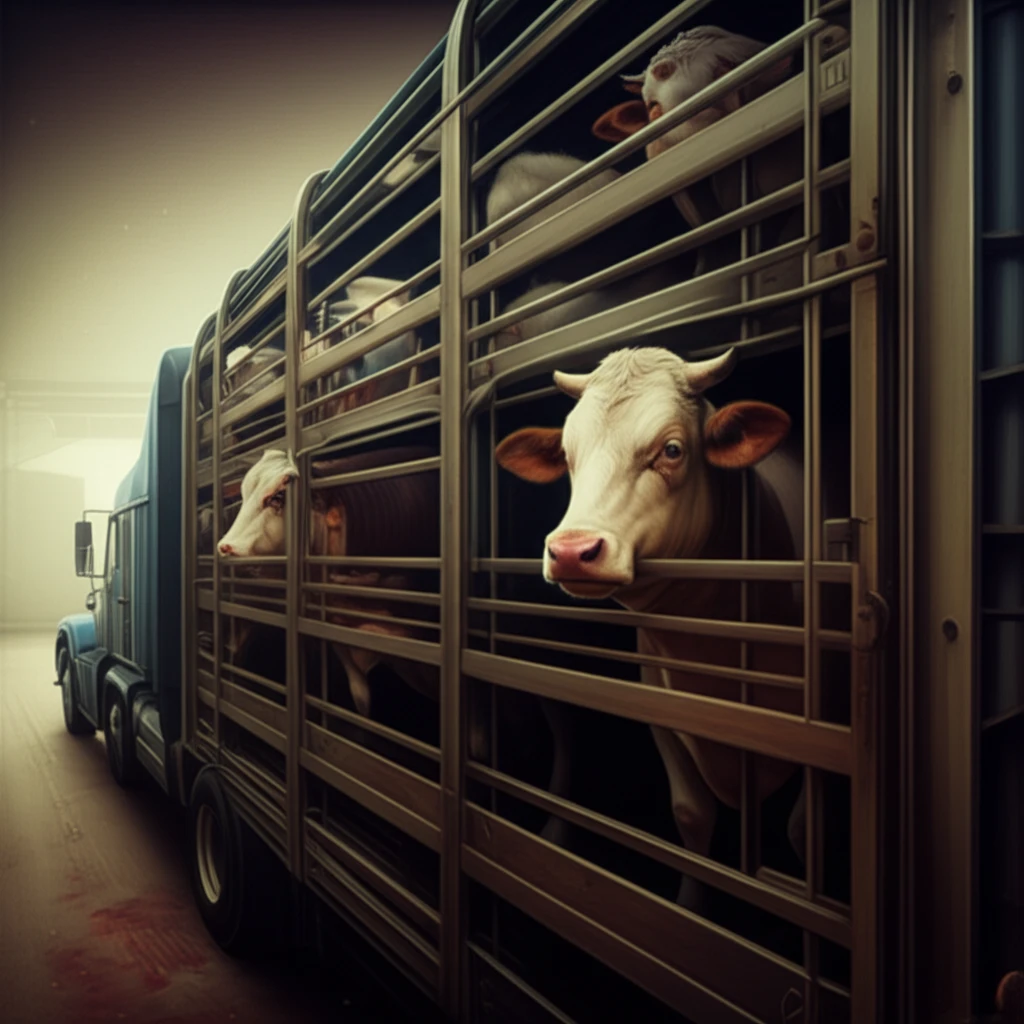
Hidden Costs: How Livestock Injuries Impact Your Bottom Line

"Discover how pre-slaughter handling affects meat quality and learn practical steps to minimize financial losses."
In the competitive meat industry, optimizing every stage of production is crucial. While much attention is given to breeding and feeding, the often-overlooked area of pre-slaughter handling can significantly impact profitability. Bruises, cuts, and other injuries on livestock carcasses result in downgrades, trimming losses, and ultimately, reduced revenue.
Brazil, a global leader in beef production, exemplifies this issue. With its massive cattle herds and extensive export market, even small improvements in carcass quality can translate to substantial financial gains. The state of Mato Grosso, holding the largest cattle herd in Brazil, faces unique challenges due to its vast geography and varied transportation conditions.
This article explores the economic impact of livestock injuries occurring during transportation and pre-slaughter management. Drawing from research conducted in Mato Grosso, we'll uncover the financial costs associated with carcass lesions and highlight strategies to minimize these losses, benefiting producers, processors, and consumers alike.
How Do Pre-Slaughter Injuries Impact Carcass Value?
Research was undertaken evaluating carcasses in a northern Mato Grosso slaughterhouse to quantify the economic losses attributed to injuries. The study meticulously examined 1,021 bovine carcasses, documenting lesions resulting from transportation and handling prior to slaughter. The findings revealed that 42.4% of the carcasses exhibited injuries directly linked to these pre-slaughter conditions.
- Short Hauls (Up to 2 Hours): Averaged 1.82 lesions per injured carcass.
- Mid-Range Transport (2-8 Hours): Increased to 2.05 lesions per injured carcass.
- Longer Journeys (Over 8 Hours): Maintained a similar level at 2.07 lesions per injured carcass.
Reducing Carcass Damage: Steps Towards Profitability
Minimizing pre-slaughter injuries requires a multifaceted approach, focusing on improved animal handling techniques, transportation practices, and facility design. By implementing strategies to reduce stress and prevent physical trauma, producers and processors can significantly improve carcass quality, reduce economic losses, and promote better animal welfare.