
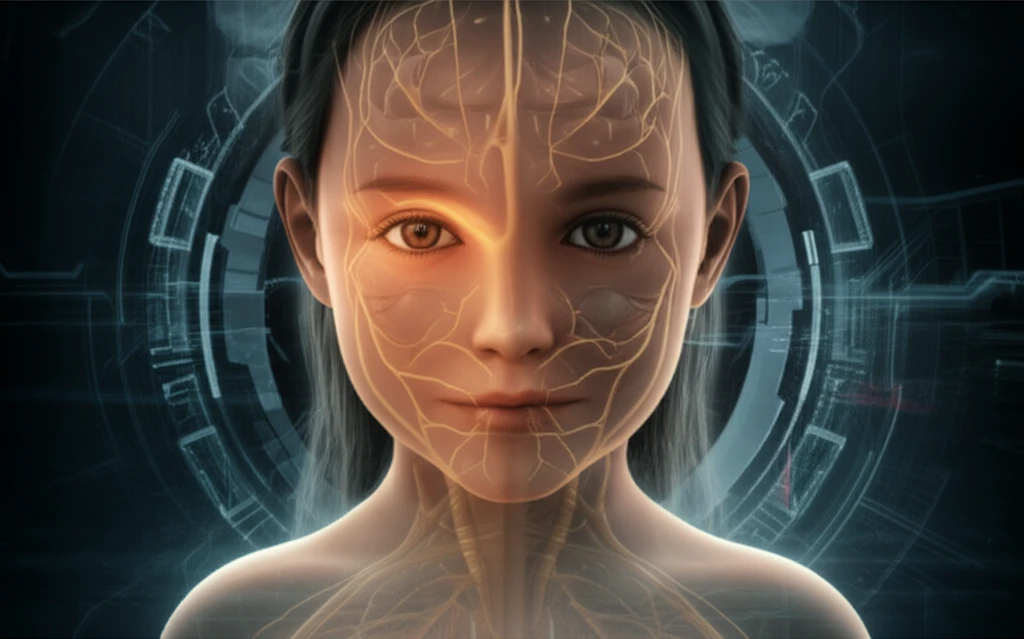
Hidden at Birth: Unveiling Congenital Cranial Nerve Absence

"Rare cases highlight the importance of advanced imaging in diagnosing congenital cranial nerve absence, offering insights for early detection and management."
Isolated congenital absence of cranial nerves is a rare anomaly where one or more of these critical nerves are missing from birth, without any other associated brain abnormalities or developmental delays. These nerves are essential for various functions, including facial movements, eye control, and sensory input. The absence can be unilateral (one side) or bilateral (both sides), leading to neurological deficits typically identified early in life.
High-resolution, heavily T2-weighted MRI sequences play a pivotal role in diagnosing this condition. These advanced imaging techniques allow doctors to visualize the cranial nerves near their exit points from the brainstem with exceptional clarity. This is crucial because early and accurate diagnosis can significantly influence patient management and outcomes.
In this article, we delve into two specific cases of isolated congenital absence of cranial nerves, focusing on the third (oculomotor) and seventh (facial) cranial nerves. Through these cases, we aim to highlight the diagnostic process, the clinical presentations, and the importance of incorporating advanced MRI techniques in evaluating cranial nerve pathologies.
Decoding Cranial Nerve Absence: Case Presentations
To illustrate the importance of detailed clinical examination coupled with advanced MRI, let's examine two cases of cranial nerve absence:
- MRI Findings: High-resolution MRI revealed a complete absence of the right oculomotor nerve throughout its course. The midbrain appeared normal, and the left oculomotor nerve was clearly visualized. Mild atrophy of the right medial rectus muscle and outward deviation of the eyeball were also noted.
- Diagnosis: Based on the clinical and MRI findings, a diagnosis of isolated congenital third nerve absence was made.
The Future of Diagnosing Nerve Anomalies
High-resolution MRI is an invaluable tool in diagnosing cranial nerve palsies, enabling clinicians to differentiate isolated nerve absence from syndromic or traumatic causes. This distinction is crucial for accurate prognosis, medico-legal considerations, and informed family counseling.
The detailed anatomical knowledge of cranial nerve pathways, coupled with MRI findings and clinical presentations, is paramount for effective patient evaluation by radiologists and neurologists.
As technology advances, the potential for even earlier and more precise diagnoses increases, promising improved management and quality of life for individuals affected by these rare conditions. Therefore, always consider the possibility of congenital absence when assessing pediatric patients with cranial nerve palsy.