
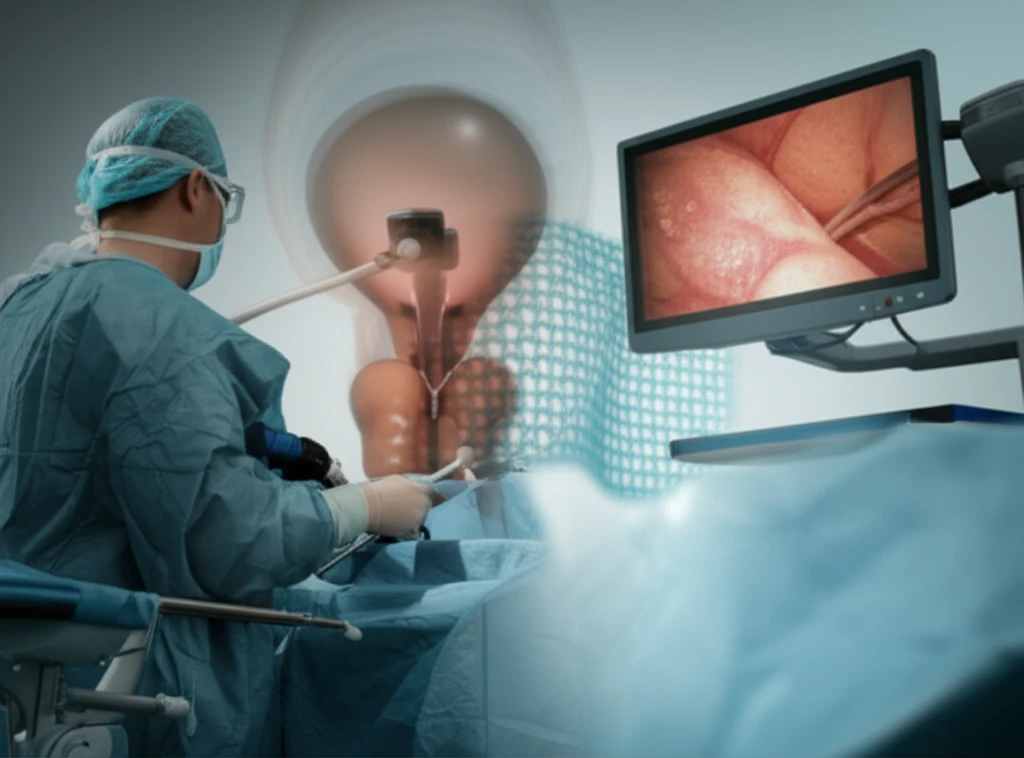
Laparoscopic Hernia Repair After Prostatectomy

Hernia Repair After Prostatectomy: Is Laparoscopic Surgery the Best Option?

"Discover the safety and effectiveness of laparoscopic TAPP hernia repair following radical prostatectomy and how it minimizes complications and recurrence rates."


Experiencing an inguinal hernia after undergoing a radical prostatectomy can be a challenging situation. While both laparoscopic transperitoneal endoscopic (TAPP) and totally extraperitoneal (TEP) hernia repairs are well-established for primary and recurrent inguinal hernias, the landscape becomes more intricate when considering patients who have previously undergone radical prostatectomy.

Radical prostatectomy, a surgery to remove the prostate gland, can sometimes lead to the development of inguinal hernias. This is where the debate begins: Is laparoscopic hernia repair a feasible and safe option for these individuals? Key considerations include the optimal mesh size, the necessity of dissecting scarred tissue, and the long-term outcomes of the procedure.

This article explores a study assessing the outcomes of laparoscopic transperitoneal endoscopic hernioplasty (TAPP) in patients who developed inguinal hernias following radical open retropubic prostatectomy. By analyzing patient data, surgical techniques, and follow-up results, it aims to provide insights into the efficacy and safety of this approach, offering clarity for both patients and surgeons navigating this complex scenario.

What Makes Laparoscopic TAPP a Viable Option After Prostatectomy?

Laparoscopic Hernia Repair After Prostatectomy

The cornerstone of this analysis is a retrospective study involving 5,764 patients who underwent hernia operations between 1993 and 2009. Among them, 48 patients had 55 inguinal hernias after prior open radical retropubic prostatectomy. These patients underwent laparoscopic transperitoneal endoscopic hernioplasty (TAPP), and their outcomes were meticulously compared to a control group.

Here’s what the study looked at:

  • Patient Demographics: Comparing the age and general health of patients in both groups.
  • Surgical Details: Examining the duration of surgery and specific techniques used.
  • Hernia Characteristics: Noting the location and type of hernia (medial, lateral, combined, or bilateral).
  • Complications: Assessing both perioperative (30-day) and late complications.
  • Follow-Up: Monitoring recurrence rates over a median postoperative follow-up time of 8.0 years.
The results indicated that patients who had undergone radical prostatectomy were generally older, and their surgeries took longer. However, the rate of conversion to open repair was minimal, and the overall complication rate was low. Importantly, the hernia recurrence rate (2.4%) was not significantly different from the control group (1.8%).

The Takeaway: TAPP is Safe and Effective

In conclusion, the study suggests that laparoscopic transperitoneal hernioplasty (TAPP) is a safe and effective option for hernia repair after radical open retropubic prostatectomy, provided it is performed by experienced surgeons. The procedure demonstrates low complication and recurrence rates, making it a viable choice for patients dealing with this specific condition.

About this Article -

This article was crafted using a human-AI hybrid and collaborative approach. AI assisted our team with initial drafting, research insights, identifying key questions, and image generation. Our human editors guided topic selection, defined the angle, structured the content, ensured factual accuracy and relevance, refined the tone, and conducted thorough editing to deliver helpful, high-quality information.See our About page for more information.

Everything You Need To Know

1

What is the primary focus of this research regarding hernia repair?

The primary focus is the assessment of laparoscopic transperitoneal endoscopic hernioplasty (TAPP) as a viable and safe option for inguinal hernia repair in patients who have previously undergone radical open retropubic prostatectomy. The study specifically investigates the effectiveness of TAPP in this patient population, comparing it to standard repair methods and evaluating outcomes such as complications and recurrence rates.

2

What specific surgical techniques are discussed and compared in this context?

The article specifically focuses on laparoscopic transperitoneal endoscopic hernioplasty (TAPP) and contrasts it with standard hernia repair methods. While both laparoscopic transperitoneal endoscopic (TAPP) and totally extraperitoneal (TEP) hernia repairs are mentioned as established options, the study zeroes in on the application and outcomes of TAPP following radical prostatectomy.

3

What key factors are considered when evaluating the success of the TAPP procedure after radical prostatectomy?

The study examines several key factors to evaluate the success of TAPP. These include patient demographics (age and overall health), surgical details (duration of surgery and specific techniques), hernia characteristics (location and type), the rate of complications (both perioperative and late), and the long-term recurrence rates following the procedure. The study compares these factors between the group that underwent TAPP after radical prostatectomy and a control group.

4

Why is it important to consider laparoscopic TAPP for hernia repair after a radical prostatectomy?

It's important to consider laparoscopic TAPP because radical prostatectomy can lead to the development of inguinal hernias. The study suggests that TAPP is a safe and effective option for these patients, demonstrated by low complication and recurrence rates. This offers a minimally invasive approach that can potentially lead to faster recovery and reduced discomfort compared to open surgical methods. The use of TAPP, therefore, provides a specific surgical solution that is well-suited for the unique challenges of hernia repair after prostate removal.

5

What were the major findings regarding the safety and effectiveness of laparoscopic TAPP after radical prostatectomy?

The major findings indicate that laparoscopic transperitoneal hernioplasty (TAPP) is a safe and effective procedure for hernia repair following radical open retropubic prostatectomy. The study found that while surgeries might take longer in patients who have undergone prostatectomy, the conversion rate to open repair was minimal. The overall complication rate was low, and, importantly, the recurrence rate was not significantly different from the control group. These results suggest that TAPP is a viable choice for these patients, provided it is performed by experienced surgeons.

Newsletter Subscribe

Subscribe to get the latest articles and insights directly in your inbox.