
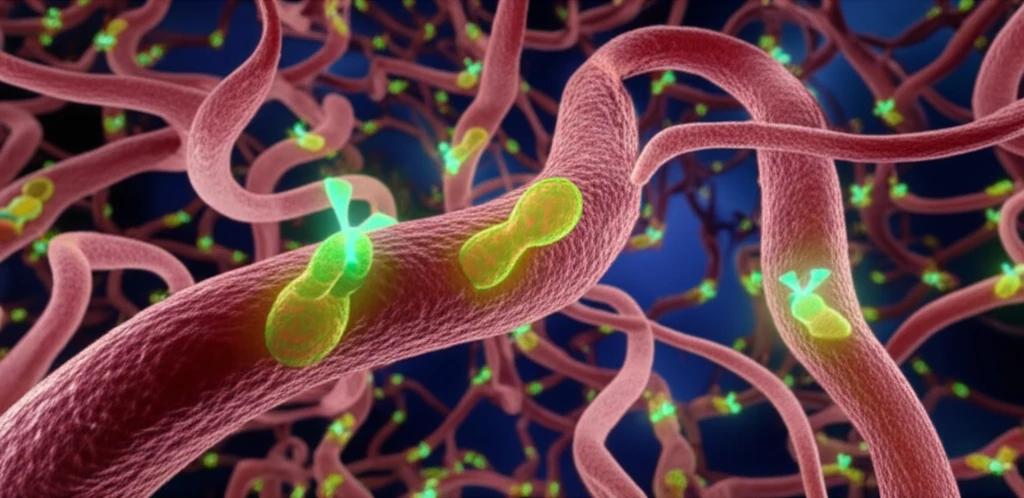
Microscopic view of gastric cancer cells with HER2 receptors.

HER2 Testing in Gastric Cancer: Are We Doing Enough?

"A comprehensive look at an Australia-wide study reveals the critical factors in HER2 testing for advanced gastric and gastro-oesophageal cancer, highlighting the importance of accurate assessment for effective treatment."


Gastric cancer, a formidable adversary, ranks as the fifth most prevalent cancer globally and stands as the third leading cause of cancer-related deaths. However, advancements in understanding the disease have paved the way for targeted therapies, offering a beacon of hope for patients. Among these, the human epidermal growth factor receptor 2 (HER2) has emerged as a crucial target.

HER2, when amplified and overexpressed, is associated with aggressive disease progression and poorer outcomes in gastric and gastro-oesophageal junction (GOJ) cancers. Yet, this knowledge has also opened a therapeutic avenue. Trastuzumab, a monoclonal antibody that targets HER2, has shown remarkable success in improving survival rates when combined with chemotherapy, transforming the treatment landscape for HER2-positive advanced gastric cancer.

But the path to effective HER2-targeted therapy hinges on precise and reliable HER2 status determination. This is where the GaTHER (Gastric HER2 Testing) program steps in, aiming to refine HER2 testing algorithms and establish robust criteria for assessment. By analyzing a vast pool of cases, the program seeks to address practical challenges in testing, such as tissue fixation, sample selection, and the impact of tumor heterogeneity, ultimately ensuring that the right patients receive the right treatment.

Unpacking the HER2 Testing Criteria: What's the Standard?

Microscopic view of gastric cancer cells with HER2 receptors.

Defining HER2 positivity isn't as straightforward as a simple yes or no. Various criteria have been proposed, leading to potential inconsistencies in assessment. Some definitions rely solely on protein expression levels, using immunohistochemistry (IHC) scores of 3+ as the gold standard. Others incorporate gene amplification, measured by in situ hybridization (ISH), focusing on the HER2:chromosome enumeration probe 17 (CEP17) ratio or the absolute HER2 copy number (CN). Still others combine both protein expression and gene amplification for a more comprehensive evaluation.

To address these ambiguities, the Australian HER2 testing program adopted a stringent definition (SD) of HER2 positivity, requiring both IHC 2+/3+ expression and a HER2 CN >6 with a ratio >2. This definition was then compared to other published criteria, including those used in the ToGA trial, by the United States Food and Drug Administration (FDA), the European Medicines Agency (EMA), and the Asia Pacific consensus guidelines.

  • IHC Score: Assesses the level of HER2 protein expression in tumor cells.
  • HER2 Gene Copy Number (CN): Measures the number of copies of the HER2 gene present in tumor cells.
  • HER2:CEP17 Ratio: Compares the HER2 gene copy number to the copy number of chromosome 17, which is used as a reference.
The study found that the HER2-positive rate varied depending on the definition used, ranging from 12.9% to 16.0%. The stringent definition yielded a positivity rate of 13.9%. Interestingly, the study revealed a higher concordance between IHC and HER2 CN by ISH than with the HER2:CEP17 ratio, suggesting that HER2 CN may be a more reliable indicator of HER2 status in gastric cancer.

Looking Ahead: The Future of HER2 Testing

The findings of the Australian HER2 testing program offer valuable insights for refining HER2 testing algorithms and improving the accuracy of HER2 status assessment in gastric and GOJ cancers. By emphasizing the importance of HER2 CN and addressing the challenges of tumor heterogeneity, the study contributes to ensuring that patients receive the most appropriate and effective treatment. As research continues and new technologies emerge, the future of HER2 testing holds the promise of even more precise and personalized approaches to cancer therapy.

About this Article -

This article was crafted using a human-AI hybrid and collaborative approach. AI assisted our team with initial drafting, research insights, identifying key questions, and image generation. Our human editors guided topic selection, defined the angle, structured the content, ensured factual accuracy and relevance, refined the tone, and conducted thorough editing to deliver helpful, high-quality information.See our About page for more information.

Everything You Need To Know

1

What is the significance of HER2 in gastric and gastro-oesophageal cancer?

In gastric and gastro-oesophageal junction (GOJ) cancers, HER2 (human epidermal growth factor receptor 2) is significant because its amplification and overexpression are associated with aggressive disease progression and poorer patient outcomes. However, this also means that HER2 can be targeted therapeutically. Trastuzumab, a monoclonal antibody, is used to target HER2 which has improved survival rates in HER2-positive advanced gastric cancer.

2

How is HER2 status determined, and why is it important in the treatment of gastric cancer?

HER2 status determination is crucial for effective treatment. The process involves assessing HER2 protein expression using immunohistochemistry (IHC) and measuring HER2 gene amplification using in situ hybridization (ISH). The Australian study used a stringent definition (SD) of HER2 positivity requiring IHC 2+/3+ expression and a HER2 CN >6 with a ratio >2. HER2 status is important because it dictates whether a patient is eligible for HER2-targeted therapy, like Trastuzumab. Accurate assessment ensures that patients who will benefit from this therapy receive it.

3

What are the different methods used to assess HER2 status, and how do they compare?

HER2 status can be assessed using several methods, including IHC (immunohistochemistry) to measure protein expression, and ISH (in situ hybridization) to measure gene amplification. Within ISH, the HER2 gene copy number (CN), and the HER2:CEP17 ratio are used. The study found a higher concordance between IHC and HER2 CN by ISH than with the HER2:CEP17 ratio, suggesting that HER2 CN may be a more reliable indicator of HER2 status in gastric cancer. These methods are used to determine if the cancer cells have amplified or overexpressed the HER2 protein.

4

What challenges exist in HER2 testing, and how does the GaTHER program address them?

Challenges in HER2 testing include inconsistencies in defining HER2 positivity, tissue fixation, sample selection, and tumor heterogeneity. The GaTHER (Gastric HER2 Testing) program addresses these challenges by refining HER2 testing algorithms and establishing robust criteria for assessment. It analyzes a large number of cases to overcome the practical hurdles in testing, ensuring accurate results and improving patient outcomes. The program aims to ensure the right patients receive the most effective treatments, like Trastuzumab.

5

How can the findings of the Australian HER2 testing program impact the future of gastric cancer treatment?

The findings of the Australian HER2 testing program offer valuable insights for refining HER2 testing algorithms and improving the accuracy of HER2 status assessment in gastric and GOJ cancers. By emphasizing the importance of HER2 CN and addressing the challenges of tumor heterogeneity, the study contributes to ensuring that patients receive the most appropriate and effective treatment. This could lead to more precise and personalized approaches to cancer therapy by improving the selection of patients for HER2-targeted treatments and potentially improving patient survival rates and overall outcomes.

Newsletter Subscribe

Subscribe to get the latest articles and insights directly in your inbox.