
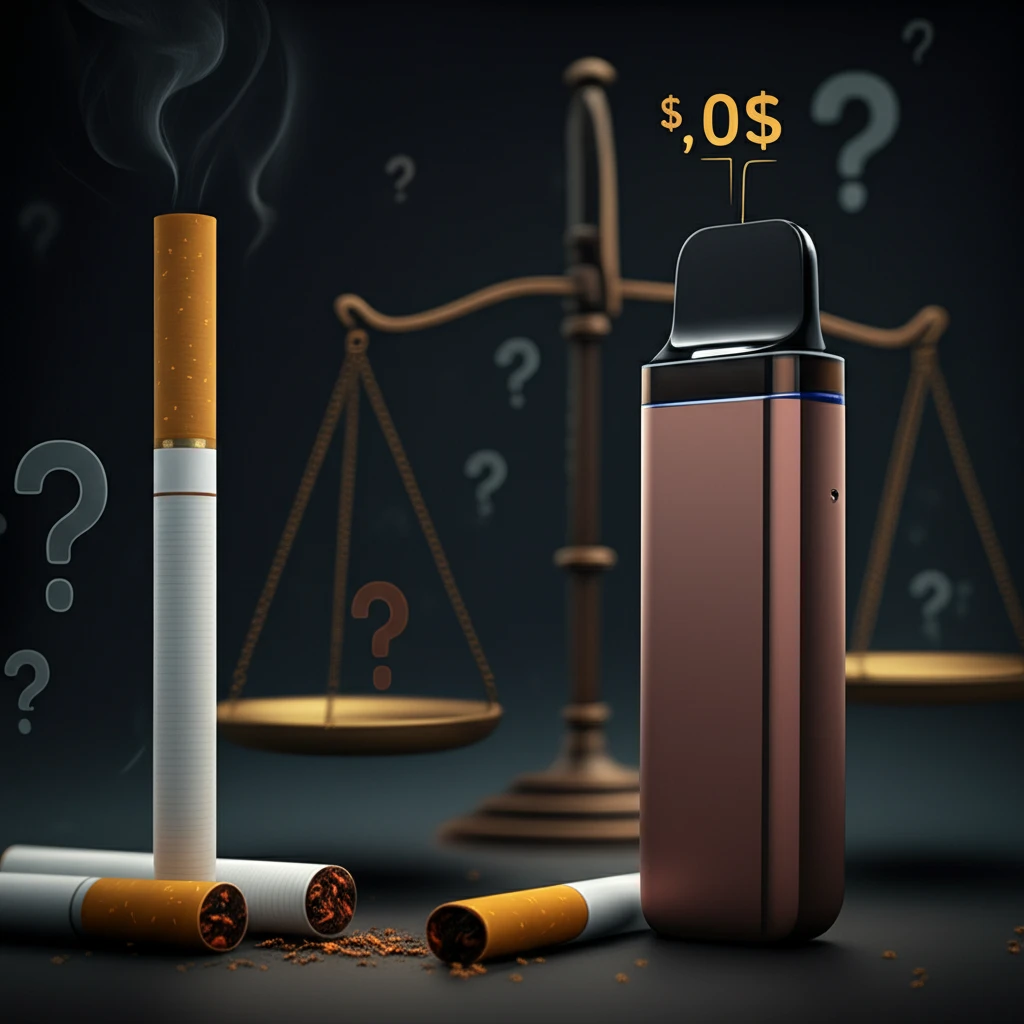
Comparison of traditional cigarettes and heated tobacco products with price tags

Heated Tobacco vs. Combustible Cigarettes: Are You Really Saving Money?

"A global price comparison reveals the surprising truth about the cost of switching to heated tobacco products."


Many smokers consider switching from traditional cigarettes to heated tobacco products (HTPs) for various reasons, including the perception that they are less harmful, have a more pleasant smell, or offer potential cost savings. Understanding whether these assumptions hold true is crucial for guiding consumer behavior and informing government responses to these products.

Tobacco companies have pushed for lower tax rates on HTPs, arguing they are less risky and deserve preferential treatment. However, HTPs require an initial investment in a heating device, raising the question: Are HTPs genuinely more economical in the long run, or are consumers being misled?

This analysis investigates the real cost of using HTPs compared to traditional cigarettes across different global markets. By examining product prices and taxes, we uncover whether the tax advantages afforded to HTPs translate into actual savings for consumers or primarily benefit tobacco companies.

The Real Cost: Are HTPs Cheaper Over Time?

Comparison of traditional cigarettes and heated tobacco products with price tags

To determine if HTPs offer genuine cost savings, a "payback period" calculation was used. This method assesses how long a smoker must exclusively use HTPs to recoup the initial cost of the heating device, considering the price difference between HTP refills and traditional cigarettes.

Data was gathered from Euromonitor International, covering 2014-2017, across 34 countries. This data included the prices of HTP devices, heated tobacco refills, and traditional cigarettes. Currency conversions were adjusted using purchasing power parity (PPP) to allow for accurate international comparisons.

  • The Payback Period: The number of days of exclusive HTP use required to offset the cost of the heating device.
  • Data Source: Euromonitor International retail price data from various outlets in 100 countries.
  • Product Scope: Prices for devices, heated tobacco sticks, and cobranded cigarettes from the four major transnational tobacco companies were analyzed.
The findings revealed that in only 17 out of 46 country-year cases with sufficient data were HTPs less expensive to use than traditional cigarettes over a year. This suggests that, despite lower tax rates in many regions, the upfront cost of the heating device often outweighs any potential savings.

Tax Breaks: A Gift to Consumers or Big Tobacco?

The study highlights that the tax advantages given to HTPs may not be translating into savings for consumers. Instead, these tax breaks could be providing a profit boost to tobacco companies, incentivizing them to shift towards selling more HTPs and fewer traditional cigarettes.

If HTPs are genuinely less harmful, governments should ensure that reduced taxes translate into reduced prices for consumers. This would provide a clear economic incentive for smokers to switch. Without this, the benefits of lower taxes may primarily accrue to tobacco companies, with no guarantee of improved public health outcomes.

Moving forward, continued monitoring of pricing patterns and market trends is essential for informing effective tobacco regulatory systems. Governments need to rigorously examine the health effects of HTPs and ensure that tax policies align with public health goals, rather than simply padding the profit margins of the tobacco industry.

About this Article -

This article was crafted using a human-AI hybrid and collaborative approach. AI assisted our team with initial drafting, research insights, identifying key questions, and image generation. Our human editors guided topic selection, defined the angle, structured the content, ensured factual accuracy and relevance, refined the tone, and conducted thorough editing to deliver helpful, high-quality information.See our About page for more information.

This article is based on research published under:

DOI-LINK: 10.1136/tobaccocontrol-2018-054602, Alternate LINK

Title: Heated Tobacco Products And Combusted Cigarettes: Comparing Global Prices And Taxes

Subject: Public Health, Environmental and Occupational Health

Journal: Tobacco Control

Publisher: BMJ

Authors: Alex C Liber

Published: 2018-10-31

Everything You Need To Know

1

What are heated tobacco products (HTPs), and why are they relevant?

Heated tobacco products (HTPs) are alternatives to traditional cigarettes that heat tobacco instead of burning it. This process aims to reduce the harmful chemicals produced. The importance of HTPs lies in their potential as a harm-reduction strategy for smokers, as they may expose users to fewer harmful substances compared to combustible cigarettes. The implications of this are that consumers may believe they are making a healthier choice. The study investigated the real cost of using HTPs compared to traditional cigarettes across different global markets.

2

What is the 'payback period' in relation to heated tobacco products (HTPs)?

The 'payback period' is the time it takes for a smoker to recover the initial cost of the heating device by exclusively using heated tobacco products (HTPs). This calculation is crucial for understanding whether HTPs offer genuine cost savings compared to traditional cigarettes. If the payback period is long, the initial investment in the heating device outweighs the potential savings from lower refill prices or taxes. The implications suggest consumers may not be saving money initially. The analysis found that in only a portion of cases were HTPs less expensive than traditional cigarettes over a year.

3

How does the initial cost of the heating device affect the economics of heated tobacco products?

The initial cost of the heating device significantly impacts the overall cost-effectiveness of heated tobacco products (HTPs). This upfront expense can offset any potential savings from lower prices on HTP refills or tax advantages. The implications are that consumers need to consider the device cost when evaluating whether HTPs are a cheaper alternative to traditional cigarettes. It shows that the cost of the device makes a big difference to the payback period calculation. The device cost along with other factors determine the economic advantages of the heated tobacco products.

4

How do taxes on heated tobacco products (HTPs) affect their overall cost?

Tax rates influence the price of both heated tobacco products (HTPs) and traditional cigarettes. The study showed that lower tax rates on HTPs might not always translate into savings for consumers. These tax breaks could primarily benefit tobacco companies. The implications suggest that government policies regarding taxation can significantly affect consumer behavior and the profitability of tobacco companies. The analysis found that the tax advantages afforded to HTPs do not always mean the consumer saves money.

5

What role did Euromonitor International's data play in this analysis?

Euromonitor International provided the retail price data for the study, which covered 2014-2017 and spanned 34 countries. The data included the prices of HTP devices, heated tobacco refills, and traditional cigarettes. This data source is important because it provides the basis for the cost comparison analysis. The implications are that the reliability of the study's findings depends on the accuracy and comprehensiveness of the data collected from various outlets in 100 countries. The currency conversions were adjusted using purchasing power parity (PPP) to allow for accurate international comparisons.

Newsletter Subscribe

Subscribe to get the latest articles and insights directly in your inbox.