
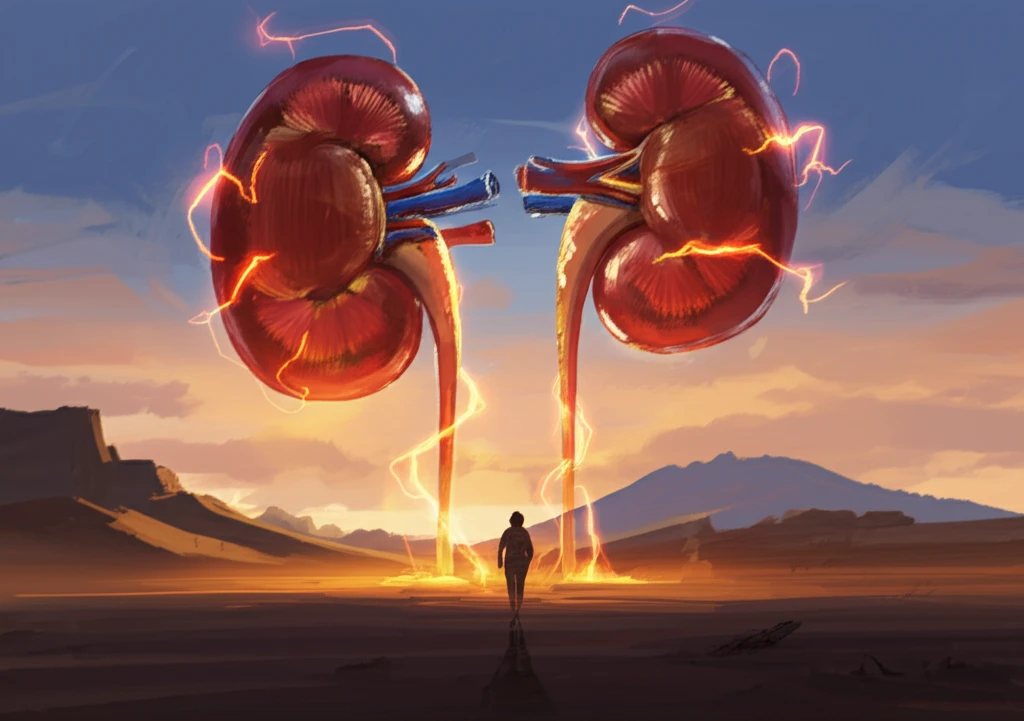
Surreal illustration of heat waves impacting kidney health in a desert landscape.

Heat and Kidneys: Are You at Risk? Understanding the Link Between Rising Temperatures and Kidney Health

"As global temperatures rise, kidney health is increasingly at risk. Learn about the dangers and how to protect yourself and your loved ones."


Global warming is no longer a distant threat; it's impacting our health right now. One concerning consequence is the rising prevalence of chronic kidney disease (CKD), especially among younger individuals who lack the traditional risk factors. This alarming trend highlights the urgent need to understand how heat exposure affects our kidneys and what we can do to protect ourselves.

While the dangers of heatstroke are well-known, the subtle yet significant impact of prolonged heat exposure on kidney function often goes unnoticed. From outdoor laborers in tropical climates to those simply working in overheated kitchens, many are unknowingly putting their kidneys at risk. As temperatures continue to climb, understanding this connection is more critical than ever.

This article explores the intricate relationship between heat and kidney health. We'll delve into the specific mechanisms that make our kidneys vulnerable to heat stress, identify those at highest risk, and provide actionable strategies to safeguard your kidney function, ensuring you stay healthy as the world warms.

Why Are Rising Temperatures Bad for Your Kidneys?

Surreal illustration of heat waves impacting kidney health in a desert landscape.

When our bodies overheat, we sweat to cool down. This leads to a loss of both water and salt. If we don't replenish these fluids and electrolytes, our blood volume decreases, triggering vasoconstriction (narrowing of blood vessels). This process puts a strain on the kidneys, as they receive less blood flow. Over time, this can lead to kidney injury and even chronic kidney disease.

Dehydration isn't the only culprit. Strenuous activity in hot environments can also lead to rhabdomyolysis, a condition where damaged muscle tissue releases harmful substances into the bloodstream. These substances can overwhelm the kidneys, causing further damage.

Here's what can happen:
  • Reduced blood flow to the kidneys.
  • Increased uric acid production, leading to crystal formation in the kidneys.
  • Activation of the aldose reductase pathway, causing inflammation and fibrosis in the kidneys.
  • Potential exposure to toxins like glyphosate through contaminated water sources.
Emerging research suggests that even seemingly minor dehydration can have long-term consequences for kidney health. A study on sugarcane workers in El Salvador found that even mild dehydration was associated with increased uric acid levels and reduced kidney function. This highlights the importance of staying well-hydrated, especially if you live in a hot climate or work in a physically demanding job.

Protect Your Kidneys: Simple Steps for a Hotter World

The good news is that protecting your kidneys from heat-related damage doesn't require drastic measures. Simple, proactive steps can make a significant difference, especially for those at higher risk. In hotter environment and work place, access to clean water should be provided by Employers. Proper health and diagnostics must be put in place at workplaces. Here's what you can do: <ul> <li><b>Stay Hydrated:</b> Drink plenty of water throughout the day, even if you don't feel thirsty. Aim for 2-3 liters, especially when active or in hot weather.</li> <li><b>Avoid Strenuous Activity During Peak Heat:</b> If possible, schedule outdoor activities for cooler times of the day.</li> <li><b>Wear Light-Colored, Loose-Fitting Clothing:</b> This helps your body stay cool.</li> <li><b>Take Breaks in Shaded or Air-Conditioned Environments:</b> Even short breaks can help your body recover.</li> <li><b>Monitor Your Medication:</b> If you take diuretics, talk to your doctor about adjusting your dosage during hot weather.</li> <li><b>Be Aware of Urine Color:</b> Dark urine is a sign of dehydration. Aim for pale yellow urine.</li> <li><b>Know Your Risk Factors:</b> If you have diabetes, high blood pressure, or are over 65, you are at higher risk of heat-related kidney problems. Talk to your doctor about additional precautions.</li> </ul>

About this Article -

This article was crafted using a human-AI hybrid and collaborative approach. AI assisted our team with initial drafting, research insights, identifying key questions, and image generation. Our human editors guided topic selection, defined the angle, structured the content, ensured factual accuracy and relevance, refined the tone, and conducted thorough editing to deliver helpful, high-quality information.See our About page for more information.

This article is based on research published under:

DOI-LINK: 10.1136/bmjebm-2018-110971, Alternate LINK

Title: Heat-Related Chronic Kidney Disease Mortality In The Young And Old: Differing Mechanisms, Potentially Similar Solutions?

Subject: General Medicine

Journal: BMJ Evidence-Based Medicine

Publisher: BMJ

Authors: Tomás Ó Flatharta, Aidan Flynn, Eamon C Mulkerrin

Published: 2018-09-27

Everything You Need To Know

1

How do rising temperatures specifically damage the kidneys?

Rising temperatures negatively impact the kidneys through several mechanisms. The body sweats to cool down, leading to fluid and salt loss. This can cause decreased blood volume, triggering vasoconstriction, which reduces blood flow to the kidneys, potentially leading to kidney injury. Additionally, strenuous activity in heat can cause rhabdomyolysis, where damaged muscle tissue releases harmful substances that can overwhelm the kidneys. Other factors include increased uric acid production, crystal formation, activation of the aldose reductase pathway causing inflammation and fibrosis and potential exposure to toxins like glyphosate through contaminated water sources.

2

What are the primary risk factors that make someone more vulnerable to heat-related kidney problems?

Individuals with certain pre-existing conditions face a higher risk of heat-related kidney issues. Those with diabetes, high blood pressure, or are over the age of 65 are particularly vulnerable. These conditions often affect the kidneys' ability to regulate fluids and blood flow, making them more susceptible to damage from heat stress and dehydration. Consulting with a doctor about these risk factors is crucial, especially during heat waves.

3

What practical steps can be taken to protect kidney health during heatwaves?

Protecting kidney health during heatwaves involves several straightforward yet effective strategies. The most important step is to stay hydrated by drinking plenty of water throughout the day, aiming for 2-3 liters, especially when active or in hot weather. Other measures include avoiding strenuous activities during peak heat, wearing light-colored, loose-fitting clothing, and taking breaks in shaded or air-conditioned environments. Monitoring medication, especially diuretics, and being aware of urine color (aiming for pale yellow) are also crucial. Employers should provide access to clean water and implement proper health diagnostics.

4

How does dehydration impact kidney function, and what are the long-term consequences?

Dehydration is a major threat to kidney function in a hot environment. When the body loses fluids through sweating without adequate replenishment, blood volume decreases. This triggers vasoconstriction, narrowing blood vessels, and reducing blood flow to the kidneys, which can lead to kidney injury. Emerging research indicates that even mild dehydration can have long-term consequences, such as increased uric acid levels and reduced kidney function. These effects highlight the importance of staying well-hydrated, especially in hot climates or during physical labor.

5

Can you explain the connection between strenuous activity in heat and kidney damage and how employers can contribute to the prevention?

Strenuous activity in hot environments can lead to rhabdomyolysis, where damaged muscle tissue releases harmful substances into the bloodstream that can overwhelm the kidneys, causing further damage. Employers can play a vital role in prevention by providing access to clean water, implementing proper health diagnostics, and providing adequate breaks in shaded or air-conditioned environments, especially for those working outdoors or in overheated spaces. Education on staying hydrated and recognizing the early signs of heat-related illness can also be provided to prevent long-term kidney damage among employees.

Newsletter Subscribe

Subscribe to get the latest articles and insights directly in your inbox.