
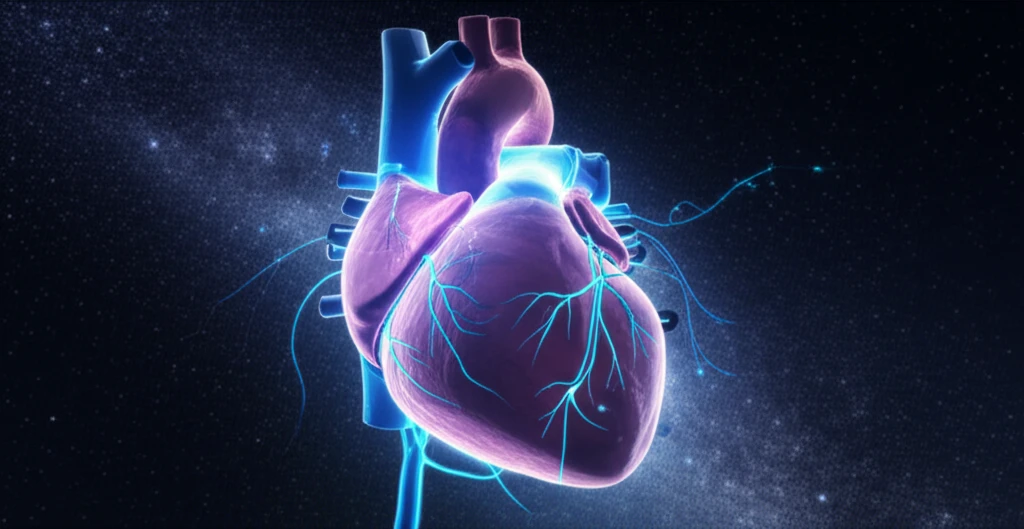
Heart's Hidden Rhythms: Can New Scans Predict Cardiac Death?

"Unlock the Secrets of Heart Health: A Breakthrough Study Reveals How Cardiac Scans Can Identify Hidden Risks and Improve Patient Outcomes."
Dilated cardiomyopathy (DCM), a condition where the heart's ability to pump blood is weakened, affects millions worldwide. While treatments have improved, predicting which patients are most at risk of sudden cardiac death remains a challenge. Traditional methods often fall short, leaving doctors searching for more precise tools.
Now, a groundbreaking study published in the Journal of Nuclear Cardiology offers new hope. Researchers have discovered that by using advanced cardiac imaging techniques, they can identify subtle abnormalities in the heart's rhythm – both during contraction (systole) and relaxation (diastole) – that significantly increase the risk of cardiac death. This could revolutionize how we assess and manage DCM patients.
This article breaks down this complex research into easy-to-understand terms, revealing how these new insights could impact you or your loved ones. We'll explore the innovative scanning techniques, the key findings of the study, and what this all means for the future of heart health.
Decoding the Heart's Electrical Symphony: Systole, Diastole, and Dyssynchrony
To understand this new approach, it's essential to grasp a few key concepts. The heart's function relies on a precise, coordinated rhythm. When the heart contracts (systole), blood is pumped out to the body. When it relaxes (diastole), the heart chambers refill with blood. 'Dyssynchrony' refers to any disruption in this coordinated rhythm, meaning different parts of the heart aren't working together in harmony.
- Phase Standard Deviation (PSD): Measures the overall variability in the timing of heart muscle contraction and relaxation.
- Phase Histogram Bandwidth (PBW): Indicates the range of time over which heart muscle activity occurs.
- Phase Entropy (PE): Reflects the complexity and disorganization of the heart's electrical activity.
A Brighter Future for Heart Health: The Promise of Early Detection
This research offers a powerful new tool for predicting cardiac death in DCM patients. By identifying and quantifying both systolic and diastolic dyssynchrony, doctors can gain a more complete picture of a patient's risk and tailor treatment accordingly. While further studies are needed to confirm these findings and optimize their application, this innovative approach holds tremendous promise for improving heart health and saving lives.