
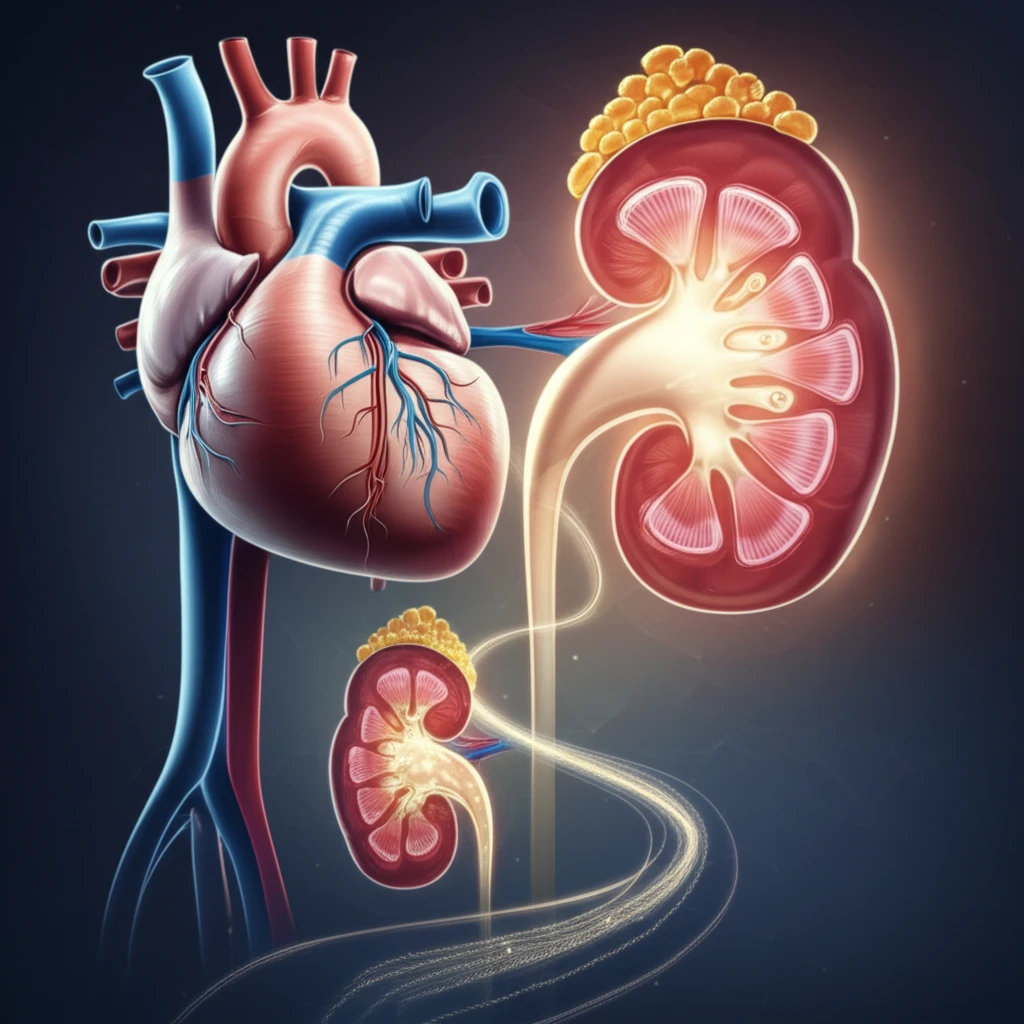
Stylized heart and kidney connected by a path, symbolizing LVAD support and the importance of balance.

HeartMate II LVAD: Why Early Renal Gains May Not Last

"Understanding the Long-Term Impact on Kidney Function After Ventricular Assist Device Implantation"


For individuals grappling with advanced heart failure, Left Ventricular Assist Devices (LVADs) have emerged as a vital lifeline. These devices, particularly the HeartMate II, offer enhanced durability, and prolonged support. As LVAD use becomes more prevalent, especially as a destination therapy, understanding the long-term effects on the body becomes increasingly critical. One key area of interest is renal function, which can significantly impact patient outcomes.

The kidneys, with their intricate filtration mechanisms, are highly sensitive to changes in overall physiology. Adequate blood supply, hemodynamic stability, and effective filtration are all essential for maintaining renal health. Given this complexity, kidney function serves as an indicator of subtle physiological shifts in the body, making it an important area to monitor in LVAD patients.

While initial studies suggest that LVAD implantation can lead to early improvements in renal function, longer-term trends are less clear. Some research indicates a potential decline in kidney function after the initial boost. Further investigation is needed to fully understand these long-term effects and identify the factors that contribute to renal decline in LVAD patients.

The Ups and Downs: Exploring Kidney Function Post-LVAD

Stylized heart and kidney connected by a path, symbolizing LVAD support and the importance of balance.

A recent study investigated the long-term impact of HeartMate II LVADs on renal function. Researchers followed 62 patients for a year after LVAD implantation, carefully monitoring their Glomerular Filtration Rate (GFR), a key indicator of kidney function. The study revealed a common pattern: an initial improvement in GFR followed by a gradual decline over time.

Specifically, GFR initially increased from 54.5±19.5 (at admission) to 66.4±22.3 (pre-operatively) and further to 79.2±30.1 one month post-implantation. However, as time progressed, GFR gradually declined to 74.7±25.4 at ~3 months, 68.8±23.1 at ~6 months, and ultimately 63.9±17.7 at ~1 year. This decline was statistically significant compared to the earlier improvements, highlighting the dynamic nature of renal function following LVAD support.

  • Initial Improvement: GFR tends to increase shortly after LVAD implantation.
  • Gradual Decline: Over the following months, kidney function gradually decreases.
  • Long-Term Impact: After one year, GFR is significantly lower than earlier post-operative levels.
Interestingly, the study also identified factors associated with less decline in GFR. Shorter bypass times during surgery and higher albumin levels three months after LVAD implantation were linked to better long-term renal function. These findings suggest that surgical techniques and nutritional status may play a role in preserving kidney health in LVAD patients.

What Does This Mean for LVAD Patients?

This research underscores the importance of long-term monitoring of renal function in individuals with HeartMate II LVADs. While the initial benefits are encouraging, the potential for later decline highlights the need for proactive management. By understanding the factors that influence kidney health, healthcare professionals can optimize patient care and strive to preserve renal function over the long term. Regular check-ups, nutritional support, and careful management of other health conditions can all contribute to better outcomes for LVAD patients.

About this Article -

This article was crafted using a human-AI hybrid and collaborative approach. AI assisted our team with initial drafting, research insights, identifying key questions, and image generation. Our human editors guided topic selection, defined the angle, structured the content, ensured factual accuracy and relevance, refined the tone, and conducted thorough editing to deliver helpful, high-quality information.See our About page for more information.

Everything You Need To Know

1

Why is it important to monitor kidney function in patients with the HeartMate II LVAD?

Monitoring kidney function in patients with the HeartMate II LVAD is critical because the kidneys are highly sensitive to changes in overall physiology, including blood supply, hemodynamic stability, and effective filtration. Kidney function, specifically measured by Glomerular Filtration Rate (GFR), serves as an indicator of subtle physiological shifts in the body, making it an important area to monitor for potential decline and overall impact on patient outcomes. Early improvements can be misleading, and long-term trends may show a decline.

2

What is the Glomerular Filtration Rate (GFR), and why is it important in the context of HeartMate II LVADs?

The Glomerular Filtration Rate (GFR) is a key indicator of kidney function, measuring how well the kidneys are filtering blood. In the context of HeartMate II LVADs, GFR is vital because studies show an initial improvement in GFR shortly after LVAD implantation, followed by a gradual decline over time. Monitoring GFR helps healthcare professionals assess the long-term impact of the HeartMate II LVAD on renal health and manage patient care proactively. A declining GFR signals potential kidney dysfunction that needs attention.

3

What factors might influence long-term kidney function in patients with the HeartMate II LVAD?

Several factors can influence long-term kidney function in patients with the HeartMate II LVAD. Shorter bypass times during surgery and higher albumin levels three months after LVAD implantation are associated with better long-term renal function. This suggests that surgical techniques and nutritional status play a role in preserving kidney health. Other health conditions and their management also contribute to the overall renal health of HeartMate II LVAD patients. These factors highlight the importance of comprehensive patient management.

4

What does the research suggest about the long-term impact of HeartMate II LVADs on renal function, and what are the implications for patient care?

Research indicates that while HeartMate II LVAD implantation can lead to early improvements in renal function, specifically an increase in Glomerular Filtration Rate (GFR), this improvement is often followed by a gradual decline over time. After one year, GFR is significantly lower than earlier post-operative levels. This underscores the importance of long-term monitoring of renal function. Healthcare professionals should focus on proactive management, including regular check-ups, nutritional support, and careful management of other health conditions, to optimize patient care and preserve renal function in HeartMate II LVAD patients.

5

How can healthcare professionals proactively manage and optimize long-term kidney health in individuals with HeartMate II LVADs, considering the observed patterns in Glomerular Filtration Rate (GFR)?

To proactively manage and optimize long-term kidney health in individuals with HeartMate II LVADs, healthcare professionals should implement several strategies. Regular monitoring of Glomerular Filtration Rate (GFR) is essential to detect early signs of decline. Nutritional support to maintain adequate albumin levels, along with careful management of other health conditions such as hypertension and diabetes, can help preserve renal function. Furthermore, optimizing surgical techniques to minimize bypass times may also contribute to better long-term outcomes. These interventions, combined with personalized patient care plans, can mitigate the potential for renal decline and improve overall health.

Newsletter Subscribe

Subscribe to get the latest articles and insights directly in your inbox.