
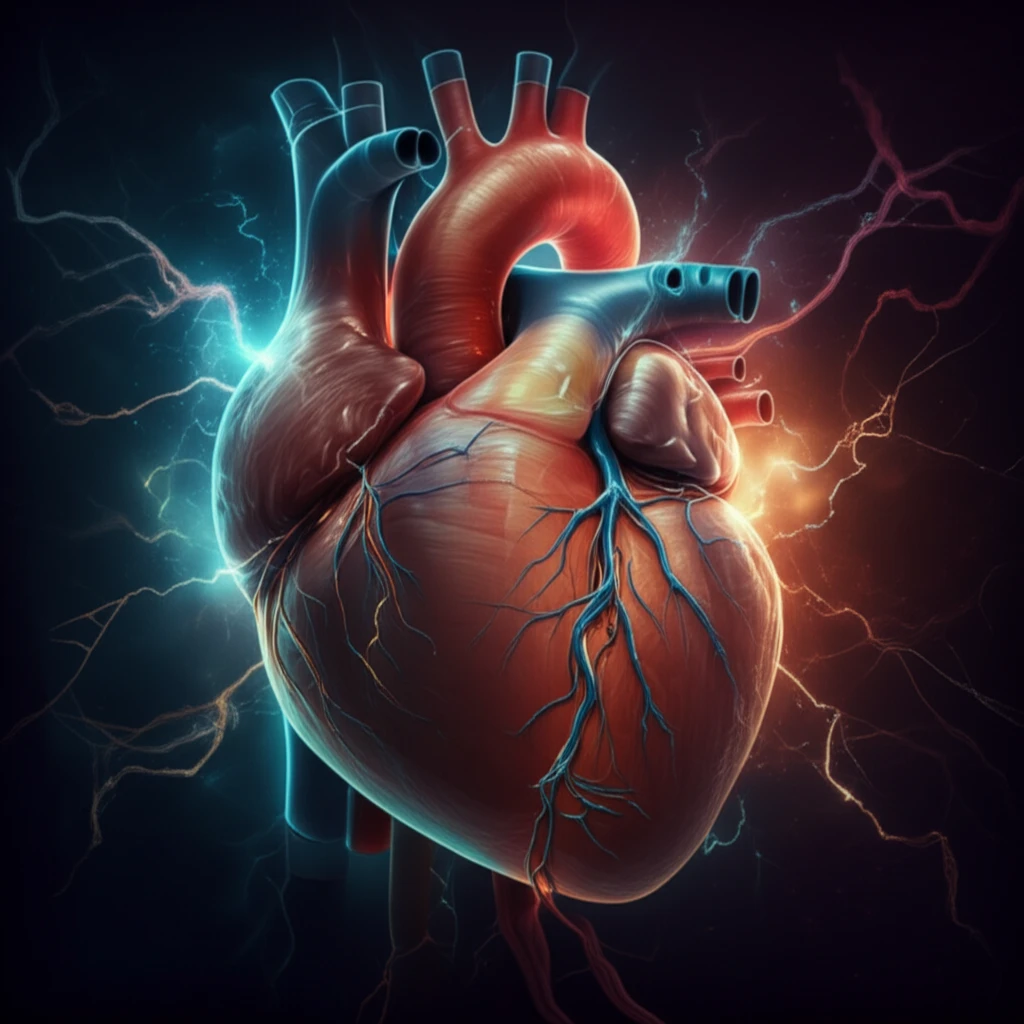
Heart interwoven with DNA and electrical sparks, representing arrhythmias

Heartbreak at a Cellular Level: How Faulty Proteins Trigger Arrhythmias

"Unraveling the Mysteries of Dilated Cardiomyopathy and Novel Therapeutic Targets"


Our hearts, those tireless engines of life, depend on a symphony of coordinated electrical and mechanical events. But what happens when a single faulty protein throws this delicate balance into chaos? Recent research is illuminating the profound impact of genetic mutations on heart function, particularly in the context of dilated cardiomyopathy (DCM), a condition where the heart muscle weakens and enlarges.

DCM isn't just a structural problem; it's an electro-mechanical one. As the heart's architecture falters, so too does its electrical stability, paving the way for dangerous arrhythmias – irregular heartbeats that can lead to sudden cardiac arrest. Scientists are now piecing together the intricate puzzle of how specific protein defects disrupt cellular mechanics and electrical signaling, offering hope for targeted therapies that can restore harmony to the failing heart.

This article explores cutting-edge studies presented at a recent European Heart Journal conference, focusing on the role of lamin A mutations in DCM, the protective effects of NLRP3 inflammasome inhibition after a heart attack, and the surprising link between a protein phosphatase subunit and arrhythmia risk. Get ready to journey into the microscopic world of cardiac cells, where the fate of the heart is determined by the intricate dance of proteins and ions.

Lamin A Mutations: When the Heart's Infrastructure Crumbles

Heart interwoven with DNA and electrical sparks, representing arrhythmias

Lamin A, a protein residing within the nucleus of cardiac cells, acts as a critical scaffold, maintaining the structural integrity of our genetic material. Imagine it as the heart's internal framework, essential for proper function. When lamin A is mutated, this framework weakens, leading to DCM. A new study sheds light on how these mutations disrupt the heart's electrical and mechanical coupling, predisposing individuals to arrhythmias.

Researchers used human induced pluripotent stem cell-cardiomyocytes (hiPSC-CMs) – essentially, heart cells grown in a lab from stem cells – to model the effects of lamin A mutations. These hiPSC-CMs, carrying a specific mutation (LmnaR225X/WT), exhibited several key abnormalities:

  • Disorganized F-actin: F-actin, a protein crucial for cell structure and force generation, was found to be disorganized in the mutated cells, disrupting the connection between the nucleus and the cell's outer membrane.
  • Reduced Nuclear Integrity: The nucleus itself became compromised, further weakening the cell's structural foundation.
  • Hyperpolarization: The mutated cells tended to have a more negative resting membrane potential, making it harder for them to fire electrical signals properly.
  • Impaired Calcium Handling: Calcium, a key player in muscle contraction, was dysregulated, leading to weakened contractility.
The researchers found that mechanical stress relief could restore some electrical stability in the mutated cells. This suggests that targeting the mechanical consequences of lamin A mutations could be a promising therapeutic strategy. The study highlights the importance of lamin A in maintaining the heart's structural and electrical integrity, and offers a potential avenue for treating DCM-related arrhythmias. What is means is that, fixing broken support beams and reduce electrical noise is like patching the hole.

Hope on the Horizon

The studies discussed above offer a glimpse into the complex interplay of genetics, cellular mechanics, and electrical signaling in the heart. By identifying specific molecular targets, such as lamin A, the NLRP3 inflammasome, and B56α, researchers are paving the way for personalized therapies that can restore heart health and prevent life-threatening arrhythmias. These are just small little peeks on whats to come in the future of medicine.

About this Article -

This article was crafted using a human-AI hybrid and collaborative approach. AI assisted our team with initial drafting, research insights, identifying key questions, and image generation. Our human editors guided topic selection, defined the angle, structured the content, ensured factual accuracy and relevance, refined the tone, and conducted thorough editing to deliver helpful, high-quality information.See our About page for more information.

Everything You Need To Know

1

What is dilated cardiomyopathy (DCM), and how does it relate to heart arrhythmias?

DCM is a condition where the heart muscle weakens and enlarges, leading to both structural and electrical problems. The article emphasizes that DCM isn't just a structural issue but also an electro-mechanical one. As the heart's architecture deteriorates, its electrical stability is compromised, increasing the risk of dangerous arrhythmias, which are irregular heartbeats that can lead to sudden cardiac arrest. The research focuses on the link between specific protein defects and the disruption of cellular mechanics and electrical signaling, offering hope for targeted therapies to restore heart health.

2

How do lamin A mutations contribute to the development of DCM and arrhythmias?

Lamin A, a protein within the nucleus of cardiac cells, is crucial for maintaining the structural integrity of the heart. Mutations in lamin A weaken this internal framework, leading to DCM. Research using human induced pluripotent stem cell-cardiomyocytes (hiPSC-CMs) carrying the LmnaR225X/WT mutation revealed several abnormalities. These included disorganized F-actin, reduced nuclear integrity, hyperpolarization, and impaired calcium handling. These defects disrupt the heart's electrical and mechanical coupling, increasing the likelihood of arrhythmias. The study suggests that targeting the mechanical consequences of lamin A mutations could be a promising therapeutic strategy.

3

What role does F-actin play in heart cell function, and how does its disorganization impact the heart?

F-actin is a protein essential for cell structure and force generation within cardiac cells. Its disorganization, as observed in hiPSC-CMs with lamin A mutations, disrupts the crucial connection between the nucleus and the cell's outer membrane. This disruption affects the cell's ability to maintain its structural integrity and properly generate force, which is vital for the heart's ability to contract and pump blood effectively. This disorganization contributes to the overall weakening of the heart muscle and increases the risk of arrhythmias.

4

How can mechanical stress relief help in treating heart conditions caused by lamin A mutations?

The research found that mechanical stress relief could restore some electrical stability in mutated cells. This suggests that addressing the mechanical consequences of lamin A mutations could be a potential therapeutic approach. This may involve strategies aimed at reducing the strain on the heart cells or reinforcing the damaged structural components. By targeting the mechanical aspects, it might be possible to improve the electrical signaling and reduce the likelihood of arrhythmias. This is akin to repairing damaged structural supports to reduce electrical noise in a building's wiring.

5

What are some potential therapeutic targets discussed in the article to treat heart conditions, and how do they work?

The article highlights several potential therapeutic targets. Lamin A, by focusing on the structural integrity of cardiac cells, researchers aim to prevent the mechanical and electrical disruptions that lead to arrhythmias. The NLRP3 inflammasome, and B56α are also mentioned as potential targets. By identifying specific molecular targets, researchers are paving the way for personalized therapies that can restore heart health and prevent life-threatening arrhythmias. The exact mechanisms of action for these targets would involve specific interventions aimed at correcting the underlying cellular defects and restoring proper heart function. These treatments are still under investigation and are a peek at what is to come in the future of medicine.

Newsletter Subscribe

Subscribe to get the latest articles and insights directly in your inbox.