
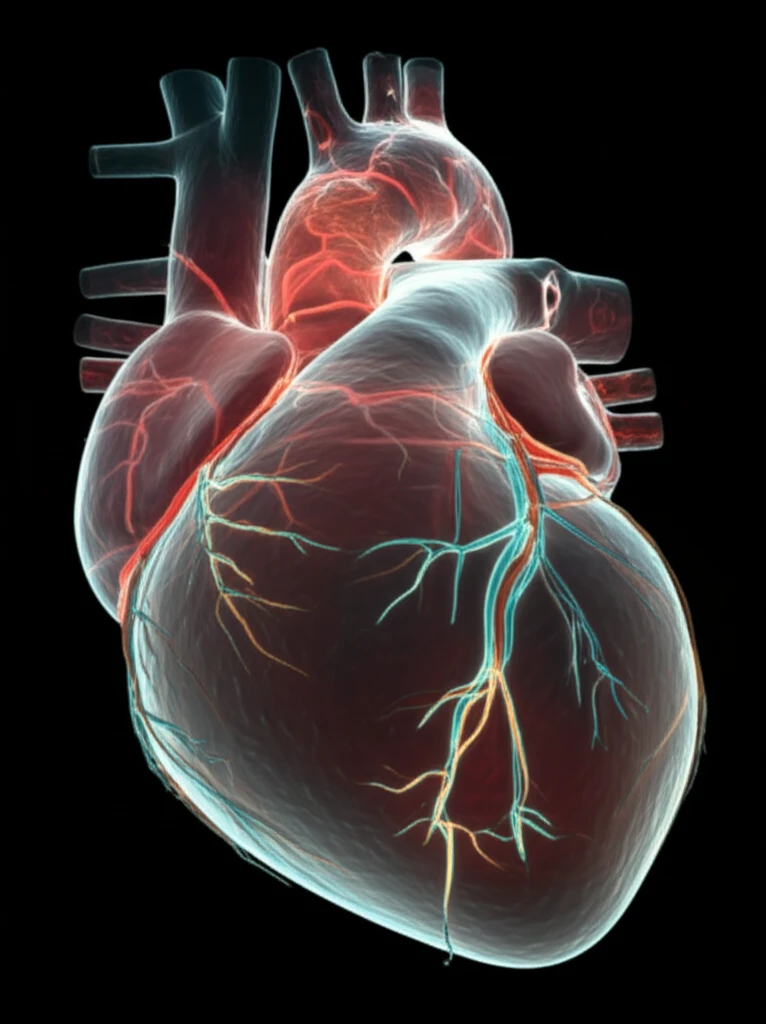
Illustration of engineered human myocardium

Heart Repair Revolution: How Scientists are Engineering Human Myocardium

"Unlocking the Secrets of Heart Health: Exploring the Cutting-Edge Research on Engineered Human Myocardium for Disease Modeling and Repair."


October 26, 2023. Heart disease remains a leading cause of death worldwide, but a new era of hope is emerging. Scientists are making incredible strides in regenerative medicine, with the goal of repairing damaged hearts. One of the most promising areas of research involves engineering human myocardium – essentially, growing functional heart muscle in a lab. This innovative approach has the potential to transform how we treat and understand heart conditions.

Imagine a future where damaged heart tissue can be replaced or repaired with lab-grown alternatives. This isn't science fiction; it's the focus of intense research efforts around the globe. Engineered human myocardium (EHM) offers a unique opportunity to study heart disease, test new drugs, and ultimately, develop treatments that can restore heart function. This article delves into the fascinating science behind EHM and its potential to revolutionize cardiac care.

This groundbreaking work is not only about creating functional heart tissue but also about understanding the complex biological processes that govern heart development and repair. By studying how cells interact and tissues form, researchers are uncovering critical insights that could lead to new therapies and diagnostic tools. The quest to engineer a healthy heart is a collaborative effort, with researchers from various disciplines working together to achieve a common goal: saving lives and improving the quality of life for people affected by heart disease.

The Building Blocks of a Better Heart: Understanding Engineered Human Myocardium

Illustration of engineered human myocardium

At the heart of EHM are cardiomyocytes, the cells responsible for the heart's rhythmic contractions. These cells are combined with fibroblasts, which provide structural support and play a crucial role in tissue organization. The mixture is then placed in a collagen hydrogel, a three-dimensional scaffold that mimics the natural environment of heart tissue. Over time, the cells self-assemble, creating a functional, beating heart muscle.

The process of EHM creation involves several key steps, each critical for the success of the final product. The research, as highlighted in the original study, demonstrates a critical interplay between cardiomyocytes and fibroblasts, highlighting the significance of cellular crosstalk in tissue development. The cells communicate through various mechanisms, including direct contact and the release of signaling molecules. The collagen hydrogel provides the necessary structural support and allows the cells to interact and organize themselves into a functional tissue. This self-assembly process is a marvel of biological engineering.

  • Cellular Components: Cardiomyocytes and fibroblasts are the main cell types used in EHM.
  • Scaffolding: A collagen hydrogel serves as a support structure.
  • Self-Assembly: Cells organize themselves into functional heart muscle.
  • Maturation: Mechanical and biochemical factors promote tissue maturation.
The initial research emphasizes the critical role of fibroblasts in tissue compaction, a process in which the collagen network becomes more dense and organized. Cardiomyocytes, in turn, seem to regulate this process, leading to the development of stable, functional EHM. This insight is pivotal for future research, as it could help optimize the design of EHM for a wide range of applications, from in vitro disease modeling to in vivo heart repair.

Looking Ahead: The Future of Engineered Human Myocardium

The field of EHM is rapidly advancing, with each new discovery bringing us closer to our goals of treating heart disease and improving patient outcomes. As scientists continue to unravel the intricacies of cellular interactions and tissue formation, we can anticipate even more sophisticated and effective approaches to heart repair. The engineered human myocardium represents not only a scientific achievement but also a symbol of hope, promising a healthier future for millions affected by heart disease.

About this Article -

This article was crafted using a human-AI hybrid and collaborative approach. AI assisted our team with initial drafting, research insights, identifying key questions, and image generation. Our human editors guided topic selection, defined the angle, structured the content, ensured factual accuracy and relevance, refined the tone, and conducted thorough editing to deliver helpful, high-quality information.See our About page for more information.

This article is based on research published under:

DOI-LINK: 10.1016/j.pbiomolbio.2018.11.011, Alternate LINK

Title: Agonistic And Antagonistic Roles Of Fibroblasts And Cardiomyocytes On Viscoelastic Stiffening Of Engineered Human Myocardium

Subject: Molecular Biology

Journal: Progress in Biophysics and Molecular Biology

Publisher: Elsevier BV

Authors: Susanne F. Schlick, Florian Spreckelsen, Malte Tiburcy, Lavanya M. Iyer, Tim Meyer, Laura C. Zelarayan, Stefan Luther, Ulrich Parlitz, Wolfram-Hubertus Zimmermann, Florian Rehfeldt

Published: 2019-07-01

Everything You Need To Know

1

What exactly is engineered human myocardium (EHM), and why is it considered a significant advancement in treating heart conditions?

Engineered human myocardium (EHM) refers to functional heart muscle grown in a laboratory setting. Its significance lies in its potential to revolutionize the treatment of heart conditions by providing a means to study heart disease, test new drugs, and ultimately, replace or repair damaged heart tissue. This innovative approach offers hope for improving outcomes for millions affected by heart disease, and the ability to unlock the secrets of heart health.

2

Could you elaborate on the key components and processes involved in creating engineered human myocardium?

The creation of engineered human myocardium (EHM) involves several key components and processes. The primary cellular components are cardiomyocytes, responsible for the heart's contractions, and fibroblasts, which provide structural support and aid in tissue organization. These cells are placed within a collagen hydrogel, which acts as a three-dimensional scaffold mimicking the natural environment of heart tissue. Over time, the cells self-assemble to form a functional, beating heart muscle. Tissue compaction, regulated by cardiomyocytes and aided by fibroblasts, is also a key aspect of EHM development.

3

What role do cellular interactions, specifically the interplay between cardiomyocytes and fibroblasts, play in the development of functional engineered human myocardium?

Cellular interactions, particularly the interplay between cardiomyocytes and fibroblasts, are critical for the development of functional engineered human myocardium (EHM). Cardiomyocytes regulate tissue compaction with fibroblasts. They work together through direct contact and the release of signaling molecules. This cellular crosstalk is vital for the self-assembly process and the overall maturation of the tissue, ultimately leading to the creation of stable and functional EHM.

4

What are the potential applications of engineered human myocardium beyond just repairing damaged heart tissue?

Beyond repairing damaged heart tissue, engineered human myocardium (EHM) holds significant promise for in vitro disease modeling, allowing scientists to study heart conditions in a controlled laboratory setting. It can also be used for drug testing, enabling researchers to assess the efficacy and safety of new therapies before they are tested on humans. These applications contribute to a better understanding of heart disease and the development of more effective treatments.

5

What are some of the challenges and future directions in the field of engineered human myocardium research?

While the field of engineered human myocardium (EHM) is rapidly advancing, several challenges remain. One major focus is optimizing the cellular interactions and tissue formation processes to create more sophisticated and effective heart repair strategies. It will also be crucial to better mimic the complexity of human heart tissue. As scientists continue to unravel the intricacies of cellular interactions and tissue formation, there is hope for even more effective approaches to treating heart disease and improving patient outcomes, leading to a healthier future for millions.

Newsletter Subscribe

Subscribe to get the latest articles and insights directly in your inbox.