
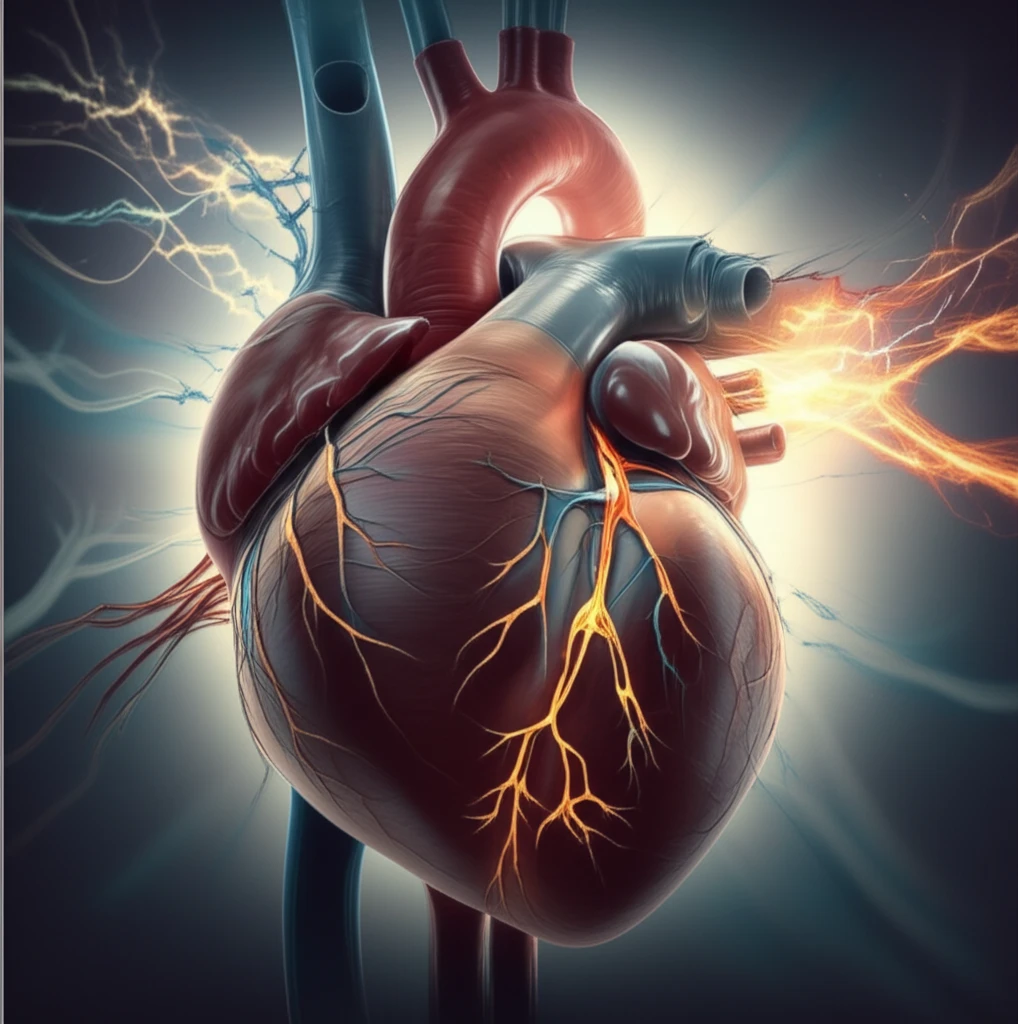
Heart Palpitations: Understanding ATP-Induced Ventricular Tachycardia

"Decoding the complexities of heart rhythms and their impact on your heart health: Can a change in pace lead to more serious heart conditions?"
For individuals with implantable cardioverter-defibrillators (ICDs), the heart's rhythm can sometimes take unexpected turns. Ventricular tachycardia (VT), a rapid heart rate originating in the ventricles, can occur spontaneously. But what happens when the very device designed to correct these rhythms—through antitachycardia pacing (ATP)—actually triggers a different kind of VT? This phenomenon raises important questions about the nature and clinical significance of ATP-induced VTs.
A recent study delved into this complex area, seeking to understand the relevance of ATP-mediated VTs in patients undergoing VT ablation procedures. By analyzing stored ICD electrograms from 162 patients with prior myocardial infarction, researchers aimed to classify clinical VTs as either spontaneous or ATP-induced and evaluate their impact during ablation procedures.
This research offers insights into the challenges of managing heart rhythms and optimizing treatment strategies for patients with ICDs. It highlights the need for tailored approaches that consider the potential for pacing-induced arrhythmias, ensuring that interventions enhance rather than complicate cardiac health.
ATP-Induced vs. Spontaneous VTs: What's the Difference?
The study revealed that among 554 ICD-recorded clinical VTs, a significant 28% were ATP-induced, affecting 63 patients. In contrast, 72% were spontaneous. Notably, ATP-induced VTs presented distinct characteristics: they were faster, less commonly inducible with invasive programmed stimulation, and less likely to have identifiable target sites compared to their spontaneous counterparts.
- Faster Heart Rate: ATP-induced VTs have a quicker cycle length.
- Lower Inducibility: Less likely to be triggered during stimulation.
- Harder to Target: Fewer identifiable sites for treatment.
Clinical Implications and Future Directions
The study's conclusion offers a nuanced perspective: ATP-induced VTs occur frequently in post-infarction patients needing VT ablation. While their presence is linked to a higher VT recurrence rate post-ablation, they don't directly reappear after the procedure. This suggests ATP-induced VTs act more as indicators of an underlying arrhythmogenic condition than as direct causes of recurring arrhythmias. Further research is needed to refine targeting strategies during ablation and improve long-term outcomes for VT patients.