
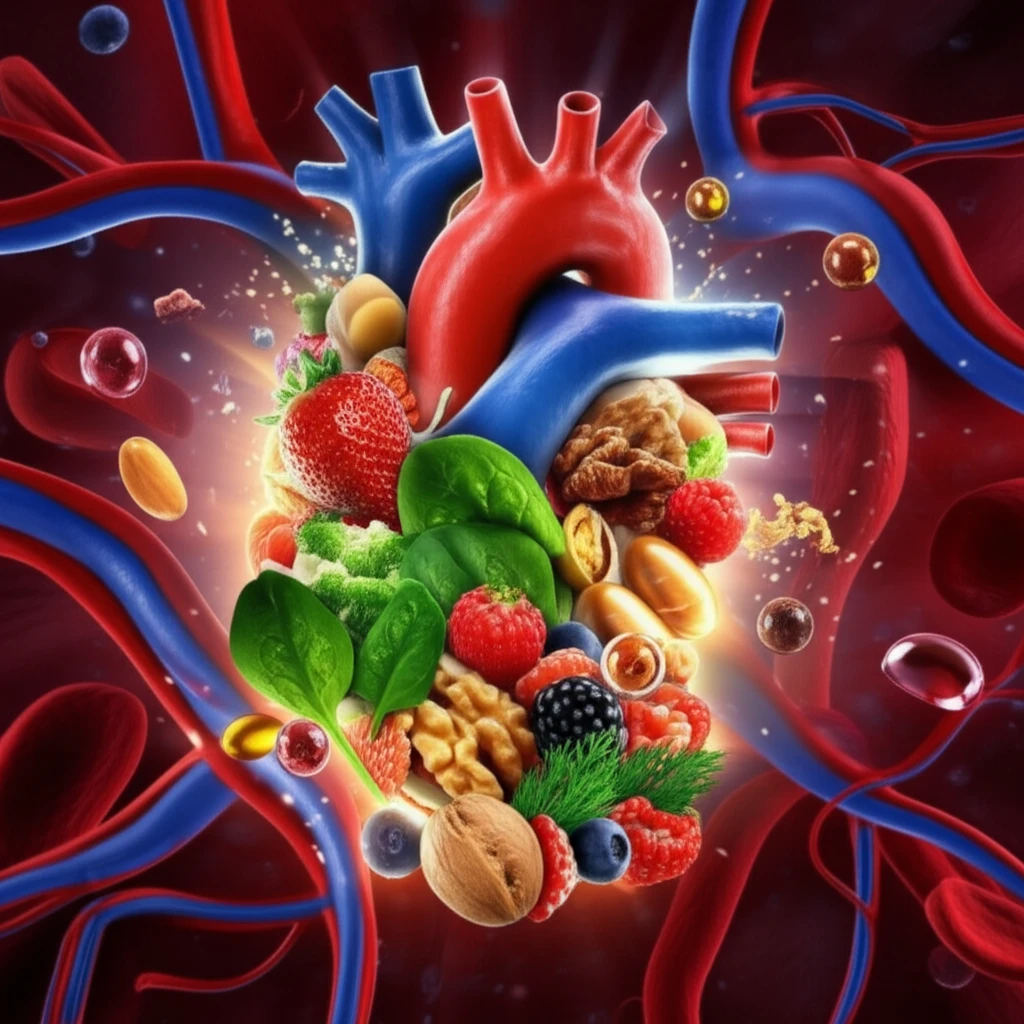
Illustration of a heart composed of healthy foods, with glowing particles representing vitamins and supplements, promoting heart health.

Heart Health's Hidden Heroes: How Diet and Supplements Could Be Your Secret Weapon

"Unlocking the Secrets to a Healthier Heart: Exploring the Powerful Link Between Diet, Supplements, and Cardiovascular Wellness"


In the relentless pursuit of optimal health, the spotlight often shines on exercise and stress management. However, a crucial player in the game of wellness often gets overlooked: the power of nutrition. Specifically, the role of diet and supplements in maintaining and improving cardiovascular health is gaining increasing attention.

This article delves into the fascinating world of heart health, examining how specific dietary choices and the strategic use of supplements can offer significant benefits. We'll explore recent research findings on vitamins, amino acids, and other vital nutrients, revealing how they may act as secret weapons in the fight against cardiovascular disease.

We'll break down complex scientific concepts into easily digestible information, empowering you with the knowledge and insights needed to make informed decisions about your diet and supplementation. Whether you're proactively seeking to improve your heart health or looking for ways to complement existing treatments, this guide is designed to offer practical, actionable advice.

Decoding the Science: Key Nutrients and Their Impact on Heart Health

Illustration of a heart composed of healthy foods, with glowing particles representing vitamins and supplements, promoting heart health.

The human body is an intricate system, and every part works in harmony. The same goes for your heart, which thrives on a steady supply of essential nutrients. Recent studies highlight the significant impact of various vitamins, amino acids, and other dietary components on heart health. Let's explore some of the key players.

One area of interest is the role of B vitamins. Research indicates that certain B vitamins, like B6, B9 (folic acid), and B12, may help in reducing homocysteine levels in the body. Elevated homocysteine levels have been linked to an increased risk of cardiovascular disease. By maintaining healthy levels of these vitamins, you can support a healthier heart.

  • Vitamin B Complex: Studies suggest that a high methionine diet without vitamin B complex causes negative effects associated with elevated homocysteine.
  • Sulfur Amino Acids: These acids play a role in cardiovascular health. Subchronic administration of DL-Hcy induces considerable changes in function of the cardiovascular system.
  • Glucagon-Like Peptide-1 (GLP-1): This peptide has been linked to reduced oxidative stress and anti-atherosclerotic benefits, suggesting its potential to protect against cardiovascular disease.
Beyond vitamins, specific amino acids and other compounds have shown promise. Sulfur amino acids, for instance, are being studied for their impact on the cardiovascular system's redox balance. Furthermore, research into the role of GLP-1, a peptide with anti-inflammatory properties, suggests its potential in reducing oxidative stress and supporting overall heart health. Incorporating these nutrients into your diet or considering supplementation, under the guidance of a healthcare professional, could be a proactive step towards improved cardiovascular wellness.

Taking Control: Your Path to a Healthier Heart

The journey to a healthier heart is a marathon, not a sprint. By understanding the critical role of diet and supplementation, you can equip yourself with the knowledge to make informed choices. Remember to consult with your healthcare provider before making any significant changes to your diet or starting a new supplement regimen. With the right approach, you can take proactive steps towards a healthier, more vibrant life.

About this Article -

This article was crafted using a human-AI hybrid and collaborative approach. AI assisted our team with initial drafting, research insights, identifying key questions, and image generation. Our human editors guided topic selection, defined the angle, structured the content, ensured factual accuracy and relevance, refined the tone, and conducted thorough editing to deliver helpful, high-quality information.See our About page for more information.

This article is based on research published under:

DOI-LINK: 10.1016/j.atherosclerosis.2018.06.397, Alternate LINK

Title: Vitamin B Complex Mitigates Cardiac Dysfunction In High-Methionine Diet-Induced Hyperhomocysteinemia

Subject: Cardiology and Cardiovascular Medicine

Journal: Atherosclerosis

Publisher: Elsevier BV

Authors: V. Jakovljevic, J. Jeremic, T. Nikolic-Turnic, V. Zivkovic, N. Jeremic, I. Milosavljevic, I. Srejovic, B. Jakovljevic, D. Djuric

Published: 2018-08-01

Everything You Need To Know

1

How do B vitamins specifically contribute to cardiovascular wellness, and what role does homocysteine play in this process?

B vitamins, such as B6, B9 (folic acid), and B12, are believed to help lower homocysteine levels in the body. Elevated homocysteine is associated with an increased risk of cardiovascular disease. Therefore, maintaining adequate levels of these B vitamins may support a healthier heart. The connection between a high methionine diet without sufficient vitamin B complex and negative effects associated with elevated homocysteine is also an important aspect of this relationship that can affect cardiovascular wellness.

2

What are sulfur amino acids, and how do they influence the cardiovascular system's redox balance?

Sulfur amino acids are being studied for their impact on the cardiovascular system. Research suggests they play a role in the cardiovascular system's redox balance. Subchronic administration of DL-Hcy induces considerable changes in function of the cardiovascular system. The specifics of how sulfur amino acids influence this balance and their exact mechanisms of action are areas of ongoing investigation.

3

What is Glucagon-Like Peptide-1 (GLP-1), and what potential benefits does it offer for protecting against cardiovascular disease?

Glucagon-Like Peptide-1, or GLP-1, is a peptide with anti-inflammatory properties. Research indicates that it has links to reduced oxidative stress and anti-atherosclerotic benefits. These findings suggest that GLP-1 has the potential to protect against cardiovascular disease. Further research is needed to fully understand its mechanisms of action and how it can be effectively utilized for cardiovascular health.

4

Besides vitamins, what other types of supplements might be beneficial for heart health, and why is it important to consult with a healthcare provider before starting a new supplement regimen?

In addition to vitamins, amino acids and other compounds like Glucagon-Like Peptide-1 (GLP-1) have shown promise for heart health. Specifically sulfur amino acids impact on the cardiovascular system's redox balance. Consulting with a healthcare provider before starting any new supplement regimen is crucial because they can assess your individual needs, potential interactions with existing medications, and ensure that the supplements are appropriate and safe for you.

5

How can dietary changes and supplements act as a 'secret weapon' in the fight against cardiovascular issues, and what steps can individuals take to proactively improve their heart health through nutrition?

Dietary changes and supplements can serve as a 'secret weapon' by providing essential nutrients like B vitamins, sulfur amino acids and Glucagon-Like Peptide-1 (GLP-1) that support heart function and reduce risk factors for cardiovascular disease. Individuals can proactively improve their heart health by incorporating nutrient-rich foods into their diet, considering supplementation under the guidance of a healthcare professional, and making informed choices based on the latest research. Regular monitoring and adjustments to their approach, in consultation with their healthcare provider, are also essential for long-term success.

Newsletter Subscribe

Subscribe to get the latest articles and insights directly in your inbox.