
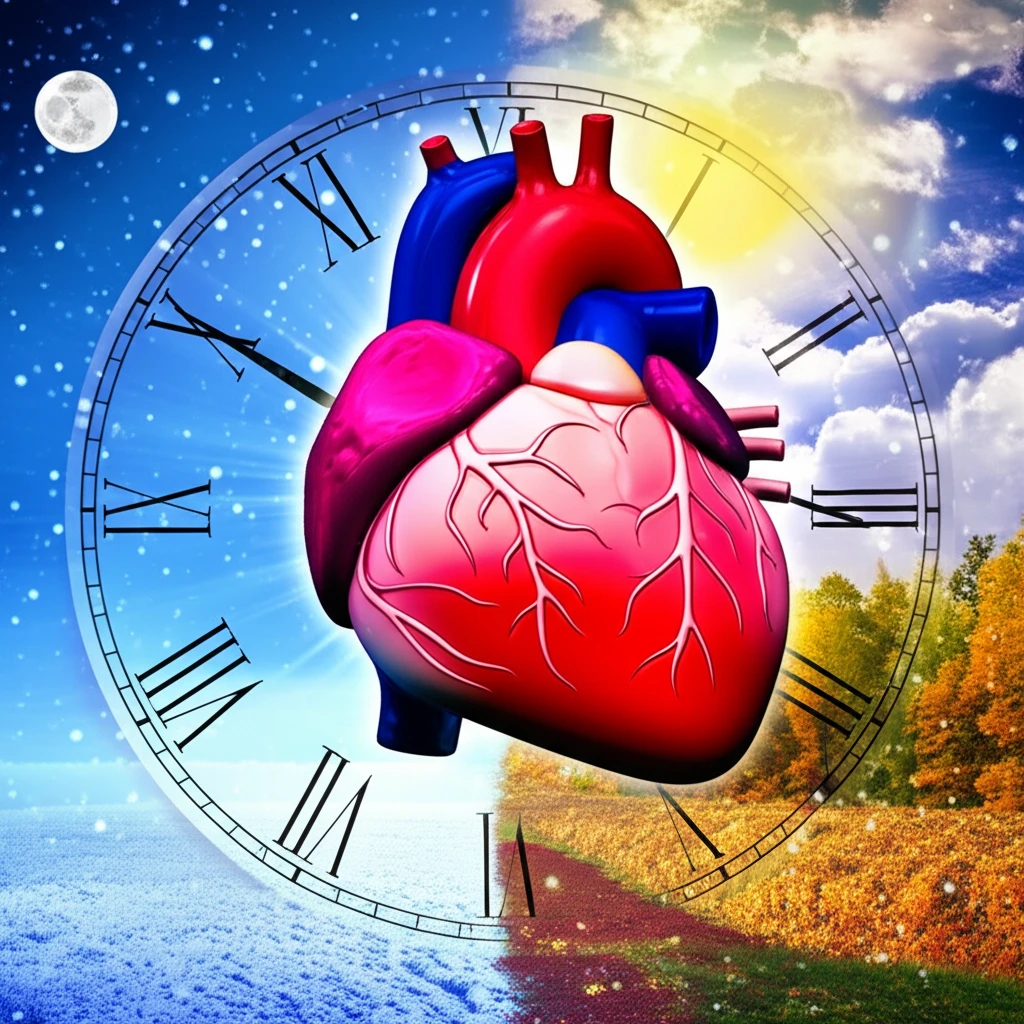
Illustration symbolizing the connection between heart health, circadian rhythms, and seasonal changes.

Heart Health Unlocked: Decoding the Secrets of Heart Attacks and Seasonal Patterns

"Unraveling the Mysteries of Heart Attacks: Exploring the Influence of Time, Weather, and Your Well-being"


Cardiovascular health remains a paramount concern in the modern world, with heart attacks ranking among the leading causes of mortality globally. In recent years, researchers and medical professionals have made remarkable strides in understanding the multifaceted factors contributing to these life-threatening events. While conventional risk factors such as age, genetics, and lifestyle choices are well-established, emerging evidence highlights the intricate interplay between time, season, and even weather patterns, and the onset of heart attacks. This article explores the latest scientific insights into this fascinating domain, offering a comprehensive view of the factors that can influence cardiovascular health.

The human body operates under a complex biological clock, known as the circadian rhythm. This internal clock governs various physiological processes, including heart rate, blood pressure, and hormone secretion. Moreover, the influence of seasonal changes, temperature fluctuations, and humidity levels, may play a crucial role in affecting heart health. Understanding these connections is vital for preventative measures and timely interventions.

Our focus is to investigate into two research papers which provide valuable insights into the correlation between circadian rhythms, seasonal patterns, and the onset of heart attacks. By examining these studies, we aim to unlock the secrets of cardiovascular health, providing actionable information to help you lead a healthier, heart-conscious life. This analysis will cover the major insights from these publications, offering an easy to understand and actionable guide.

Unveiling the Patterns: Circadian Rhythms and Heart Attacks

Illustration symbolizing the connection between heart health, circadian rhythms, and seasonal changes.

The first article examines the intricate relationship between circadian rhythms and the onset of heart attacks. This study highlights that these events are not randomly distributed throughout the day but often exhibit a distinctive pattern. The peak incidence of heart attacks has been observed in the early hours of the morning, suggesting a strong link between the body's internal clock and cardiovascular events. This phenomenon can be explained by the fact that certain biological processes, such as increased blood clotting and elevated levels of stress hormones, tend to be more active during these hours, increasing the risk of a heart attack.

The influence of circadian rhythms on heart health extends beyond the mere timing of events. These internal clocks also impact various physiological processes, like blood pressure and heart rate. Understanding these rhythmic fluctuations is vital for healthcare professionals, as it can inform the design of personalized prevention strategies and treatment plans.

  • Blood Clotting: Increased activity in the morning.
  • Stress Hormones: Elevated levels contributing to risk.
  • Physiological Processes: Circadian impact on blood pressure and heart rate.
The findings underscore the significance of considering the body's natural rhythms when evaluating heart health. Moreover, this knowledge empowers individuals to make informed decisions about their lifestyle choices, such as timing of medication or exercise, aligning with the body's internal clock to reduce the risk of cardiovascular events.

Empowering a Heart-Healthy Future

As we conclude our exploration of heart health, it's evident that the journey towards a healthier heart involves understanding not just the conventional risk factors but also the hidden influences of our internal clocks and the external environment. By raising awareness about the intricate interplay between circadian rhythms, seasonal patterns, and climate, we can empower individuals with the knowledge to take proactive steps in protecting their cardiovascular health. Remember, every beat of your heart is a testament to the incredible resilience of the human body, and with the right information and lifestyle choices, you can ensure it beats strong and healthy for years to come.

About this Article -

This article was crafted using a human-AI hybrid and collaborative approach. AI assisted our team with initial drafting, research insights, identifying key questions, and image generation. Our human editors guided topic selection, defined the angle, structured the content, ensured factual accuracy and relevance, refined the tone, and conducted thorough editing to deliver helpful, high-quality information.See our About page for more information.

Everything You Need To Know

1

How do circadian rhythms affect the likelihood of having a heart attack?

Circadian rhythms significantly influence the timing of heart attacks. Studies show a higher incidence of heart attacks in the early morning hours. This is attributed to increased blood clotting and elevated levels of stress hormones, which are typically more active during this time. These internal clocks also impact physiological processes like blood pressure and heart rate, making these rhythms critical to consider when evaluating overall heart health. The role of medication timing and aligning exercise routines with these rhythms should also be discussed with your doctor.

2

What specific biological processes that occur during circadian rhythms increase the risk of heart attacks?

During the early morning hours, several biological processes associated with circadian rhythms contribute to an elevated risk of heart attacks. These include increased blood clotting activity and elevated levels of stress hormones. The study shows that these changes in the body's internal environment can place additional strain on the cardiovascular system, potentially triggering a heart attack in susceptible individuals. Though not mentioned here, these processes may be affected by environmental factors and individual lifestyles.

3

Can understanding circadian rhythms help in preventing heart attacks, and if so, how?

Yes, understanding circadian rhythms can aid in preventing heart attacks. Awareness of these internal rhythms allows healthcare professionals to design personalized prevention strategies and treatment plans. Individuals can make informed lifestyle choices, such as timing their medication or exercise routines to align with their body's internal clock, potentially reducing the risk of cardiovascular events. The concept involves chronotherapy, in which drugs are administered at specific times to coincide with the body's rhythms.

4

Beyond circadian rhythms, what other factors influence cardiovascular health and heart attack risk?

While circadian rhythms play a significant role, seasonal changes, temperature fluctuations, and humidity levels are emerging as factors that influence cardiovascular health. These environmental elements can impact heart rate and blood pressure, affecting overall cardiovascular well-being. The interplay between the body's internal clock and external environmental factors requires a comprehensive approach to heart health. Further research is needed to understand the complex ways in which these factors interact and influence heart attack risk.

5

How can individuals use the knowledge of circadian rhythms and seasonal patterns to improve their heart health?

Individuals can leverage the knowledge of circadian rhythms and seasonal patterns by adopting a heart-conscious lifestyle. This includes strategically timing medication intake and exercise routines to align with their body's internal clock. During seasons with extreme temperatures, individuals should take extra precautions to protect their cardiovascular health, such as staying hydrated and avoiding strenuous activities during peak heat or cold. By understanding and adapting to these internal and external rhythms, people can proactively manage their heart health and reduce the risk of heart attacks. Nutrition, and stress management, though not explicitly mentioned, should be integrated into lifestyle choices for a holistic approach.

Newsletter Subscribe

Subscribe to get the latest articles and insights directly in your inbox.