
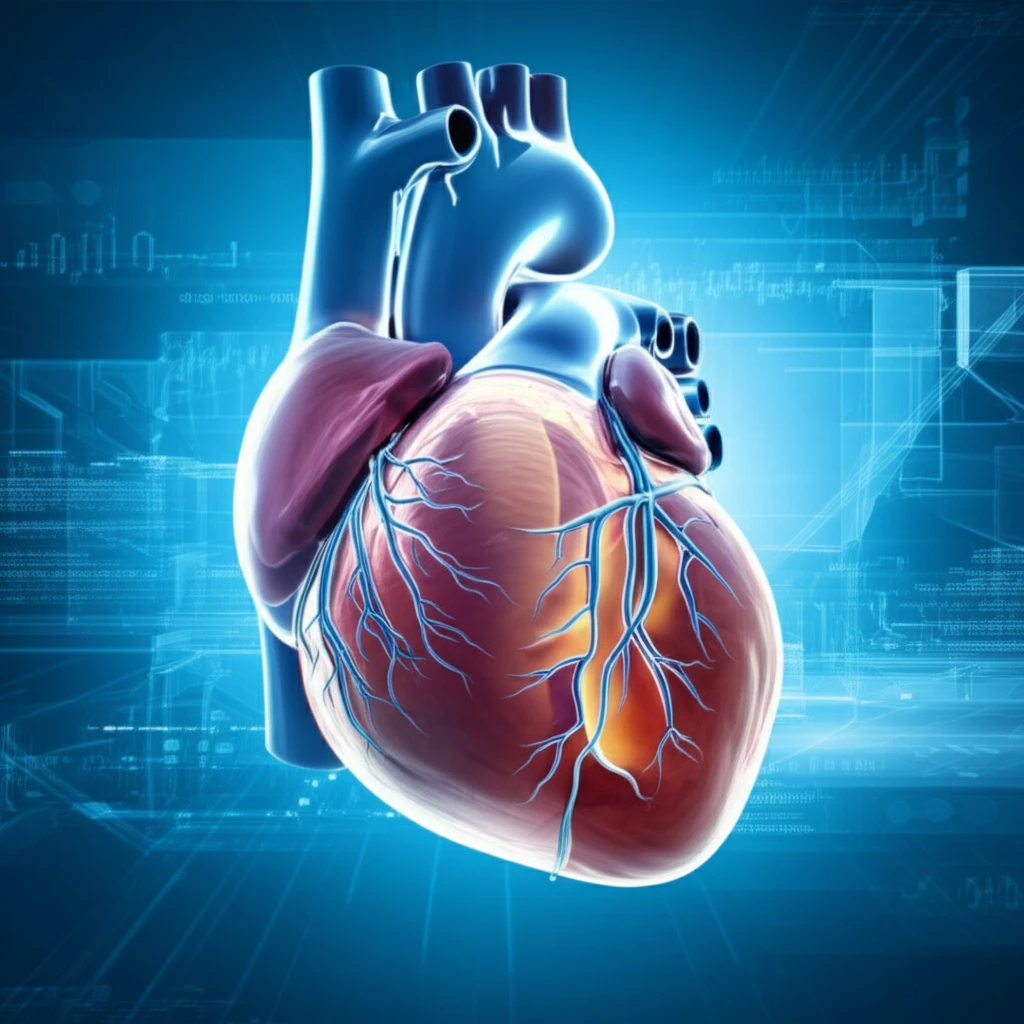
Illustration of a heart, highlighting myocardial work and advanced imaging in cardiac care.

Heart Health Unlocked: A New Era in Understanding Your Heart's Work

"Revolutionizing Cardiac Care: How Non-Invasive Techniques Are Reshaping the Future of Heart Health and Detecting Problems Early."


In an era where technology continually reshapes healthcare, a revolutionary approach to understanding the heart's intricate workings has emerged. This new method, relying on non-invasive techniques, offers a profound shift in how we assess and manage heart health. It's not just about measuring the heart's pumping capacity; it's about delving deeper into the very 'work' your heart performs. This approach is particularly crucial for those at risk of conditions like hypertension and dilated cardiomyopathy, where early detection and proactive management can significantly impact health outcomes.

The core of this innovation lies in analyzing the relationship between pressure and strain within the left ventricle, the heart's main pumping chamber. This allows for a detailed assessment of "myocardial work" (MW), a measure that goes beyond traditional metrics. This sophisticated analysis offers a more complete picture of heart function, potentially revealing hidden problems that might otherwise go unnoticed. This is important for everyone, but especially for women who are often underdiagnosed with heart problems. It allows a focus on the heart, rather than just the symptoms.

As we explore this new frontier in cardiac care, we'll unravel the science behind MW, examine its potential to revolutionize heart health, and consider what this means for individuals at risk of heart conditions. This is not just a scientific exploration; it's a journey into a future where cardiac care is more precise, personalized, and proactive. The future is now, and it's beating with the promise of better heart health for all of us.

Decoding Myocardial Work: A Deep Dive into Your Heart's Performance

Illustration of a heart, highlighting myocardial work and advanced imaging in cardiac care.

At the heart of this innovative approach is the concept of MW. It's not just about the amount of blood your heart pumps; it's about the energy and effort required to do so. By examining the interplay between pressure and strain within the left ventricle, healthcare professionals gain a deeper understanding of how efficiently your heart functions. This is achieved through non-invasive methods, primarily using advanced imaging techniques. These methods assess how the heart muscle deforms and contracts. It is important to remember that a healthy heart works in sync with our bodies, with each pump providing life to all areas.

The process involves creating a "pressure-strain loop" (PSL) representing the heart's work cycle. The area inside this loop directly correlates to the amount of MW. Analyzing the PSL allows experts to identify patterns indicative of various heart conditions, offering a significant advantage over traditional methods. For instance, in cases of hypertension, the PSL might reveal the heart working harder to overcome increased blood pressure. On the other hand, conditions like dilated cardiomyopathy might show a reduced and altered PSL, reflecting impaired heart function.

  • Global Work Index (GWI): This is a measure of the total MW performed by the heart. It helps in understanding the overall efficiency of the heart's function.
  • Constructive MW: This reflects the work done by the heart in contributing to actual blood ejection during systole (contraction).
  • Wasted MW: This signifies the energy expended by the heart that does not contribute to blood ejection, often seen in inefficient heart function.
  • MW Efficiency: This is a ratio that indicates how effectively the heart converts energy into work.
This approach isn't merely a scientific advancement; it's a practical tool for clinicians. By understanding these key components, doctors can identify specific issues early on, tailor treatments, and make informed decisions to enhance patient care. This is particularly significant for conditions where early intervention can significantly improve outcomes and offers tailored support for women, taking into account the unique aspects of their heart health.

The Future of Heart Health: A Proactive and Personalized Approach

As we venture forward, this new method of assessing myocardial work represents a pivotal shift in cardiac care. It empowers healthcare professionals with advanced insights and equips individuals with proactive tools for managing their heart health. This groundbreaking approach promises more accurate diagnoses, tailored treatments, and a future where cardiovascular health is not only preserved but optimized. It marks the dawn of a new era in cardiac care, where the focus is not only on treating the disease, but on understanding and supporting the heart's fundamental function, thereby ensuring longer, healthier lives for all.

About this Article -

This article was crafted using a human-AI hybrid and collaborative approach. AI assisted our team with initial drafting, research insights, identifying key questions, and image generation. Our human editors guided topic selection, defined the angle, structured the content, ensured factual accuracy and relevance, refined the tone, and conducted thorough editing to deliver helpful, high-quality information.See our About page for more information.

This article is based on research published under:

DOI-LINK: 10.1093/ehjci/jey131, Alternate LINK

Title: A New Approach To Assess Myocardial Work By Non-Invasive Left Ventricular Pressure–Strain Relations In Hypertension And Dilated Cardiomyopathy

Subject: Cardiology and Cardiovascular Medicine

Journal: European Heart Journal - Cardiovascular Imaging

Publisher: Oxford University Press (OUP)

Authors: Jonathan Chan, Natalie F A Edwards, Bijoy K Khandheria, Kenji Shiino, Surendran Sabapathy, Bonita Anderson, Robert Chamberlain, Gregory M Scalia

Published: 2018-09-20

Everything You Need To Know

1

What is myocardial work (MW) and why is it important for understanding heart health?

Myocardial Work (MW) is the energy and effort the heart expends to pump blood, determined by analyzing the pressure and strain within the left ventricle. It's more insightful than just measuring blood output because it reveals how efficiently the heart functions. Analyzing myocardial work can detect subtle heart problems, like those associated with hypertension or dilated cardiomyopathy, that traditional methods might miss, allowing for earlier and more effective intervention.

2

How are non-invasive techniques used to assess myocardial work?

Non-invasive techniques, primarily advanced imaging, are used to assess how the heart muscle deforms and contracts. These techniques create a pressure-strain loop (PSL), which represents the heart's work cycle. The area inside the PSL correlates to the amount of myocardial work (MW). Analyzing this loop allows experts to identify patterns indicative of various heart conditions without invasive procedures.

3

What are the key components used to measure myocardial work and what do they signify?

The key components used to measure myocardial work are the Global Work Index (GWI), Constructive Myocardial Work, Wasted Myocardial Work, and Myocardial Work Efficiency. The Global Work Index (GWI) measures the total myocardial work performed by the heart, indicating overall efficiency. Constructive Myocardial Work reflects the work contributing to actual blood ejection. Wasted Myocardial Work signifies energy expended without contributing to blood ejection, often seen in inefficient heart function. Myocardial Work Efficiency is a ratio indicating how effectively the heart converts energy into work. Understanding these components helps doctors identify specific heart issues early and tailor treatments.

4

How does analyzing the pressure-strain loop (PSL) help in diagnosing heart conditions?

Analyzing the pressure-strain loop (PSL) helps diagnose heart conditions by revealing patterns indicative of various heart conditions. For example, in cases of hypertension, the PSL might show the heart working harder to overcome increased blood pressure. Conversely, conditions like dilated cardiomyopathy might show a reduced and altered PSL, reflecting impaired heart function. These patterns provide a detailed assessment of heart function, which enables earlier and more accurate diagnoses compared to traditional methods.

5

What is the future impact of assessing myocardial work on cardiac care and patient outcomes?

Assessing myocardial work represents a significant shift toward proactive and personalized cardiac care. It enables more accurate diagnoses and tailored treatments, potentially improving patient outcomes by addressing heart conditions earlier and more effectively. This approach focuses not only on treating disease but also on understanding and supporting the heart's fundamental function, ultimately ensuring longer and healthier lives. Moreover, it paves the way for more tailored support, particularly for women, considering the unique aspects of their heart health.

Newsletter Subscribe

Subscribe to get the latest articles and insights directly in your inbox.