
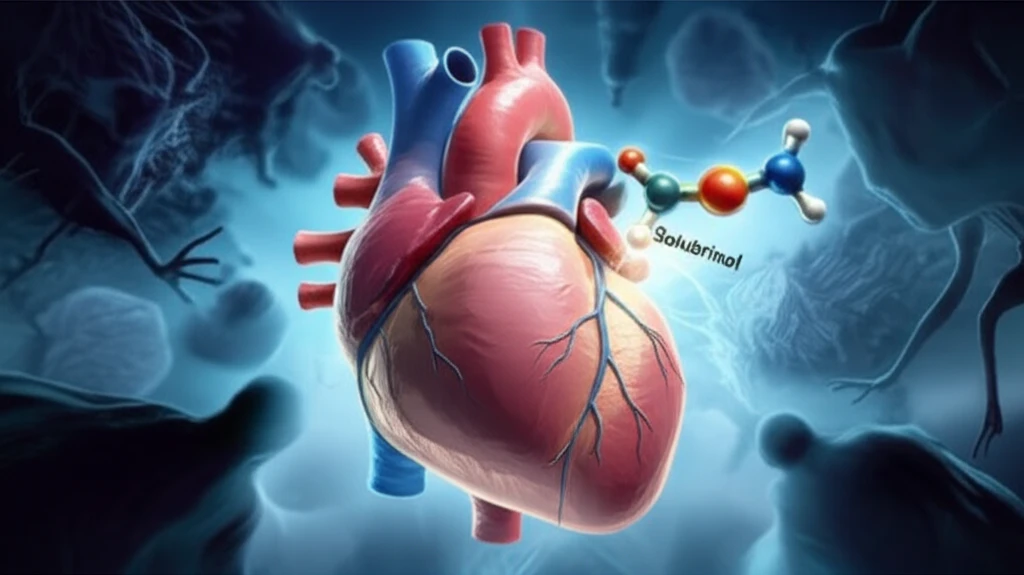
Illustration of a heart protected by salubrinal molecule. The image shows the potential for heart protection.

Heart Health SOS: Can a Tiny Molecule Really Protect Your Ticker?

"New research reveals how a small molecule, salubrinal, might shield your heart from damage and potentially revolutionize treatment."


Cardiovascular disease remains a leading global health challenge, impacting millions worldwide. The heart, a tireless muscle, faces constant threats from various stressors, including hypoxia (low oxygen levels) and oxidative stress. These conditions can trigger a cascade of events leading to cell death, ultimately contributing to heart failure and other severe cardiovascular issues.

For years, researchers have been searching for ways to protect heart cells from these damaging effects. Recent breakthroughs have identified promising new targets within the cellular machinery, offering hope for novel therapies. One such target is the endoplasmic reticulum (ER), a vital organelle within cells responsible for protein synthesis and folding, and its response to stress.

This article explores groundbreaking research on salubrinal, a small molecule that shows potential to protect the heart by targeting the ER stress response. We'll dive into the science, the potential benefits, and the implications for future heart health treatments, examining how this molecule could change the game for cardiovascular care.

Unpacking the ER Stress Response: The Heart's Cellular Distress Signal

Illustration of a heart protected by salubrinal molecule. The image shows the potential for heart protection.

The endoplasmic reticulum (ER) is like the cellular factory where proteins are made and folded correctly. However, when the ER is overwhelmed by stress – due to low oxygen levels (hypoxia), or the presence of harmful substances – it triggers a complex response known as the unfolded protein response (UPR). The UPR is a protective mechanism, but if the stress is too severe or prolonged, it can lead to cell death.

Think of it like this: Imagine a factory where production is constantly interrupted. The machinery gets jammed, and workers struggle to keep up. In the ER, this disruption manifests as a buildup of misfolded proteins, setting off a chain of events that can lead to cell apoptosis (programmed cell death). Hypoxia and certain drugs, like tunicamycin (TM), can initiate this process, damaging heart cells.

  • Cellular Factory Overload: The ER, responsible for protein folding, gets overwhelmed.
  • Misfolded Proteins: Stress causes a buildup of incorrectly folded proteins.
  • UPR Activation: The cell initiates the unfolded protein response (UPR).
  • Apoptosis Trigger: Prolonged stress leads to programmed cell death.
This complex interplay highlights the critical need for interventions that can protect the heart cells at a molecular level, offering a potential pathway to reduce or reverse damage caused by cardiovascular disease. The study explores how salubrinal may be able to act as a protective agent against this ER stress response.

Looking Ahead: The Future of Heart Health and Salubrinal's Promise

The journey to healthy hearts is an ongoing one, and this research suggests that salubrinal could become an important part of the treatment toolkit. While further studies are needed to confirm these findings and assess long-term effects, the initial results are encouraging. This research opens new avenues for therapeutic intervention and emphasizes the importance of understanding and targeting cellular mechanisms in the fight against cardiovascular disease, offering hope for a healthier future for all.

About this Article -

This article was crafted using a human-AI hybrid and collaborative approach. AI assisted our team with initial drafting, research insights, identifying key questions, and image generation. Our human editors guided topic selection, defined the angle, structured the content, ensured factual accuracy and relevance, refined the tone, and conducted thorough editing to deliver helpful, high-quality information.See our About page for more information.

This article is based on research published under:

DOI-LINK: 10.3724/sp.j.1263.2012.02292, Alternate LINK

Title: Salubrinal Protects Against Tunicamycin And Hypoxia Induced Cardiomyocyte Apoptosis Via The Perk-Eif2Α Signaling Pathwaysalubrinal Protects Against Tunicamycin And Hypoxia Induced Cardiomyocyte Apoptosis Via The Perk-Eif2Α Signaling Pathway

Subject: Cardiology and Cardiovascular Medicine

Journal: Journal of Geriatric Cardiology

Publisher: China Science Publishing & Media Ltd.

Authors: Liu Chun-Lei, Li Xin, Hu Guo-Liang, Li Rui-Jun, He Yun-Yun, Zhong Wu, Li Song, He Kun-Lun, Wang Li-Li

Published: 2012-11-27

Everything You Need To Know

1

What is salubrinal and how might it help protect the heart?

Salubrinal is a small molecule that has shown potential in protecting heart cells from stress and damage, particularly by targeting the endoplasmic reticulum (ER) stress response. The ER is responsible for protein synthesis and folding. Salubrinal is being explored for its ability to mitigate the effects of stress on the ER, which could prevent cell death and ultimately protect against cardiovascular issues. Further studies are needed to fully understand its long-term effects and benefits.

2

What is the endoplasmic reticulum (ER) and why is its function important for heart health?

The endoplasmic reticulum (ER) is a crucial organelle within heart cells responsible for protein synthesis and folding. It ensures that proteins are correctly made and processed. When the ER experiences stress, due to factors like hypoxia or harmful substances, it triggers the unfolded protein response (UPR). If this stress is prolonged, it can lead to cell death. Maintaining ER function is vital for preventing heart cell damage and supporting overall cardiovascular health, highlighting why molecules like salubrinal, which target ER stress, are of interest.

3

What is the unfolded protein response (UPR) and how does it relate to heart damage?

The unfolded protein response (UPR) is a cellular mechanism activated when the endoplasmic reticulum (ER) is under stress, often due to an accumulation of misfolded proteins. This stress can be caused by factors like hypoxia or certain drugs. The UPR is initially a protective response, aiming to restore normal ER function. However, if the stress is severe or prolonged, the UPR can trigger apoptosis, or programmed cell death, leading to damage in heart cells and contributing to cardiovascular issues. Substances like salubrinal aim to modulate this UPR and prevent it from reaching the point of triggering cell death.

4

What are some of the stressors that can trigger the unfolded protein response (UPR) in heart cells?

Several stressors can trigger the unfolded protein response (UPR) in heart cells. Hypoxia, or low oxygen levels, is a significant stressor. Additionally, certain drugs, such as tunicamycin (TM), can also induce ER stress and activate the UPR. When the endoplasmic reticulum (ER) is overwhelmed by these factors, it leads to a buildup of misfolded proteins, initiating the UPR and potentially leading to cell death if the stress is not resolved.

5

How could treatments targeting the endoplasmic reticulum (ER) stress response, such as those involving salubrinal, potentially change the future of cardiovascular care?

Treatments targeting the endoplasmic reticulum (ER) stress response, like those involving salubrinal, offer a novel approach to cardiovascular care by addressing cellular mechanisms that lead to heart damage. By protecting the ER from stress and preventing the unfolded protein response (UPR) from triggering cell death, these treatments could potentially reduce or reverse damage caused by cardiovascular disease. This approach emphasizes the importance of understanding and targeting cellular mechanisms, marking a significant shift toward more precise and effective interventions. While further research is necessary, the initial findings are encouraging and suggest a promising avenue for future therapies.

Newsletter Subscribe

Subscribe to get the latest articles and insights directly in your inbox.