
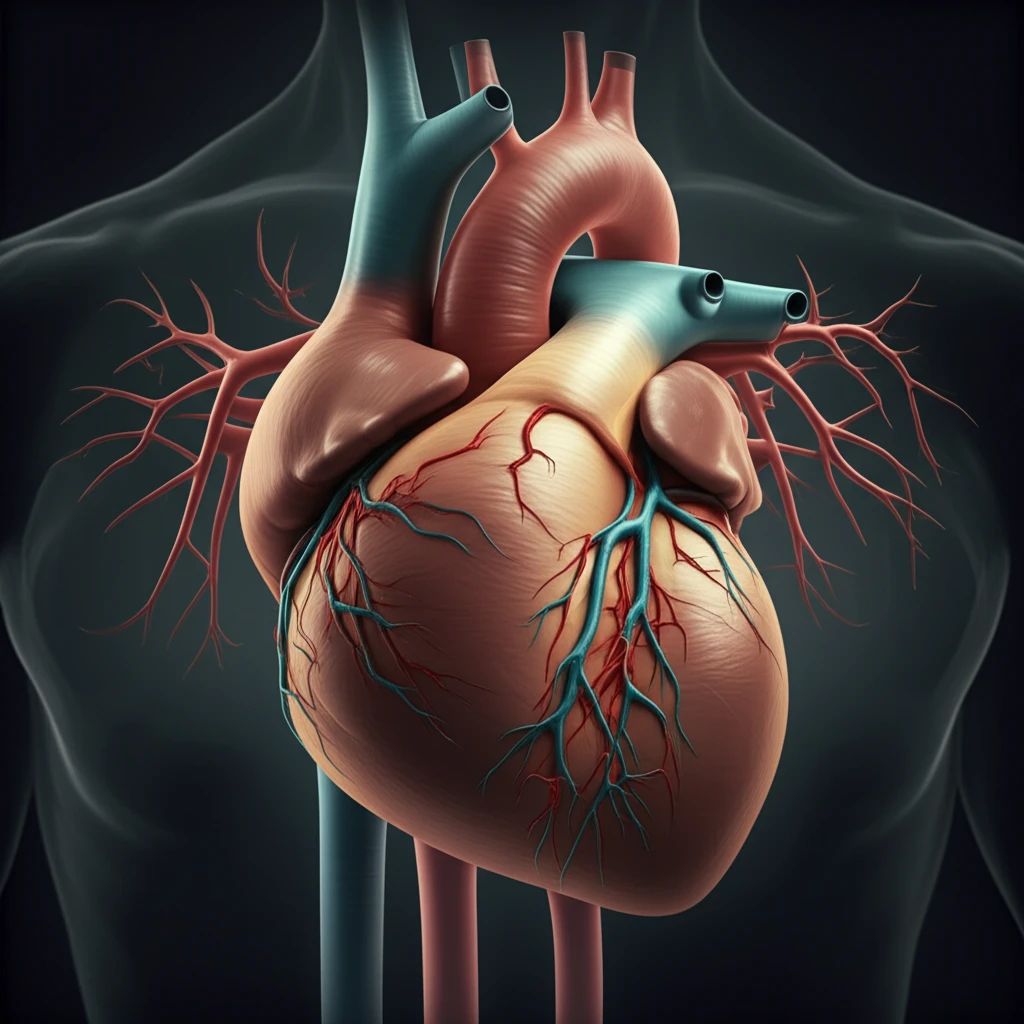
Surreal illustration of a heart representing the complex interplay of congenital and acquired cardiovascular risks.

Heart Health Check: Are Adults with Congenital Heart Disease at Risk?

"Understanding ASCVD risk in adults with congenital heart disease and how to manage it for a healthier future."


Acquired cardiovascular disease (ASCVD) is a major health concern, even for those who've had heart issues since birth. Myocardial infarction, or heart attack, has become a leading cause of death in adults with non-cyanotic congenital heart disease—where the skin isn't bluish from lack of oxygen. It's important to understand that over 80% of adults with congenital heart disease (CHD) also have other cardiovascular risk factors.

Certain types of CHD and previous surgeries can further increase the risk of ASCVD. This highlights the need for careful assessment and tailored prevention strategies.

A recent study used the Prospective Cardiovascular Munster (PROCAM) 10-year risk score to assess ASCVD risk in adults with CHD. Interestingly, the study found that the absolute 10-year risk was lower in adults with CHD compared to the general population. This may sound reassuring, but it also underscores the complexity of assessing heart health in this specific population.

Why Standard Risk Calculators Might Fall Short

Surreal illustration of a heart representing the complex interplay of congenital and acquired cardiovascular risks.

The usual tools we use to predict heart disease risk, like the Framingham Risk Assessment, Reynolds Risk Score, and ASCVD risk estimator, were developed using data from older adults without CHD. When these scores are applied to younger adults with CHD, they may underestimate their actual risk. None of these calculators, including PROCAM, have been specifically validated for adults with CHD.

It's also worth noting that the PROCAM score hasn't been fully validated for predicting ASCVD events, even in the general population. Some people with high scores don't develop ASCVD, while others with low scores still experience heart problems. This is why we need risk scores that are specifically designed for adults with CHD, taking into account their unique health profiles.

  • CHD-Specific Factors: The type of congenital heart defect and any previous surgical repairs can significantly impact ASCVD risk.
  • Traditional Risk Factors: High blood pressure, high cholesterol, smoking, and diabetes still play a major role.
  • New Risk Factors: Research is exploring novel factors, such as coronary anomalies or surgical coronary manipulation, to improve risk prediction.
Identifying those at risk is important, a study showed that 9% of individuals with CHD who underwent catheterization had coronary atherosclerosis. Research has also indicated reduced survival rates in patients undergoing repeat CHD surgery combined with coronary artery bypass grafts. As coronary issues rise in the ACHD population, we need relevant risk calculators.

The Future of Heart Health for Adults with CHD

Better risk assessment could also change how doctors manage their patients' care. Even when patients with CHD meet the guidelines for medications like statins based on ASCVD risk, many don't receive them. By identifying risks earlier, more adults with CHD can reduce morbidity and increased health care utilization.

Comprehensive risk modeling, incorporating both traditional ASCVD factors and CHD-specific risks, can help care networks identify high-risk patients and allocate resources effectively. This targeted approach can help ensure that those who need specialized care receive it, while also managing anxiety in stable individuals.

Continued research into risk prediction is critical. By working together and using realistic models, we can create actionable data that improves the lives of adults with CHD as they grow and age.

About this Article -

This article was crafted using a human-AI hybrid and collaborative approach. AI assisted our team with initial drafting, research insights, identifying key questions, and image generation. Our human editors guided topic selection, defined the angle, structured the content, ensured factual accuracy and relevance, refined the tone, and conducted thorough editing to deliver helpful, high-quality information.See our About page for more information.

This article is based on research published under:

DOI-LINK: 10.1016/j.ijcard.2018.10.061, Alternate LINK

Title: Predicting Acquired Cardiovascular Disease In Adults With Congenital Heart Disease Is Risky Business

Subject: Cardiology and Cardiovascular Medicine

Journal: International Journal of Cardiology

Publisher: Elsevier BV

Authors: George K. Lui, Ami B. Bhatt

Published: 2019-02-01

Everything You Need To Know

1

What is ASCVD and why is it a concern for adults with Congenital Heart Disease?

ASCVD, or Acquired Cardiovascular Disease, refers to conditions like heart attacks that develop over time. In the context of adults with Congenital Heart Disease (CHD), ASCVD is a significant concern because it can exacerbate existing heart problems and reduce life expectancy. Understanding ASCVD risk in this population is critical for implementing preventative measures and improving long-term health outcomes.

2

What are the key factors that increase the risk of ASCVD in adults with Congenital Heart Disease?

Adults with CHD face unique cardiovascular risks, and the type of congenital heart defect and any previous surgical repairs can significantly impact ASCVD risk. Traditional risk factors, such as high blood pressure, high cholesterol, smoking, and diabetes, also play a major role. Research is ongoing to explore novel factors, like coronary anomalies or surgical coronary manipulation, to improve risk prediction. These factors are significant because they highlight the complexity of assessing heart health in this specific population, requiring tailored prevention strategies.

3

Why might standard heart disease risk calculators be inaccurate for adults with Congenital Heart Disease?

Standard risk calculators, such as the Framingham Risk Assessment, Reynolds Risk Score, and ASCVD risk estimator, were developed using data from older adults without CHD. When these scores are applied to younger adults with CHD, they may underestimate their actual risk. The PROCAM score also hasn't been fully validated for predicting ASCVD events, even in the general population. This limitation underscores the need for risk scores specifically designed for adults with CHD that take into account their unique health profiles to improve accuracy.

4

What did the study using the PROCAM score reveal about ASCVD risk in adults with Congenital Heart Disease?

A recent study used the PROCAM 10-year risk score to assess ASCVD risk in adults with CHD. The study found that the absolute 10-year risk was lower in adults with CHD compared to the general population. While this might seem reassuring, it underscores the complexity of assessing heart health in this specific population and the need for further research to refine risk assessment tools. This finding suggests that current risk prediction methods may not fully capture the nuances of cardiovascular risk in this population.

5

How can improved risk assessment benefit adults with Congenital Heart Disease?

Better risk assessment could change how doctors manage their patients' care. Even when patients with CHD meet the guidelines for medications like statins based on ASCVD risk, many don't receive them. By identifying risks earlier, more adults with CHD can reduce morbidity and increased health care utilization. This means better proactive care, improved quality of life, and potentially, longer lifespans for individuals with CHD.

Newsletter Subscribe

Subscribe to get the latest articles and insights directly in your inbox.