
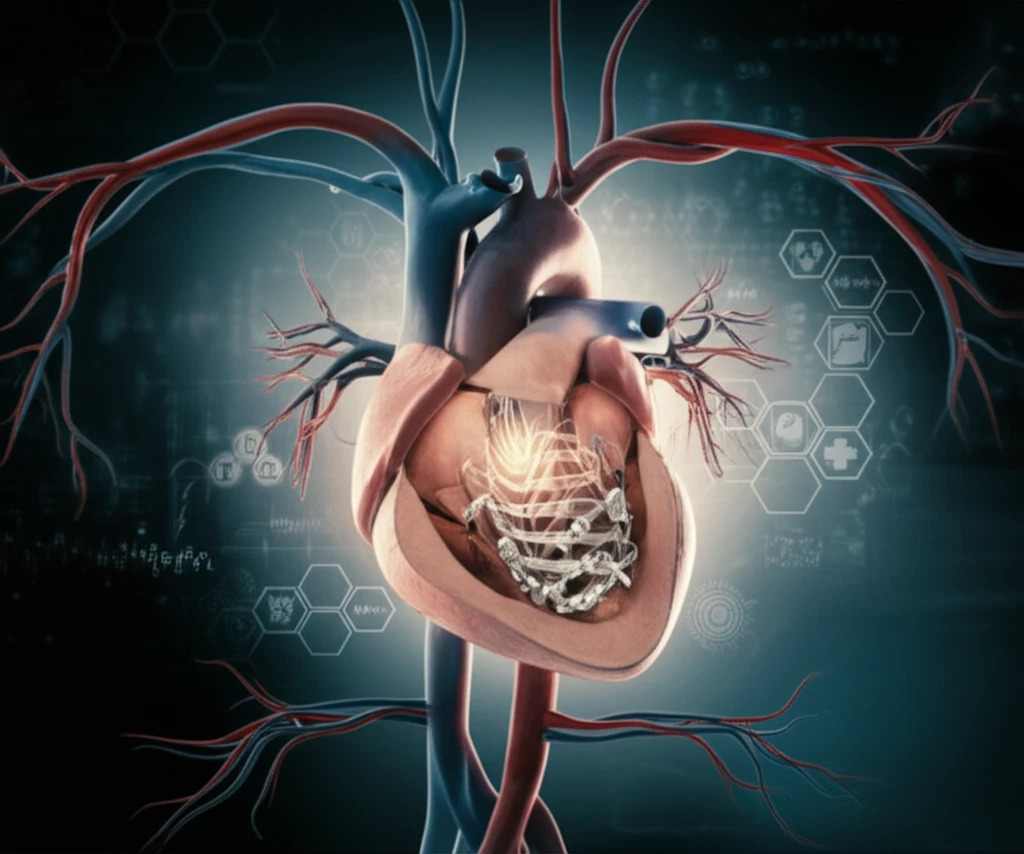
Illustration of a heart with a magnesium scaffold, symbolizing advancements in cardiovascular health.

Heart Health Breakthroughs: New Advances in Treating Aortic Stenosis and Atrial Fibrillation

"Exploring Cutting-Edge Treatments and Innovations in Cardiovascular Care"


Cardiovascular diseases remain a leading cause of mortality worldwide, but ongoing medical advancements offer new hope for patients. This article explores significant breakthroughs in treating aortic stenosis and atrial fibrillation, two prevalent conditions that affect millions. We'll examine innovative therapies and technologies that are reshaping the landscape of heart health.

Recent research has focused on improving treatment options, particularly for individuals at higher risk or those who may not be ideal candidates for traditional procedures. The focus is on less invasive methods and medications tailored to specific patient demographics. These developments are not just about extending life, but also about improving the quality of life for patients.

The information is intended for general knowledge and informational purposes only, and does not constitute medical advice. It is essential to consult with a qualified healthcare professional for any health concerns or before making any decisions related to your health or treatment.

Revolutionizing Heart Procedures: The Promise of Magnesium-Based Scaffolds and TAVI

Illustration of a heart with a magnesium scaffold, symbolizing advancements in cardiovascular health.

One of the most exciting developments in interventional cardiology is the use of magnesium-based scaffolds. These scaffolds, designed to support blood vessels after procedures, are showing promising results. The concept involves a 'leave nothing behind' approach, aiming to minimize long-term complications.

Magnesium-based scaffolds offer several advantages over traditional options. They are more easily deployed, have a shorter resorption time, and can be used in smaller vessels. The BIOSOLVE-II study highlighted positive outcomes with these scaffolds, showing reduced vessel narrowing and excellent safety profiles.

  • Reduced Vessel Narrowing: Clinical trials indicate that magnesium scaffolds help maintain open blood vessels.
  • Enhanced Safety: The risk of serious complications, such as blood clots, is significantly lowered.
  • Improved Patient Outcomes: Patients experience better long-term results with these innovative scaffolds.
Transcatheter Aortic Valve Implantation (TAVI) is another significant advancement. TAVI is a less invasive alternative to traditional open-heart surgery for patients with severe aortic stenosis. The number of TAVI procedures has dramatically increased, with outcomes improving over time. TAVI procedures are now more common than traditional surgical options.

Looking Ahead: Continued Innovation in Cardiovascular Care

The advancements in cardiovascular care are transforming the treatment landscape, offering new hope for patients with heart conditions. With ongoing research and clinical trials, the future holds even greater promise for improved outcomes and quality of life. Always consult with healthcare professionals to determine the best course of treatment.

About this Article -

This article was crafted using a human-AI hybrid and collaborative approach. AI assisted our team with initial drafting, research insights, identifying key questions, and image generation. Our human editors guided topic selection, defined the angle, structured the content, ensured factual accuracy and relevance, refined the tone, and conducted thorough editing to deliver helpful, high-quality information.See our About page for more information.

Everything You Need To Know

1

What are magnesium-based scaffolds and why are they considered a breakthrough in treating heart conditions?

Magnesium-based scaffolds represent a significant advancement in interventional cardiology. Unlike traditional scaffolds, magnesium-based scaffolds are designed to support blood vessels and are eventually resorbed by the body, following a 'leave nothing behind' approach. This minimizes long-term complications such as blood clots and vessel re-narrowing, leading to enhanced safety, improved patient outcomes, and reduced vessel narrowing. The BIOSOLVE-II study demonstrated the advantages of these scaffolds, including their ease of deployment and suitability for smaller vessels. Although the text does not mention specific alternatives, the magnesium-based scaffolds are alternatives to more invasive open-heart surgery.

2

How does Transcatheter Aortic Valve Implantation (TAVI) improve the treatment of aortic stenosis, and why is it becoming more prevalent?

Transcatheter Aortic Valve Implantation (TAVI) offers a less invasive alternative to traditional open-heart surgery for patients suffering from severe aortic stenosis. The procedure involves implanting a new valve without removing the old, damaged one, which reduces recovery time and the risks associated with open surgery. TAVI is increasingly favored due to improved outcomes and its suitability for patients who may not be ideal candidates for conventional surgery. While the procedure has become more common than surgical options, other aortic stenosis treatment options, such as balloon valvuloplasty, are not discussed.

3

What are the key advantages of using magnesium-based scaffolds compared to traditional methods in cardiovascular procedures?

Magnesium-based scaffolds offer several key advantages, including reduced vessel narrowing, enhanced safety, and improved patient outcomes. Specifically, they are more easily deployed, have a shorter resorption time, and can be used in smaller vessels. These factors contribute to minimizing long-term complications such as blood clots, and promote better overall heart health. The article does not detail the material composition of traditional methods beyond magnesium, but instead focuses on the positive effects of the magnesium-based scaffolds.

4

With ongoing research and clinical trials showing promise for improved cardiovascular care, what specific outcomes are anticipated for patients with heart conditions?

The ongoing research and clinical trials in cardiovascular care offer hope for improved outcomes and enhanced quality of life for patients. By concentrating on less invasive methods and medications tailored to specific patient demographics, these advancements aim to extend life and improve the overall well-being of individuals with heart conditions. While these advancements show great potential, further exploration into personalized treatment plans and advancements in diagnostic techniques are needed to comprehensively address individual patient needs. The article does not list specific companies or researchers leading these advancements.

5

What implications does the 'leave nothing behind' approach of magnesium-based scaffolds have for long-term cardiovascular health?

The 'leave nothing behind' approach of magnesium-based scaffolds has significant implications for long-term cardiovascular health. Because these scaffolds are designed to be resorbed by the body, they minimize the risk of complications that can arise from permanent implants, such as blood clots and chronic inflammation. This approach aims to promote natural vessel healing and function, ultimately improving long-term patient outcomes and reducing the need for subsequent interventions. While the text highlights the positive effects of magnesium, it doesn't address the potential limitations or contraindications of magnesium-based scaffolds for all patient populations.

Newsletter Subscribe

Subscribe to get the latest articles and insights directly in your inbox.