
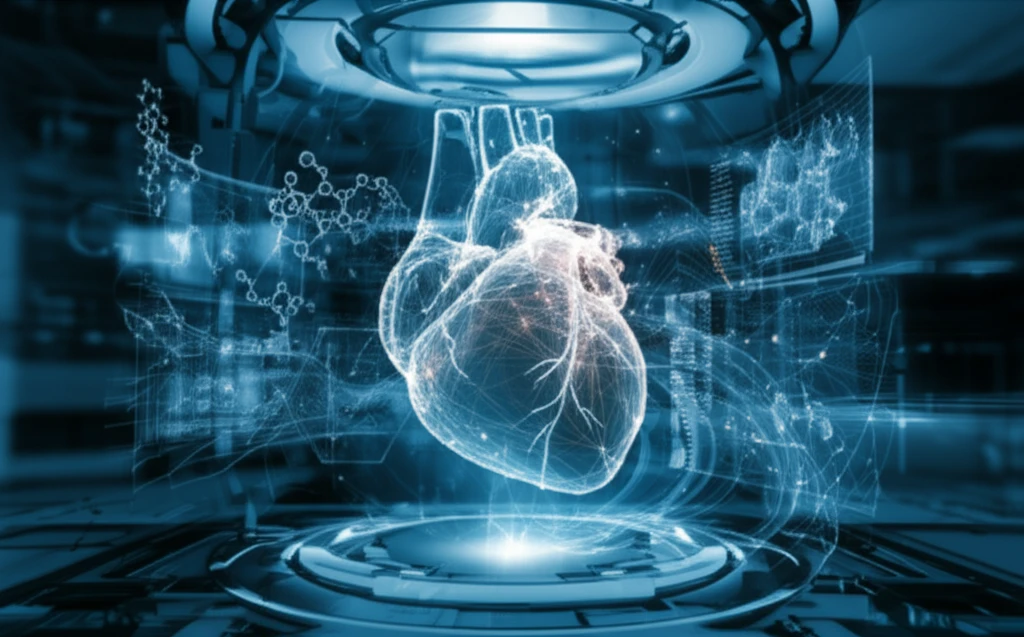
3D cardiac microtissue model with holographic drug projections.

Heart Health Breakthrough: 3D Cardiac Microtissues Revolutionize Drug Safety Testing

"Cutting-edge research unveils how 3D cardiac microtissues are enhancing cardiovascular safety assessments, promising more accurate predictions and reduced reliance on animal testing."


For years, the pharmaceutical industry has grappled with the challenge of accurately predicting how drugs will affect the human heart. Traditional methods, often relying on animal models or simple cell cultures, frequently fail to capture the complexities of the human cardiovascular system. This has led to costly late-stage drug failures and, more importantly, potential risks to patient safety.

Now, a groundbreaking approach is emerging that promises to revolutionize cardiovascular safety testing: 3D cardiac microtissues. These miniature, three-dimensional models of the heart, composed of human heart cells, offer a more realistic and predictive platform for assessing drug-induced cardiotoxicity. This innovative technology is poised to significantly improve the drug development process, ensuring that only the safest and most effective medications reach patients.

This article explores the development and application of 3D cardiac microtissues in cardiovascular safety testing, highlighting their potential to transform drug discovery and reduce reliance on traditional methods. We'll delve into the science behind these microtissues, examining how they mimic the human heart's structure and function, and explore the latest research demonstrating their superior predictive capabilities.

What are 3D Cardiac Microtissues and Why Do They Matter?

3D cardiac microtissue model with holographic drug projections.

Traditional 2D cell cultures, where cells are grown in a single layer, lack the complex cell-to-cell interactions and three-dimensional architecture of the human heart. This limitation often leads to inaccurate predictions of drug effects. Animal models, while more complex, don't always translate well to human physiology, resulting in false positives or negatives in safety testing.

3D cardiac microtissues, on the other hand, are designed to mimic the intricate structure and function of the human heart. They are typically composed of:

  • Cardiomyocytes: Heart muscle cells responsible for contraction.
  • Fibroblasts: Cells that produce connective tissue and provide structural support.
  • Endothelial Cells: Cells that line blood vessels and regulate blood flow.
By combining these cell types in a three-dimensional structure, microtissues create a more physiologically relevant model that closely resembles the human heart microenvironment. This allows researchers to study drug effects in a context that more accurately reflects how the heart would respond in a living organism.

The Future of Cardiovascular Safety Testing

As research continues to advance, 3D cardiac microtissues are poised to become an indispensable tool in the drug development process. Their ability to provide more accurate and predictive assessments of cardiotoxicity will not only improve patient safety but also streamline the development of new and life-saving medications. By embracing these innovative technologies, we can pave the way for a future where heart health is prioritized and the risks associated with drug-induced cardiotoxicity are minimized.

About this Article -

This article was crafted using a human-AI hybrid and collaborative approach. AI assisted our team with initial drafting, research insights, identifying key questions, and image generation. Our human editors guided topic selection, defined the angle, structured the content, ensured factual accuracy and relevance, refined the tone, and conducted thorough editing to deliver helpful, high-quality information.See our About page for more information.

Everything You Need To Know

1

What exactly are 3D cardiac microtissues?

3D cardiac microtissues are miniature, three-dimensional models of the heart. They are composed of human heart cells and are designed to mimic the intricate structure and function of the human heart. These models include Cardiomyocytes, Fibroblasts, and Endothelial Cells. They provide a more realistic and predictive platform for assessing drug-induced cardiotoxicity, which is crucial for cardiovascular safety testing.

2

Why are 3D cardiac microtissues so important in drug safety testing?

They are important because traditional methods like 2D cell cultures and animal models often fail to accurately predict how drugs affect the human heart. 2D cell cultures lack the complexity of cell-to-cell interactions and three-dimensional architecture. Animal models don't always translate well to human physiology. 3D cardiac microtissues offer a more accurate and reliable model for assessing drug effects, leading to improved drug development and increased patient safety.

3

What are the key components that make up a 3D cardiac microtissue?

Cardiomyocytes are heart muscle cells responsible for contraction. Fibroblasts are cells that produce connective tissue and provide structural support. Endothelial cells are cells that line blood vessels and regulate blood flow. By combining these cell types in a three-dimensional structure, 3D cardiac microtissues create a physiologically relevant model that closely resembles the human heart microenvironment, allowing researchers to study drug effects more accurately.

4

What are the practical implications of using 3D cardiac microtissues for drug development?

The implications of using 3D cardiac microtissues are significant. They offer more accurate and predictive assessments of cardiotoxicity, which can reduce late-stage drug failures. They improve patient safety by ensuring that only the safest medications reach patients. Furthermore, they streamline the drug development process, potentially leading to new and life-saving medications more quickly and efficiently.

5

What is the potential future of 3D cardiac microtissues in the field of cardiovascular safety?

Research suggests that 3D cardiac microtissues are poised to become an indispensable tool in the drug development process. By providing more accurate assessments of cardiotoxicity, they will not only enhance patient safety but also optimize the development of new medications. Embracing these innovative technologies will pave the way for a future where heart health is prioritized and risks related to drug-induced cardiotoxicity are minimized.

Newsletter Subscribe

Subscribe to get the latest articles and insights directly in your inbox.