
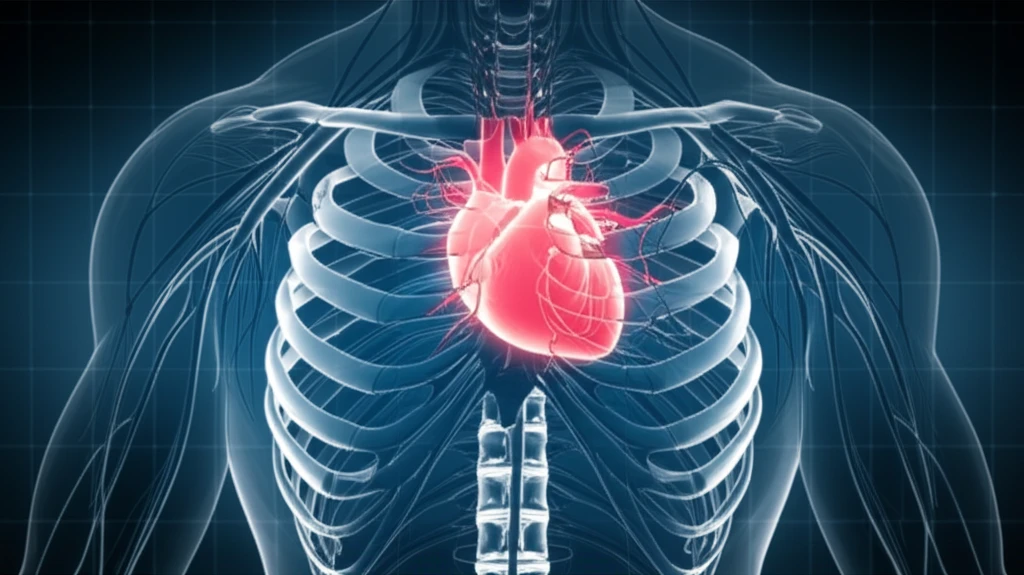
Glowing heart with nerve threads, representing cardiac health assessment.

Heart Failure Risk: Can a Simple Scan Predict Your Odds?

"Revolutionary heart scan could help doctors identify low-risk patients and prevent unnecessary procedures."


Heart failure is a serious condition, affecting millions worldwide. While treatments like implantable cardioverter-defibrillators (ICDs) can be life-saving, they're not always necessary. In fact, about 80% of people who receive an ICD never actually need it.

That's why doctors are searching for better ways to identify who truly benefits from an ICD and who might be at lower risk. A new study published in the Journal of Nuclear Cardiology suggests that a special type of heart scan, called iodine-123 meta-iodobenzylguanidine (123I-mIBG) scintigraphy, could be the key.

This article breaks down the findings of this study, explaining how the 123I-mIBG scan works, what the results mean for people with heart failure, and why this could lead to more personalized and effective treatment strategies.

The 123I-mIBG Scan: A Window into Your Heart's Health

Glowing heart with nerve threads, representing cardiac health assessment.

The 123I-mIBG scan isn't your typical heart test. It's designed to look at the neuroadrenergic function of your heart.

Think of your heart as having its own electrical system, controlled by nerves. These nerves use a chemical called norepinephrine to communicate. The 123I-mIBG scan uses a special substance that mimics norepinephrine, allowing doctors to see how well these nerves are working.

  • How it works: A small amount of radioactive tracer is injected into your bloodstream. This tracer is absorbed by the heart's nerve cells.
  • The Scan: Using a special camera, doctors can then see how much of the tracer is taken up by the heart and how quickly it's cleared away.
  • What it Reveals: This information provides valuable insights into the health of your heart's nervous system.
The study focused on a measurement called the heart-to-mediastinum ratio (H/M). A lower H/M ratio suggests that the heart's nerves aren't working as well as they should, indicating a higher risk of dangerous heart events.

The Future of Heart Failure Treatment: Personalized and Precise

This study adds to a growing body of evidence that the 123I-mIBG scan can be a valuable tool for identifying heart failure patients at low risk of dangerous events. For those individuals, an ICD may not be necessary, avoiding the risks and costs associated with the device.

However, it's important to remember that this is just one piece of the puzzle. Doctors should consider all available information, including other tests and your overall health, when making treatment decisions.

As research continues, we can expect even more precise and personalized approaches to heart failure treatment, ensuring that the right people get the right therapies at the right time.

About this Article -

This article was crafted using a human-AI hybrid and collaborative approach. AI assisted our team with initial drafting, research insights, identifying key questions, and image generation. Our human editors guided topic selection, defined the angle, structured the content, ensured factual accuracy and relevance, refined the tone, and conducted thorough editing to deliver helpful, high-quality information.See our About page for more information.

This article is based on research published under:

DOI-LINK: 10.1007/s12350-018-01467-0, Alternate LINK

Title: Incremental Prognostic Value Of Myocardial Neuroadrenergic Damage In Patients With Chronic Congestive Heart Failure: An Iodine-123 Meta-Iodobenzylguanidine Scintigraphy Study

Subject: Cardiology and Cardiovascular Medicine

Journal: Journal of Nuclear Cardiology

Publisher: Springer Science and Business Media LLC

Authors: Scrima Giovanni, Maffè Stefano, Spinnler Maria Teresa, Cannillo Margherita, Bertuccio Giovanni, Parravicini Umberto, Paffoni Paola, Canavese Giacomo, Dellavesa Pierfranco, Gambino Alfonso, Campini Riccardo, Marcassa Claudio

Published: 2018-10-30

Everything You Need To Know

1

What exactly is the 123I-mIBG scan?

The 123I-mIBG scan is a specialized heart test that examines the neuroadrenergic function of the heart. It uses a radioactive tracer that mimics norepinephrine, a chemical used by the heart's nerves to communicate. This scan helps doctors assess how well these nerves are functioning, which is crucial for understanding the health of the heart's nervous system.

2

Why is the 123I-mIBG scan important?

The 123I-mIBG scan is significant because it can potentially help doctors identify people with heart failure who are at a low risk of experiencing dangerous heart events. By identifying these individuals, doctors may be able to avoid implanting unnecessary implantable cardioverter-defibrillators (ICDs). This could spare patients from the risks and costs associated with these devices, leading to more personalized and effective treatment strategies.

3

What is the heart-to-mediastinum ratio (H/M) in the context of this scan?

The heart-to-mediastinum ratio (H/M) is a measurement taken from the 123I-mIBG scan. It compares the uptake of the radioactive tracer in the heart to the uptake in the mediastinum, the space in the chest between the lungs. A lower H/M ratio indicates that the heart's nerves are not functioning optimally, which suggests a higher risk of dangerous heart events for patients with heart failure.

4

What are the implications of using the 123I-mIBG scan for heart failure treatment?

The implications of using the 123I-mIBG scan are far-reaching. It offers the potential for more personalized treatment plans for heart failure patients. The ability to identify low-risk individuals means that fewer people may need to undergo procedures like ICD implantation, which can improve their quality of life and reduce healthcare costs. This approach moves away from a 'one-size-fits-all' treatment model towards a more precise and patient-specific strategy.

5

How can this scan help improve outcomes for those with heart failure?

The study's findings suggest that the 123I-mIBG scan can be a valuable tool for identifying heart failure patients at low risk. This can lead to a more targeted approach to treatment, where doctors can make more informed decisions about who truly needs interventions like an ICD and who may not. By understanding the health of the heart's nervous system through the 123I-mIBG scan, doctors can tailor treatment plans to the specific needs of each patient, ultimately improving outcomes and reducing unnecessary procedures.

Newsletter Subscribe

Subscribe to get the latest articles and insights directly in your inbox.